
Since COVID-19 pandemic appeared and made storm in many countries across the world, the phrase “vaccine diplomacy” has been used more and more. In current context, people have heard many times that phrase on popular medias and Government’s attempts in mobilizing countries to support Vietnam in accessing sources of vaccines against COVID-19.
Vaccine diplomacy in the COVID-19 context.
Photo source: https://www.frontlineclub.com/vaccine-diplomacy/
It may be said that, vaccine diplomacy used to be mentioned a long time ago in contemporary history. According to some scientists, vaccine diplomacy is a measure specified for international cooperation in the sake of infectious diseases control and prevention; such as the first International Epidemiological Conference taken place in Europe in 1851 (19th century) with implementation of multilateral cooperation to prevent cholera and yellow fever spread (D.P.Fidler, 2001); then birth of agreements and conventions relating to international epidemiology, and establishment of World Health Organization (WHO) as we have known nowadays[1]. Challenges from global epidemics in the past boosted demands on external cooperation and diplomacy among nations that served eco-social development, national security and other national interests (R Katz, S Kornblet, G Arnold, E Lief, J Fischer, 2011)[2]. Indeed, countries have got involved and interfered in tackling challenges such as avian flu or HIV/AIDS through various cooperative and diplomatic activities. Look back to history, it has to mention success in reducing and eliminating smallpox in early decades of the 19th century (Bazin H, 2000) and in ending years of 1970s (Henderson DA, 2009). During years of 1990 – 1991, Children Vaccination Initiative was implemented thanks to attempts of international community (Rockefeller Fund, UNDP, UNCEF, WB, WHO, International Health Care Association of Japan, Canada, EU Committee, Japan, the Netherlands, the USA) for pediatric vaccine development in developing countries[3]. Or, the RBA Validated Assessment Program (VAP) was established 30 years ago, at bilateral level between India and the USA, in order to strengthen international cooperation in investigational research and clinical trial study on vaccine, epidemiology, vaccine monitoring and distribution. In present, the VAP has focused on priorities including dengue fever, influenza (including avian influenza), malaria, tuberculosis (TB) and intestinal diseases[4]. Recently, COVAX Program has been operated under cooperation between CEPI, Gavi, Vaccine Alliance, WHO and delivery partner UNICEF, in order to guarantee accessing vaccine against COVID-19 equally and globally. Through the COVAX, UNICEF has been working with partners and producers for vaccine purchasing, delivery, logistics, and storage. The UNICEF has delivered COVID-19-against vaccines to 92 low-income and low-middle-income nations (including Vietnam) and supported over 97 high-income and upper-middle-income countries purchasing vaccines[5]. The UNICEF has been also known with reputation and experience of 20 years in vaccine delivery across the world.
[1] David P. Fidler, 2001, “Globalized public health: the first 100 years of international health diplomacy”, https://www.ncbi.nlm.nih.gov/pmc/articles/PMC2566654/pdf/11584732.pdf
[2] Rebecca Katz, Sarah Kornblet, Grace Arnold, Eric Lief, Julie E.Fischer, 2011, “Defining health diplomacy: Changing demands in the era of globalization”, https://onlinelibrary.wiley.com/doi/abs/10.1111/j.1468-0009.2011.00637.x
[3] Children Vaccine Initiative, accessed https://apps.who.int/iris/bitstream/handle/10665/325813/WH-1993-Mar-Apr-p4-6-eng.pdf on August 20, 2021.
[4] VAP Program, accessed https://www.niaid.nih.gov/research/indo-us-vaccine-action-program on August 20, 2021.
[5] UNICEF, “COVAX: Ensure global equitable access COVID-19 vaccines”. https://www.unicef.org/supply/covax-ensuring-global-equitable-access-covid-19-vaccines
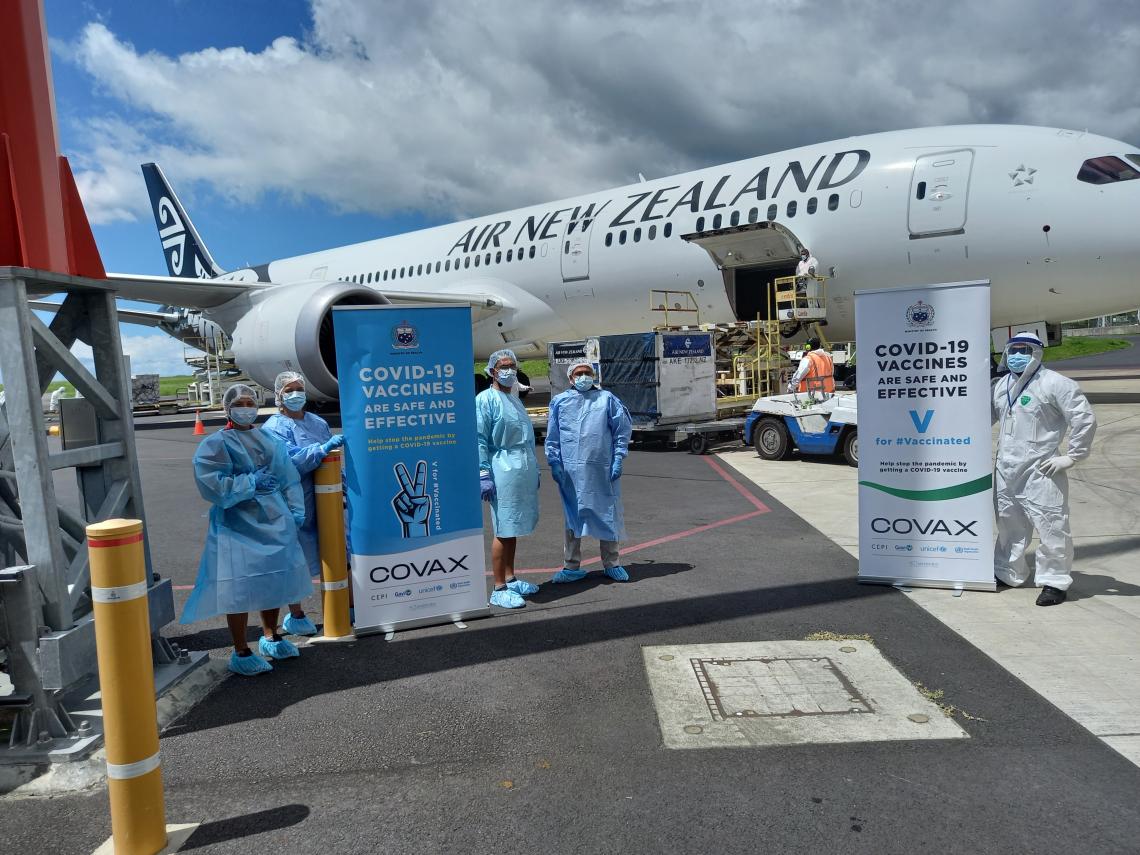
UNICEF delivered vaccine against COVID-19 to Samoa. Photo: Samoa Ministry of Health. Source: https://www.unicef.org/pacificislands/stories/eight-countries-three-months
It may say that, globalization has been going strongly for recent decades and that has led to changes and adjustments in countries’ implementation of targets and diplomatic practice. Global health issues need to get involved countries, international organizations in order to get solved. Health diplomacy needs to be implemented widely across the world, attracting attendees from expertise, technique, health science, epidemiology, etc. and diplomatic skills.
Several highlights in global vaccine diplomacy are as below:
i) Issues(relating to infectious diseases and epidemics) impact on international community’s health often attach to nations’ interests in terms of economy, social affairs, and security. Hence, they have been reflected in negotiations and dialogues (bilaterally and multilaterally) among countries, and between nations and international organizations.ii) Related international organizations are not only tightened in health care, but also expanded to various sectors and levels (i.e. inter-governmental organizations, NGOs, financial funds).iii) Developed/rich countries are often active and quick in researching, manufacturing, and providing vaccines, while developing/poor countries often face difficulties in vaccine research and production. Priviledge in vaccine research and manufacturing could become a tool serving a nation’s influence expansion (or influence enhancement) in international relations. That priviledge could also be a weak point of following countries in attempts of vaccine access. Active – passive status, redundancy – shortage in vaccine research and production among countries has led to various impacts on effort of controlling diseases, particularly infectious diseases with high speed of spread and severe damage to social communities, ability and speed of economic recovery.
Vaccine is one of significant measures to help countries fight back diseases, protect and strengthen global health. In other approach, vaccine development programs could also enhance multilateral cooperation spirit among countries in regions, grounded on their goodwill in doing attempts to control and push back the pandemic.
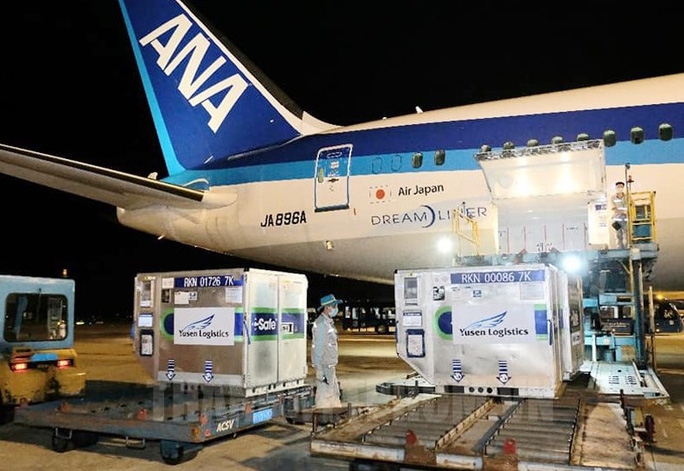
Japan Government supported Vietnam almost 1 million doses of vaccine against COVID-19. Source: https://dangcongsan.vn/thoi-su/viet-nam-day-manh-cong-tac-ngoai-giao-vac-xin-585322.html
In the context that supply of vaccines has been not much in the world, Vietnam has been active and positive in implementing vaccine diplomacy in order to acquire vaccine doses as much as possible and in the fastest way for public vaccination that in turn facilitates recovery of manufacturing, business, and daily routine of people. Resolution 21/NQ-CP dated February 26, 2021 on purchasing and using vaccines against COVID-19 identified a target of 150 million vaccine doses for vaccination of 70% of population in Vietnam. Currently, Vietnam has been active in connecting, negotiating, and mobilizing foreign governments to support Vietnam soon access and receive COVID-19 vaccine sources. Vietnam’s vaccine diplomacy has gained achievements, as below: The COVAX Program’s commitment to give priority to Vietnam in ongoing vaccine delivery batches, supporting tech transfer mRNA of vaccine manufacturing, dispatching expertise to Vietnam to assist research and production of vaccines meeting international standards and recognition, willing to cooperate and support Vietnam to become a center of vaccine production at the region; Governments in the USA, Japan, Russia, Poland, China, Australia have assisted Vietnam vaccines (Moderna, Pfizer, Astra Zeneca, Sinopharm, Sputnik-V); authorities and residents at some states in Germany supported Vietnam 1 million kits of COVID-19 quick test[1], etc. Implementation of vaccine diplomacy has been considered a right and in-time strategy of Vietnam that is to take advantage of bilateral and multilateral relations with countries and international organizations for vaccine supplies access. Besides official visits and bilateral meetings with countries’ departments at levels, Vietnam has been active and positive in mobilizing international communities at multilateral forums, such as Summit between China’s Communist Party and other Political Parties in the world (7/2021), High-level discussion Session of the UNs’ Security Council, Partnering for Green Growth and the Global Goals (P4G). Follow Prime Minister’s direction, Vaccine Diplomacy Team was established, being in charge of promotion and call for vaccines, therapeutic drugs, medical products for the fight against COVID-19. Thanks to vaccine diplomatic attempts of the Party and Government, a volume of aided vaccines were transported to Vietnam that has contributed to vaccination work at many cities and provinces at nation whole. In May 2021, Hai Phong City was allotted 27,000 doses Astra Zeneca (Decision 2499/QĐ-BYT)[2]; and then, in July 2021, the city was allocated 40,320 doses Moderna (Decision 3400/QĐ-BYT)[3]./.
[1] Accessed https://dangcongsan.vn/thoi-su/viet-nam-day-manh-cong-tac-ngoai-giao-vac-xin-585322.html on August 20, 2021.
[2] https://haiphong.gov.vn/tin-tuc-su-kien/Hai-Phong-duoc-phan-bo-27000-lieu-vac-xin-COVID-19-dot-3-60179.html
[3] https://dangcongsan.vn/thoi-su/phan-bo-2-trieu-lieu-vac-xin-covid-19-cua-moderna-585394.html