
On December 20, 2021, Ministry of Foreign Affairs and Ministry of Agriculture and Rural Development co-hosted the online meeting titled “Halal market in Southeast Asia -Southern Asia – Southern Pacific: Potentials and Challenges” with participation of over 300 delegates from public and private sectors. Indeed, attending the meeting were representatives of Vietnam’s diplomatic missions abroad, Ambassadors of Islamic – culture countries to Vietnam, CEOs of domestic and foreign companies which have been interested in Halal market, public agencies at localities across the country, international organizations, academics and lectures on Halal. Hai Phong City dispatched delegates of Department of Foreign Affairs, Department of Trade and Industry, and Department of Agriculture and Rural Development to attend the meeting.
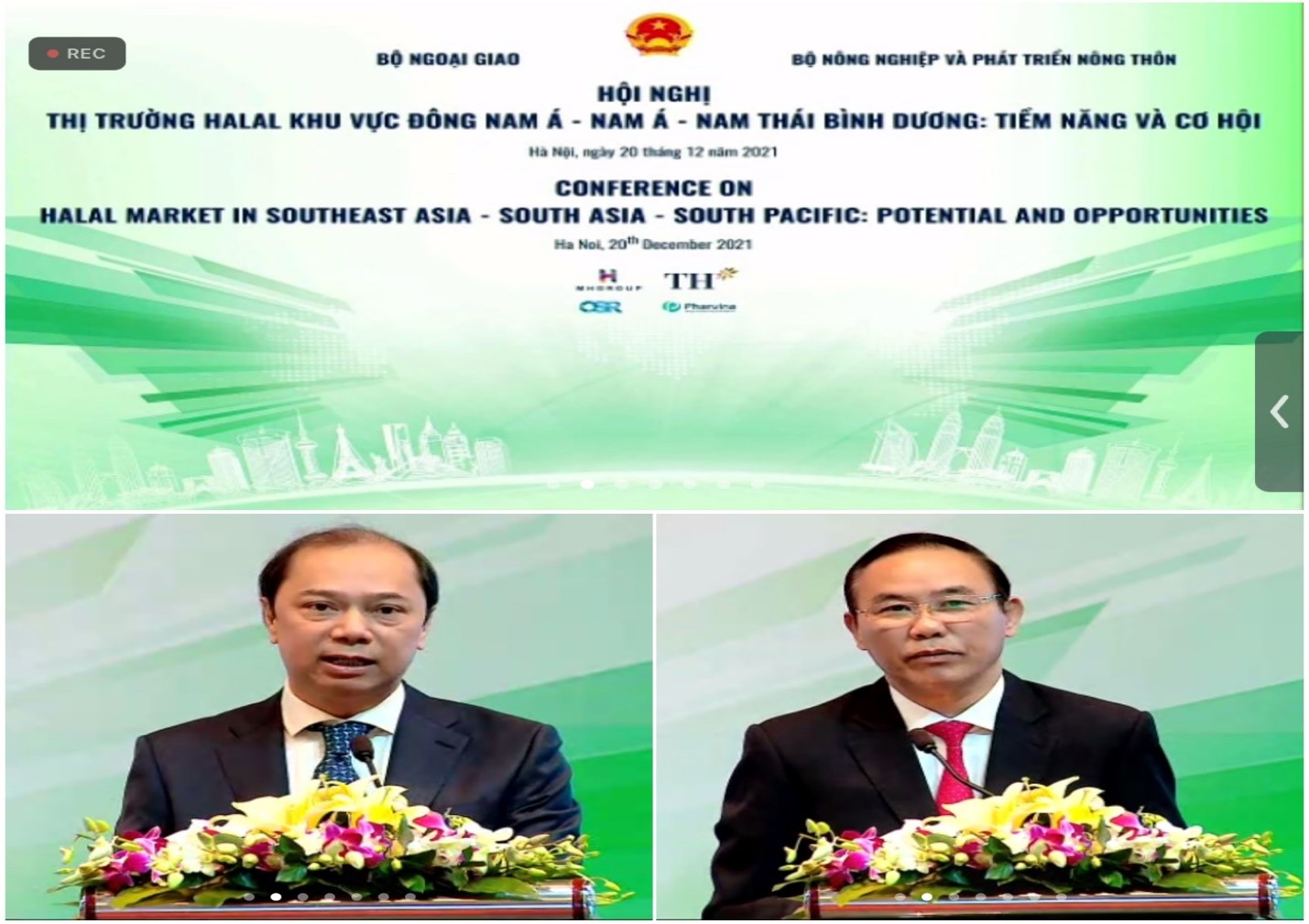
The leaders of the Ministry of Foreign Affairs and the Ministry of Agriculture and Rural Development co-hosted the meeting. Photo: Department of Foreign Affairs.
Mentioned at the meeting, with an increasing number of Islamic populations, the Southeast Asia, Southern Asia, and Southern Pacific regions have been potentially exporting markets for Halal products. In fact, the aforementioned regions are the largest markets for Halal foods consumption, reaching 470 billion USD in 2018 which was divided by Southeast Asia at 230 billion USD, and Southern Asia and Southern Pacific at 238 billion USD. According to experts, Halal market would have continuingly grown shapely ongoing time. Expenditures for Halal foods increased over 3%, have been estimated to reach 1,400 billion USD in 2020, and would grow to 1,900 billion USD by 2024 and 15,000 billion USD by 2050. Explanation for such increasing demand of Halal foods has been not only the growing population of Islam countries but also the current consumption trend, which was Halal foods have met requirements on environment and hygiene safety. In addition, experts emphasized, Halal products would not be at the boundaries of foods, but also expand to cosmetics and pharmaceuticals, that would make contributions to growth of services, finance, marketing, tourism, etc. Another fact has revealed that, Halal market is also related to all phrases of manufacturing, from raw materials, fertilizers, processing, storage, packing, to delivery to consumers.
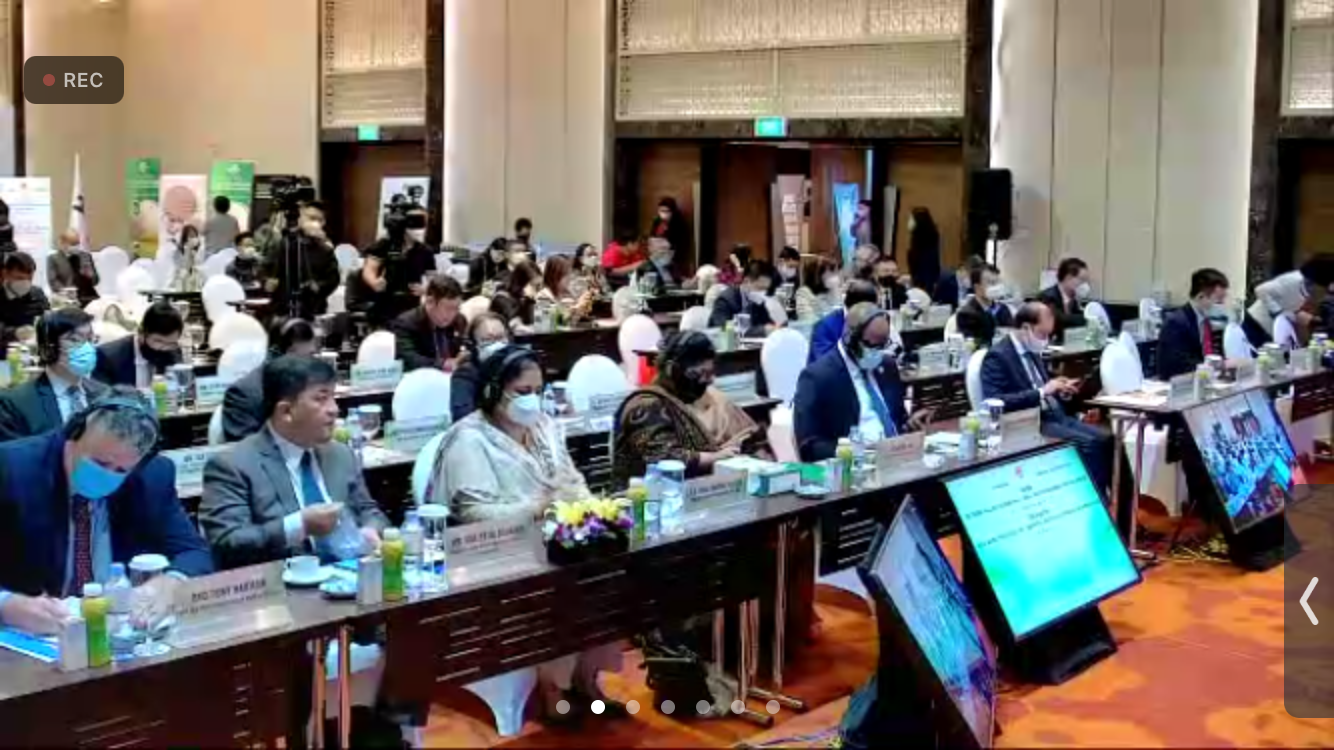
The meeting was organized with both offline and online measures. Photo: Department of Foreign Affairs.
Located in the intersection of the three regions, Vietnam has been carrying many potential to produce and export Halal products to Halal markets. More importantly, Vietnam has belonged to essentially economic links, such as CPTPP, EVFTA or RCEP, that has facilitated approaching Halal market and exporting made – in – Vietnam items, including Halal products. Currently, exporting competence of Vietnamese entrepreneurs to Halal market is not appropriate to their potential. For instance, around 50 Vietnamese companies have received Halal certificates for main products such as seafood, beverages, canned foods, bakery, vegan foods, and pharmaceuticals. Besides, many domestic companies in Vietnam have not understood about Halal culture, regulations on trade, custom, consumption of Islamic culture, etc.
The meeting was an opportunity for enterprises and localities to deepen understanding about Halal market, business culture, expectation, standards, and regulations on Halal labeling, as well as to seek business contracts and connection among entrepreneurs and investors in the regions. The meeting consisted of three sessions: i) overview on Halal market in the Northeast Asia, Northern Asia, and Northern Pacific; ii) promoting activities for Halal market, difficulties and measures for Vietnam, preferential policies of Vietnam for Halal products manufacturing; iii) matching business./.