
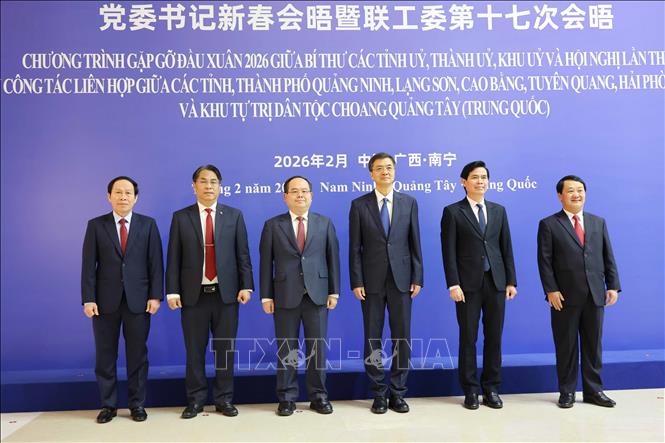
Within the framework of friendly neighborliness and the comprehensive strategic cooperative partnership between Vietnam and China, a significant milestone in local cooperation has been established. On April 15, 2026, the Provincial/City Party Committees of Quang Ninh, Lang Son, Cao Bang, Tuyen Quang, and Hai Phong (Vietnam) and the Party Committee of the Guangxi Zhuang Autonomous Region (China) officially signed the "Agreement on Cooperation in Official Training for the 2026–2027 Period". This step concretizes high-level common perceptions and opens new space for improving the quality of human resources to serve the socio-economic development of border and gateway localities.
Context and Strategic Significance
This agreement was signed at a highly symbolic time. Following the completion of Vietnam's administrative unit rearrangement in 2025 and Hai Phong officially becoming a member of the "Spring Meeting" mechanism, the need for a cadre team with modern thinking and international integration capacity has become more urgent than ever.
The signing not only aims to grasp the common perception between the top leaders of the two Parties and two countries on official training cooperation but also directly targets the overall "6 mores" goal in Vietnam–China relations. Notably, the completed agreement was sent to the Ministry of Foreign Affairs to be displayed during the State visit of General Secretary and President To Lam to China from April 14 to 17, 2026, affirming the special importance of local cooperation within the overall national diplomacy.
Comprehensive and Substantive Cooperation Content
The agreement for the 2026–2027 period focuses on training leadership and management officials at the division level and above, or those in the personnel planning category. Key contents include:
- Thematic Training Programs: Every year, the Guangxi side will invite 08 officials from each Vietnamese province/city to participate in thematic training courses in China.
- Leading Training Fields: The courses focus on contemporary issues and key professional tasks such as Artificial Intelligence (AI), disciplinary inspection, organization, and propaganda. Including AI in the training content demonstrates innovative thinking and the updating of global technology trends in the cadre work of these localities.
- Role of Training Institutions: The Baise Cadre College (Guangxi) is identified as the unit ready to organize training classes according to the specific needs of the five Vietnamese provinces and cities. Conversely, Guangxi also encourages Vietnamese localities to proactively organize delegations of trainees to conduct in-depth research on AI applications.
Implementation Mechanism and Resource Allocation
To ensure effectiveness and sustainability, the agreement clearly defines responsibilities and financial mechanisms. The Guangxi side will cover all costs for food, accommodation, travel, and training while Vietnamese officials participate in classes in China. For training courses held in Vietnam, the costs will be covered by the Vietnamese side.
Preparation for this agreement was methodically carried out through preparatory meetings of the Secretariat and the Joint Working Committee. Delegations from Hai Phong and the border provinces conducted field surveys at AI application cooperation centers and training facilities in Nanning to unify the framework program. Local Departments of Foreign Affairs serve as the focal points, urging and guiding relevant departments to finalize content so that the agreement is implemented substantively and effectively.
Expectations for a Breakthrough in Cadre Quality
With validity extending until the end of 2027, this cooperation agreement is expected to create a new vitality for the cadre team of the five Vietnamese provinces and cities. Through direct access to modern management models and advanced technology in Guangxi, the cadre team will gain more practical experience to advise on and implement local development policies.
The success of the cooperation program between these five provinces/cities and Guangxi will serve as a typical model for substantive and friendly cooperation between the border localities of the two countries, contributing to the building of a strong Vietnam–China community with a shared future.