
In a move signaling a transformative shift in its economic strategy, the Politburo of Vietnam has officially issued Resolution No. 10-NQ/TW regarding the development of the foreign-invested economic sector. Signed by General Secretary and President To Lam, this resolution outlines a comprehensive roadmap for "new-generation" Foreign Direct Investment (FDI), prioritizing quality, technology transfer, and sustainable integration into global value chains.
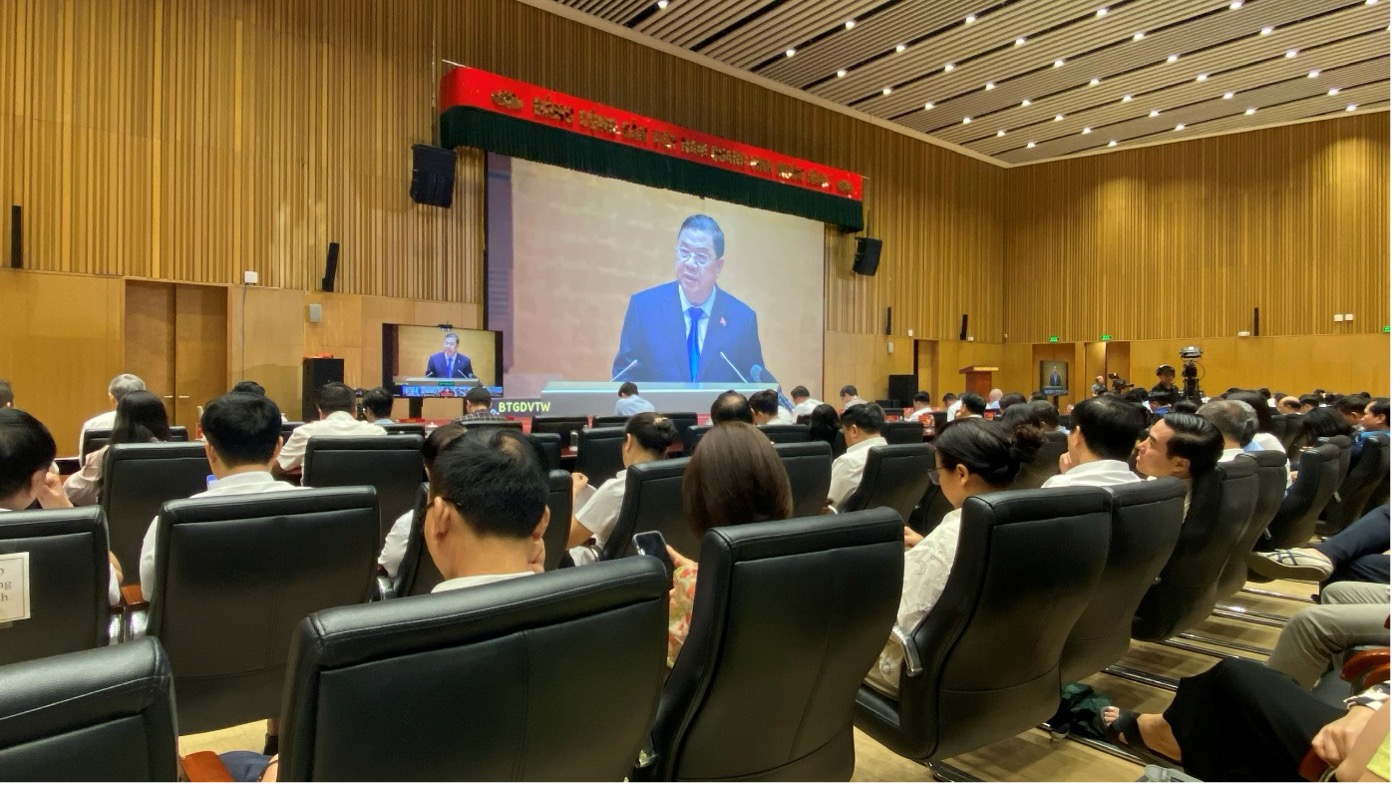
The participants attended the online conference from the Hai Phong location
A Strategic Pivot: From Quantity to Quality
After nearly 40 years of the Doi Moi (Renovation) policy, Vietnam’s FDI sector has become a vital pillar of the national economy, driving growth, modernization, and international integration. However, the Politburo recognizes that previous stages of investment often relied on labor-intensive industries and resource consumption. Resolution 10 marks a fundamental shift in mindset: moving from merely attracting capital to building a national strategic investment platform.
The Vietnamese government is transitioning from a traditional administrative management approach to a development-oriented governance model. Future investment will no longer be viewed through the lens of administrative boundaries but rather through industrial clusters, value chains, and innovation ecosystems. The core criteria for selecting investors will now center on technology transfer, domestic supply chain participation, and high added value.
Ambitious Targets for 2030 and 2045
Resolution 10 sets clear, measurable goals to position Vietnam as a top-tier global investment destination. By 2030, Vietnam aims to be among the leading ASEAN nations in terms of business environment, competitiveness, and innovation. Specific targets for the 2026-2030 period include:
- Registered Capital: Attracting between $200 billion and $300 billion (averaging $40-$50 billion annually).
- Disbursed Capital: Reaching $150 billion to $200 billion.
- High-Tech Sources: Ensuring 75% of FDI originates from developed economies with advanced technology and governance standards.
- Fortune 500 Presence: Increasing the number of Fortune 500 companies investing in Vietnam by 30%, with at least three top-tier global tech firms establishing regional headquarters or R&D centers in the country.
- Localization: Achieving a domestic value-added rate of 45-50% in key industrial sectors, with 10,000 domestic enterprises successfully joining FDI supply chains.
Looking toward 2045, the goal is for the FDI sector to contribute approximately 30% of the national GDP and account for 25% of total social investment, propelling Vietnam into the ranks of high-income, developed nations.
Priority Sectors: Shaping the Future
Vietnam has identified a specific list of core sectors for prioritized investment to ensure strategic autonomy and green growth. These include:
- High-Tech & Electronics: Semiconductor chips, electronic components, and digital equipment.
- Advanced Technologies: Artificial Intelligence (AI), Big Data, Cloud Computing, Internet of Things (IoT), and Blockchain.
- Life Sciences: Advanced biotechnology and biomedicine.
- Energy & Environment: Green energy, advanced materials, and sustainable industrial practices.
- High-Value Services: Modern logistics, supply chain services, and international financial hubs.
Institutional Breakthroughs and Special Procedures
To support these goals, the government is committed to perfecting the legal framework to ensure transparency, stability, and predictability. One of the most significant features of Resolution 10 is the introduction of Special Investment Procedures. These procedures will apply to large-scale, high-tech strategic projects with regional impact, offering streamlined approvals and "surpassing" institutional models in pilot areas like free trade zones and international financial centers.
Furthermore, the resolution emphasizes a shift from traditional entry-based incentives to performance-based support. Incentives will now be tied to specific outcomes, such as the actual implementation of technology transfer, R&D spending, and environmental compliance. Vietnam also reaffirms its commitment to intellectual property protection and the consistent protection of investors' assets and lawful interests.
Empowering the Workforce and Infrastructure
Recognizing that "soft" infrastructure is as critical as "hard" assets, the resolution mandates the development of high-quality human resources. New policies will encourage FDI enterprises to collaborate with domestic universities and vocational centers to train Vietnamese technicians and managers for high-level roles. Additionally, the government will simplify labor permits for foreign experts, particularly in high-tech fields, to facilitate a global talent exchange.
On the physical side, Vietnam will prioritize strategic infrastructure projects, including high-speed railways, international airports, and modern logistics hubs. There is also a strong push to convert traditional industrial parks into eco-friendly and smart industrial zones to meet the ESG (Environmental, Social, and Governance) standards required by modern global investors.
Implementation: A National Commitment
To ensure these policies are not just on paper, the Politburo held a National Conference on June 30, 2026, chaired by General Secretary and President To Lam, to disseminate the resolution across all levels of government. Localities like Hai Phong have already begun formulating specific action plans to build "new-generation FDI ecosystems" tailored to their unique geographical advantages.
The government will also launch a National Investment One-Stop Shop portal, digitizing the entire investment process to reduce compliance costs and processing times. This will be complemented by a more proactive, data-driven approach to investment promotion, focusing on negotiating directly with strategic partners rather than broad, unfocused campaigns.
Vietnam's Resolution 10 is a clear signal to the global community: the country is ready to partner with investors who bring not just capital, but innovation and sustainability. By aligning investor success with national development goals, Vietnam aims to remain one of the most competitive and safe investment destinations in Asia for decades to come.