
“BS The "BS ULSAN" vessel, part of a series of eight oil/chemical tankers ordered by South Korea, was successfully launched, reaffirming the shipbuilding capabilities of Hai Phong-based enterprises.
Pha Rung Shipyard Co., Ltd. (a one-member limited liability company) has organized the launching ceremony of a 13,000-ton oil/chemical tanker destined for export to South Korea.
The newly launched vessel, hull number YN-02 and named “BS ULSAN” (after the major industrial city in South Korea), is the second in a series of eight oil/chemical tankers ordered by Y-ENTEC, a South Korean shipowner. The first ship, “BS HAI PHONG,” was launched in May 2024 and handed over in late November 2024. The vessel’s name represents the comprehensive strategic partnership and friendship between Vietnam and South Korea over the years and into the future.
According to Mr. Vu Huu Chien, General Director of Pha Rung Shipyard, “Despite various challenges—particularly the heavy impact of Typhoon No. 3 (Yagi) and a shortage of skilled technical labor in the shipbuilding industry—Pha Rung has worked tirelessly to complete and successfully launch the ‘BS ULSAN’.”
It is known that the 13,000-ton oil/chemical tanker BS ULSAN has a length of 128.6 meters, a beam of 20.4 meters, a depth of 11.5 meters, and a draft of 8.7 meters. The ship was designed by FESDEC – South Korea and is classed by Korean Register (KR). BS ULSAN will be completed and delivered to the shipowner in June 2025. According to the plan, the next ships in the series will be completed and handed over approximately every five months.
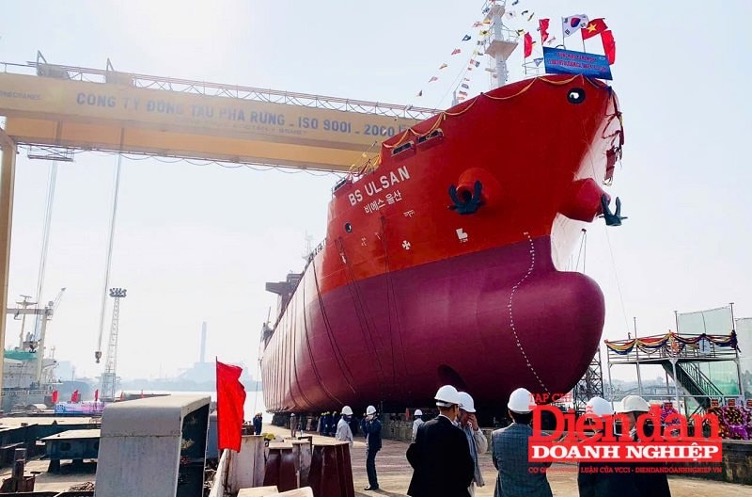
Immediately after the successful launch of BS ULSAN, Pha Rung commenced keel-laying of the third ship, hull number YN-03.
According to the reporter’s findings, in order to successfully build a vessel that meets the stringent requirements of the client, Pha Rung had to use over 3,000 tons of imported steel, certified by Korean Register. Similarly, the amount of imported piping used was many times greater than other ship types, reaching more than 300 tons, of which over 100 tons were stainless steel piping specifically for chemical cargo. In terms of technology, the vessel requires a high degree of automation and is equipped with Framo hydraulic pump systems.
The ship is also fitted with nitrogen generation equipment used for inerting chemicals during cargo operations. The vessel’s bow is designed in a bulbous shape – a popular design in shipbuilding, especially for large cargo ships and cruise ships – to reduce water resistance, improve efficiency and speed, reduce noise, and decrease vibration. The anchor and anchor handling gear are also located at the bow. The BS ULSAN, and all ships in this series, are specially designed to carry both chemicals and oil, making them more advanced than standard oil tankers, with the ability to carry multiple types of products at once via 12 dedicated cargo tanks.
Mr. Vu Huu Chien shared more about the construction process of BS ULSAN: “With the first vessels, all parties faced many difficulties and shortages, from design changes to the lack of experience of engineers, insufficient skill among workers, lack of equipment, and especially Typhoon No. 3 (Yagi), which caused great damage and significantly affected the project’s schedule and delivery timeline. At one point, the shipowner had serious concerns about the project’s continuation.”
“However, with determination and solidarity among the engineering team, shipyard workers, and the shipowner, challenges were gradually overcome. Encouraging news from the captain of the first ship currently in operation – praising its excellent quality – provided timely motivation for the project team. Now, the successful launch of the second vessel and keel-laying of the third stands as recognition of our tireless efforts,” Mr. Chien affirmed, pledging that the quality of the next ships will continue to improve and that construction timelines will be further reduced.
Pha Rung’s ability to secure bulk orders for new oil/chemical tankers from South Korea helps affirm the capabilities of Hai Phong’s shipbuilding sector in particular, and Vietnam’s in general, in the eyes of international partners, including major South Korean shipowners. To date, Hai Phong shipyards are making constant efforts to invest in and upgrade equipment, apply high levels of automation, improve workforce skills, optimize production and labor costs, and meet the demanding requirements of global shipowners.
In addition, the construction of this series of eight oil/chemical tankers, along with other repair and newbuild projects, has helped Pha Rung ensure stable employment for thousands of workers, with orders secured until mid-2027.