
Hai Phong is one of the major cities in Vietnam, with a large population and rapid urbanization. In recent years, the volume of household solid waste (HSW) in the city has increased rapidly due to population growth and urbanization. On average, the city generates about 2,010 tons of HSW daily, specifically:
- The volume of urban household solid waste is approximately 1,030 tons per day, which is collected, transported, and treated at two sanitary landfills: Trang Cat and Dinh Vu (about 880 tons per day is disposed of in a sanitary manner; around 150 tons of food/organic waste, bulky waste, and recyclable household solid waste are treated at the Trang Cat solid waste treatment complex and sold as scrap). The rate of urban HSW collected, transported, and treated in a sanitary manner reaches 100%.
- The volume of rural household solid waste is about 980 tons per day. The amount of waste collected, transported, and treated is approximately 970 tons per day, of which about 850 tons per day is treated in a sanitary manner (about 540 tons are treated through sanitary landfill/incineration; around 310 tons of food/organic waste and recyclable waste are used for animal feed/composting, and sold as scrap); the remaining waste is treated at 57 temporary landfills in rural areas, mainly through simple burial, which does not meet technical and environmental standards. The collection and treatment rate is 99%, with sanitary treatment reaching about 87%.
The increase in household solid waste, especially the rapid rise in non-biodegradable plastic and nylon waste, along with the lack of appropriate treatment solutions, poses potential instability for local socio-economic development.
Organizing Awareness Campaigns on HSW Classification
Recognizing that the task of raising awareness and implementing household solid waste classification at source is a key mission in implementing the 2020 Environmental Protection Law and Resolution No. 27/NQ-HĐND, since 2022, the city’s People's Committee has directed the organization of many awareness campaigns on household solid waste classification at source, collection, transportation, and treatment of solid waste. Specifically, in 2022, the city organized 16 city-level awareness campaigns in 11 districts for about 3,000 key officials from districts, communes, wards, towns, and political-social organizations; 30 facilities for collecting, transporting, and treating solid waste in the city. In 2023, based on the results of the 2022 implementation, a pilot model for household solid waste classification was implemented in 57 communes, wards, and towns (about 20%) in the districts; 45 awareness campaigns and 44 inspections were organized in the districts. In 2024, following Plan No. 331/KH-UBND dated December 25, 2023, of the city’s People's Committee to implement household solid waste classification at source, the entire city organized 750 awareness campaigns with approximately 90,000 participants.
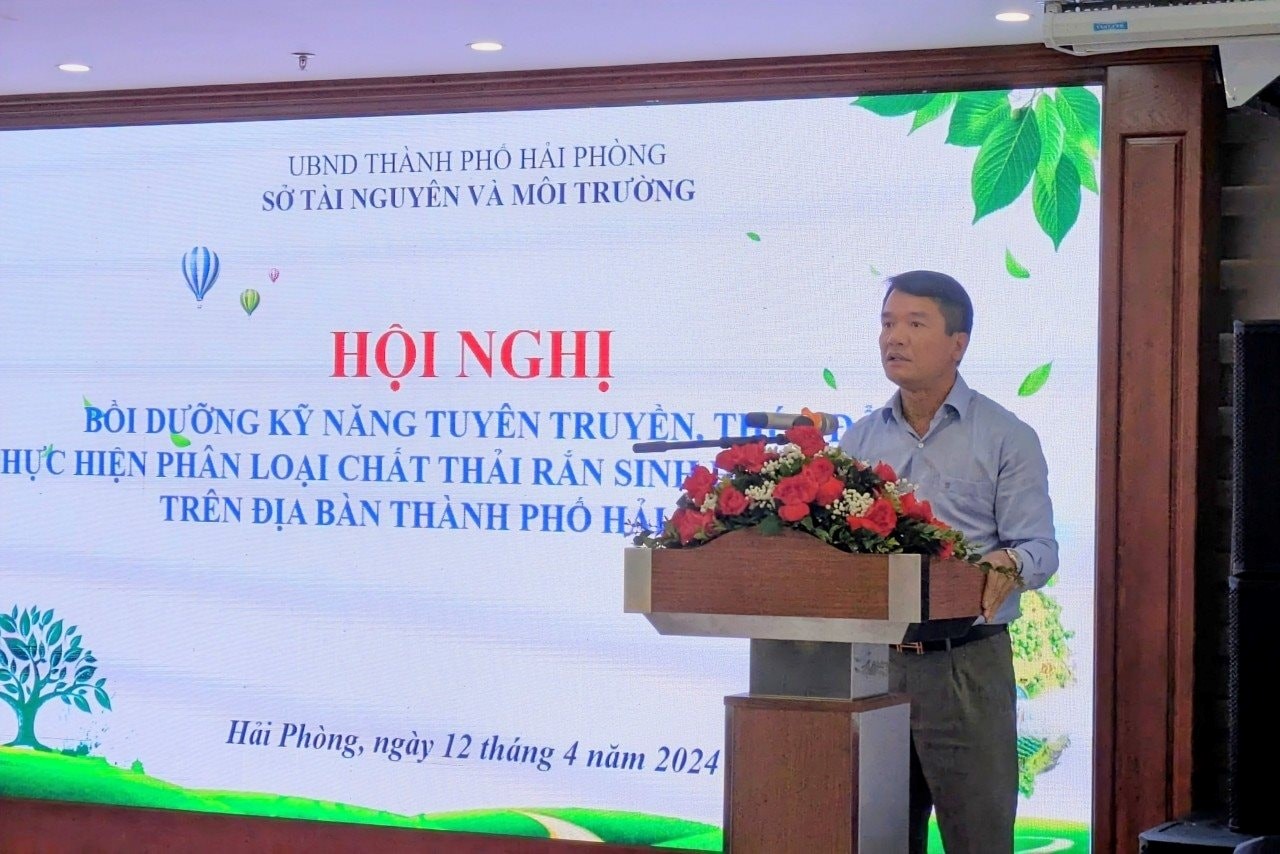
The leaders of the Department of Natural Resources and Environment spoke at the Conference on Training Skills for Promoting Household Solid Waste Classification at Source
Promoting HSW Classification in Residential Areas
Localities have implemented various programs and activities to classify household solid waste at source and enhance the collection and transportation of solid waste. In urban areas, recyclable plastic waste, organic food waste, and bulky waste are separately collected and transported for treatment at the plastic waste preprocessing line, composting plant, and bulky waste treatment line at the Trang Cat solid waste treatment complex. In rural areas, recyclable waste is sorted by collection units, and organic waste is treated at households or collection points and temporary landfills using organic composting methods with microbial preparations. Regular solid waste and hazardous waste are classified, stored, and contracted with units that have the function of transportation and treatment according to regulations.
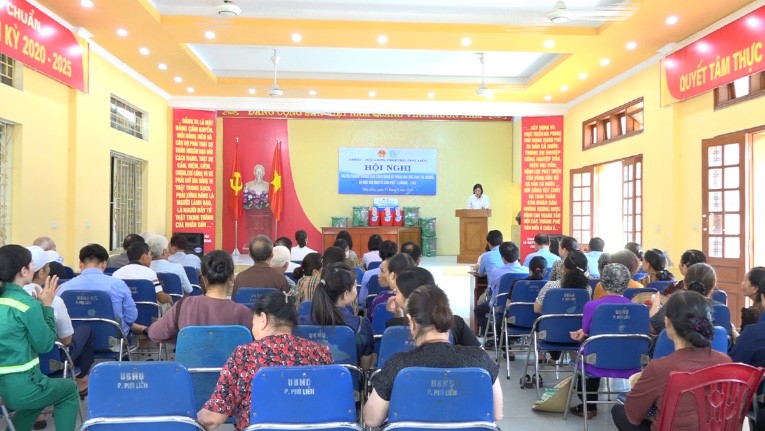
Awareness and Guidance Conference on Household Solid Waste Classification at Source held at Quy Tức 2 Residential Group, Phu Lien Ward, Kien An District
Promoting HSW Classification in Residential Areas
Localities have implemented various programs and activities to classify household solid waste at source and enhance the collection and transportation of solid waste. In urban areas, recyclable plastic waste, organic food waste, and bulky waste are separately collected and transported for treatment at the plastic waste preprocessing line, composting plant, and bulky waste treatment line at the Trang Cat solid waste treatment complex. In rural areas, recyclable waste is sorted by collection units, and organic waste is treated at households or collection points and temporary landfills using organic composting methods with microbial preparations. Regular solid waste and hazardous waste are classified, stored, and contracted with units that have the function of transportation and treatment according to regulations.
Awareness Activities by Local Authorities
The Department of Information and Communications, the city’s electronic portal, local media agencies (Hai Phong Radio and Television, Hai Phong Newspaper, Hai Phong Security Newspaper), and representatives and correspondents of central media agencies in the city regularly update, inform, and promote new regulations on the collection, transportation, and treatment of solid waste according to the 2020 Environmental Protection Law, Resolution No. 27/NĐ-HĐND, and directives and guidelines from the central government and the city regarding solid waste management.
In addition, the dissemination of legal documents, regulations, and directives from the city related to household solid waste classification at source, collection, transportation, treatment of solid waste, and responsibilities for recovering and treating packaging and discarded products from manufacturers and importers is carried out through various forms and methods of communication, including newspapers, television, the Internet, community information systems, conferences, seminars, extracurricular programs, and competitions. The target audience includes environmental protection workers at all levels; members of the Fatherland Front at all levels and political-social organizations; organizations, households, individuals in the city; students at all levels; and facilities involved in the collection, transportation, treatment, and recycling of solid waste.
The party committees, local authorities, departments, branches, the Vietnam Fatherland Front Committee, and political-social organizations in the city are currently focusing on building programs and plans to implement Directive No. 34-CT/TU dated November 18, 2024, of the City Party Committee on strengthening leadership and direction from party committees at all levels regarding household solid waste classification at source in Hai Phong city.
Hai Phong is making continuous efforts to raise public awareness about household solid waste classification at source. These awareness and educational activities will play an important role in improving the quality of the living environment, aiming for a green, clean, and beautiful city. To achieve this goal, active community participation is essential.