
Amid the accelerating process of globalisation and the rapid advancement of the Fourth Industrial Revolution, cities are increasingly assuming a central role within global networks of economics, finance, logistics and innovation. The concept of a “global city” is no longer confined to mega-cities such as New York, London or Tokyo, but is expanding to include port cities, logistics hubs and emerging growth poles across Asia. Within this context, Hai Phong, the largest port city in northern Viet Nam is presented with a significant opportunity to enhance its international standing and progressively integrate into the network of global cities.
In recent years, Hai Phong has achieved a high rate of economic growth, witnessed significant advances in transport infrastructure, steadily expanded its logistics capacity, and deepened its international integration. However, in order to be recognised as a “global city”, Hai Phong must be assessed against a range of international criteria relating to connectivity, competitiveness and global integration. Studying global city indices not only helps to position Hai Phong within the international urban system, but also provides an important foundation for formulating long-term development strategies.
GaWC index
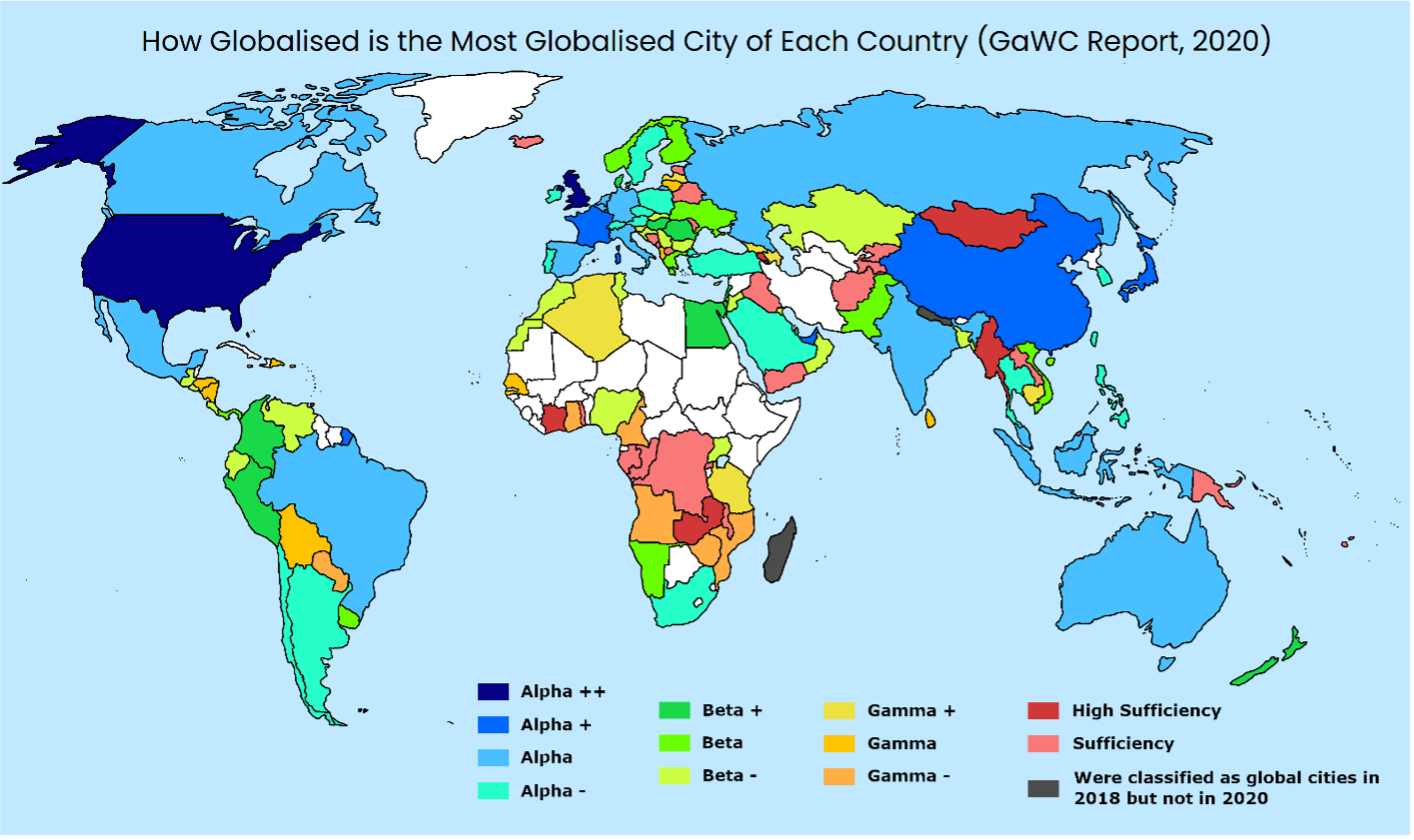 GaWC Global City Classification Index (GaWC Report, 2020) (Photo: Internet)
GaWC (the Globalization and World Cities Research Network) is one of the world’s most authoritative systems for assessing “global cities”, developed by Loughborough University in the United Kingdom. Unlike many indices that focus primarily on economic scale or population size, GaWC places particular emphasis on a city’s “degree of global connectivity”, measured through networks of advanced international services such as finance, banking, law, accountancy, advertising, auditing and management consultancy.
GaWC argues that a global city is not merely a place with a large economy, but more importantly one that is capable of participating in the networks that coordinate the world economy. The more international service corporations concentrated within an urban centre, the greater its capacity to connect global flows of capital, knowledge, information and trade. Consequently, the GaWC index provides a clear reflection of a city’s “level of integration” and its role within the global economic system.
According to GaWC’s classification system, cities are divided into the Alpha, Beta and Gamma categories. The Alpha group comprises global economic command centres such as London, New York, Tokyo and Singapore. The Beta group consists of cities with a high degree of international integration that play important roles in regional connectivity, while the Gamma group includes urban centres with influence primarily at the regional or national level.
According to the 2024 rankings, Viet Nam currently has two cities classified by GaWC: Ho Chi Minh City in the Beta+ category and Ha Noi in the Beta category. Meanwhile, Hai Phong has not yet been included in this evaluation system. This reflects the reality that, despite its outstanding advantages in seaport infrastructure and logistics, Hai Phong has yet to develop a comprehensive ecosystem of high-end international services - a core characteristic of a modern global city.
However, when viewed from the perspective of international logistics and maritime connectivity, Hai Phong possesses a number of favourable foundations to gradually strengthen its position within the global urban network. The development of a free trade zone, an international logistics hub, maritime financial and insurance services, and a modern marine economic ecosystem could become important drivers enabling Hai Phong to progressively meet GaWC’s criteria in the future.
The Global Cities Index by Oxford Economics
Unlike GaWC, which focuses primarily on the connectivity of international service networks, Oxford Economics assesses cities through a broader range of criteria, including economic scale, labour productivity, the investment and business environment, quality of life, resilience, and sustainable development.
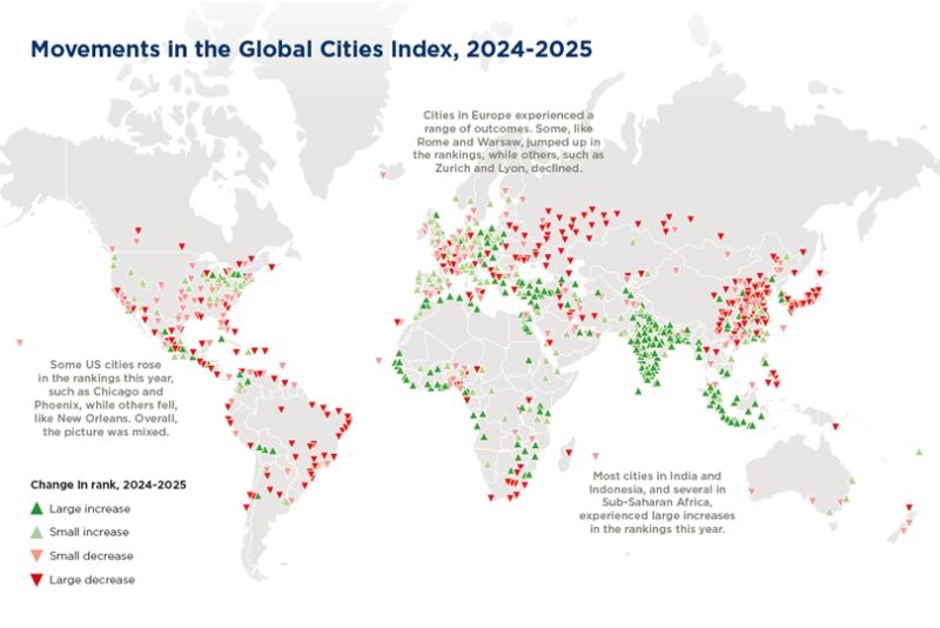
Global Cities Index 2024–2025 by Oxford Economics (Photo: Internet)
This index reflects the “overall development capacity” of a city in the long term. A city must not only achieve rapid growth, but also possess the ability to sustain quality of life, develop human capital, and create a competitive and sustainable international environment.
For Hai Phong, a number of criteria within the Oxford Economics assessment framework are showing positive signs. The city has maintained a high GRDP growth rate over many consecutive years and has emerged as one of the key growth poles in northern Viet Nam. Its economic scale continues to expand, while its logistics capacity and manufacturing industry have developed strongly, driven by the presence of numerous multinational corporations.
In particular, Hai Phong is emerging as one of Viet Nam’s leading destinations for foreign direct investment, attracting major enterprises in the fields of high technology, electronics, and smart manufacturing. This demonstrates the city’s increasingly deep integration into global value chains.
However, when assessed against the standards of Oxford Economics, Hai Phong still needs to further improve the quality of its urban infrastructure, public services, living environment, and innovation ecosystem. These are decisive factors in enabling a city to transition from an industrial growth model to one based on urban innovation and sustainable development.
The Global Power City Index (GPCI)
The Global Power City Index (GPCI), developed by the Mori Memorial Foundation of Japan, is one of the most influential indices in global urban studies. GPCI evaluates the competitive strength of cities across six key dimensions: economy, research and development, cultural interaction, liveability, accessibility, and the natural environment.
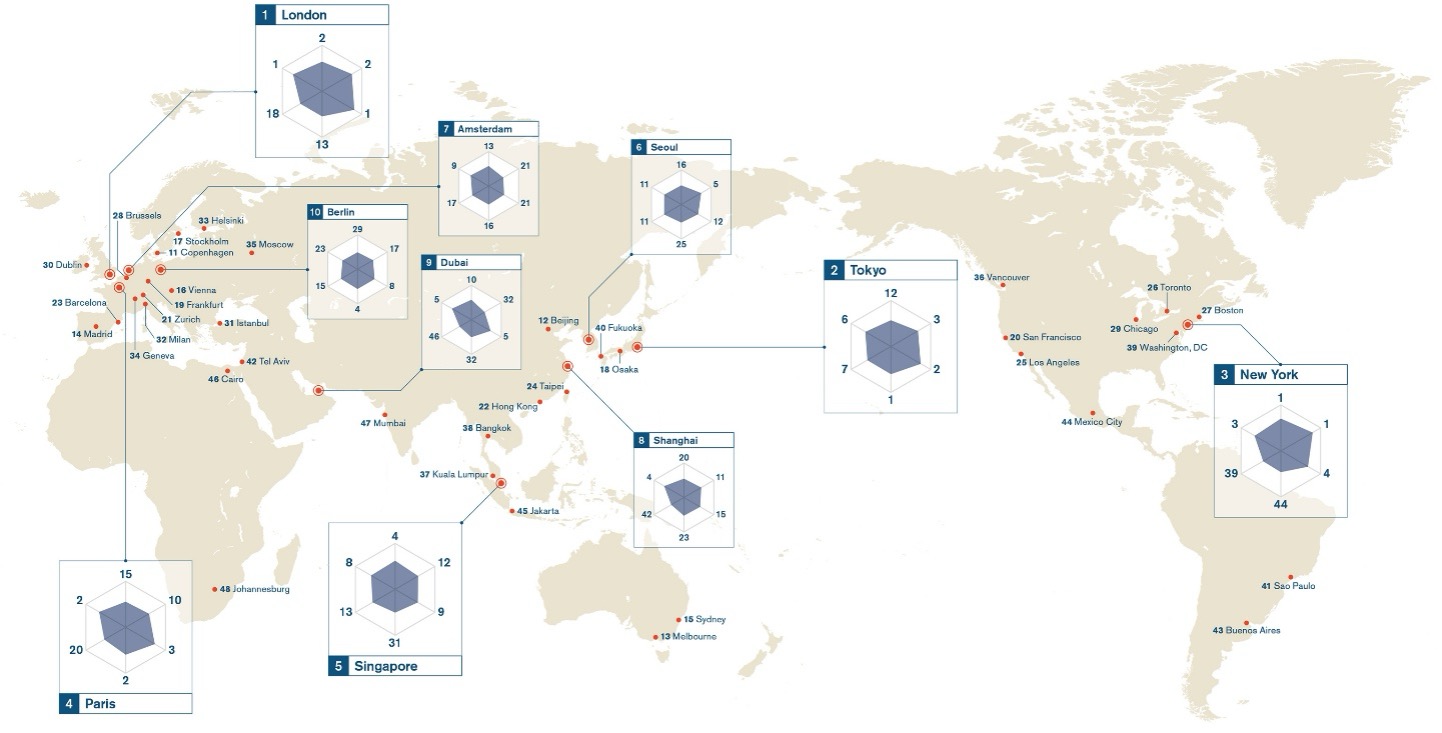
Global Power City Index (GPCI) (Photo: LinkedIn)
A distinctive feature of GPCI is its approach to cities from the perspective of “comprehensive attractiveness”. A global city is not only economically strong, but must also possess the ability to attract professionals, investors, tourists, and international communities to live, study, and work there.
For Hai Phong, this is a relatively suitable index as it reflects quite comprehensively the distinctive advantages of the port city. Most notably, the criterion of “accessibility” is strongly supported by its multimodal transport system, comprising seaports, an international airport, expressways, railways, and inland waterways. This is a rare advantage that sets Hai Phong apart from many other localities in Viet Nam.
In addition, UNESCO’s recognition of Ha Long Bay - Cat Ba Archipelago and the Yen Tu - Vinh Nghiem - Con Son, Kiep Bac Complex of Monuments and Landscapes as World Heritage Property has further enhanced the city’s cultural value and international appeal.
However, Hai Phong still faces a considerable gap in the areas of scientific research, innovation, and the attraction of high-quality international talent. These are fields in which leading Asian cities such as Singapore, Tokyo, and Shanghai possess overwhelming advantages.
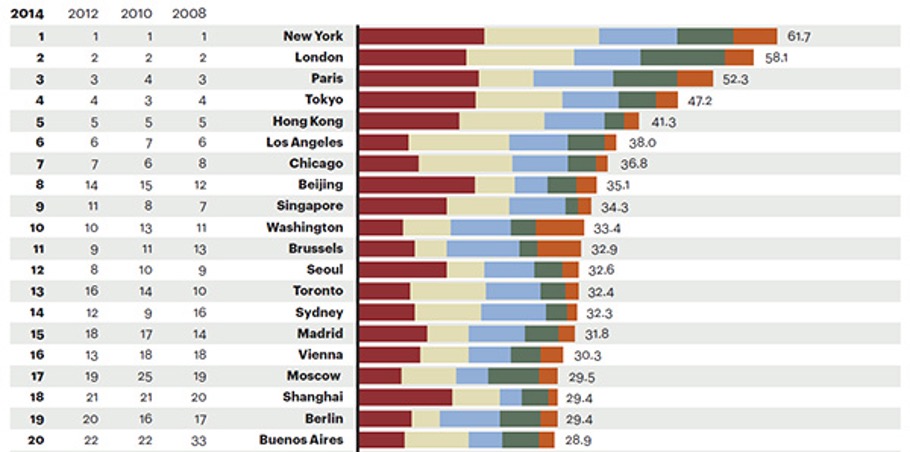
A.T. Kearney Global Cities Index (Photo: LinkedIn)
The Global Cities Index by A.T. Kearney
A.T. Kearney’s Global Cities Index assesses the international influence of cities based on five groups of criteria: business activity, human capital, information exchange, cultural experience, and political engagement at the international level.
Unlike GaWC, which focuses primarily on economic connectivity, A.T. Kearney’s index emphasises the “comprehensive international influence” of a city. A global city must not only serve as a business hub, but also as a centre for knowledge, culture, information, and international diplomatic activities.
In recent years, Hai Phong has experienced strong growth in business activities and international investment attraction. The city is now one of Viet Nam’s largest centres for industry, logistics, and import-export activities. At the same time, Hai Phong has significantly expanded its international cooperation with numerous localities, organisations, and global enterprises.
However, the criteria relating to human capital, knowledge exchange, and international financial services remain significant limitations. The city has yet to establish well-defined regional centres for finance, research and development, or innovation ecosystems. This indicates that Hai Phong requires a long-term strategy focused on international education, the development of high-quality human resources, and the knowledge economy.
The UNCTAD Liner Shipping Connectivity Index
For a port city such as Hai Phong, the UNCTAD Liner Shipping Connectivity Index is of particular significance. This index reflects the degree of connectivity between a seaport system and the global maritime transport network through indicators such as the number of shipping routes, the presence of international shipping lines, the size of container vessels, and the frequency of international connections.
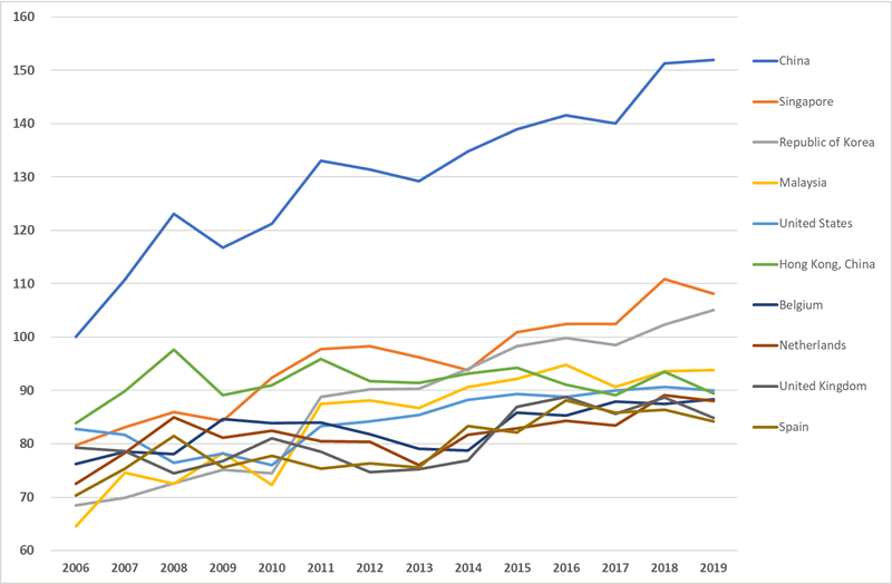
UNCTAD Liner Shipping Connectivity Index (Source: unctad.org)
This index measures the “logistics integration capacity” of an economy or urban area. The higher a city’s level of maritime connectivity, the greater its advantages in international trade, logistics cost reduction, and export-import competitiveness.
At present, Hai Phong is the largest seaport centre in northern Viet Nam, with the Lach Huyen deep-water port system capable of accommodating large vessels operating direct routes to Europe and North America. The city is also among the ports with the highest container throughput in Viet Nam, serving as the logistics hub of the northern region.
In the future, the expansion of the seaport system, the development of smart logistics, and enhanced connectivity with the Lao Cai - Ha Noi - Hai Phong railway corridor will help the city significantly strengthen its position within the global transport network.
The IATA Air Connectivity Index
The Air Connectivity Index developed by the International Air Transport Association (IATA) reflects the degree of international integration of a city through its aviation network.
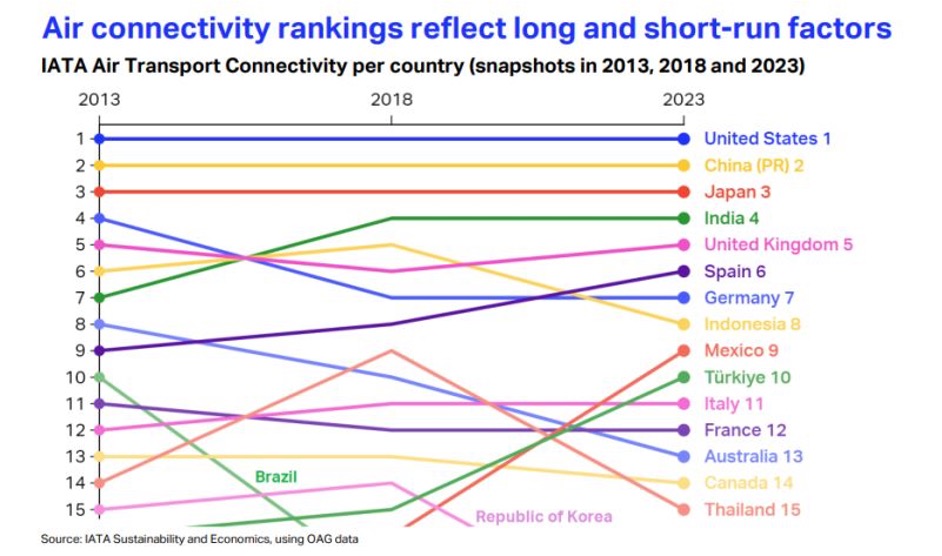
The IATA Air Connectivity Index (Source: LinkedIn)
The Air Connectivity Index developed by the International Air Transport Association (IATA) reflects the degree of international integration of a city through its aviation network.
The essence of this index lies in the ability to connect people, goods, tourism, and international trade. A city with strong air connectivity enjoys significant advantages in attracting investment, developing services, and promoting international exchange.
At present, Cat Bi International Airport is undergoing expansion in order to increase both passenger and cargo handling capacity. This is an important factor in strengthening Hai Phong’s links with major economic centres in the region, including South Korea, China, Japan, and Southeast Asia.
In the long term, if additional direct international routes and modern air logistics systems are developed, Hai Phong could emerge as a new growth pole in northern Viet Nam.
The DHL Global Connectedness Index
DHL developed the Global Connectedness Index based on the flow of goods, capital, information, and people between countries and cities.
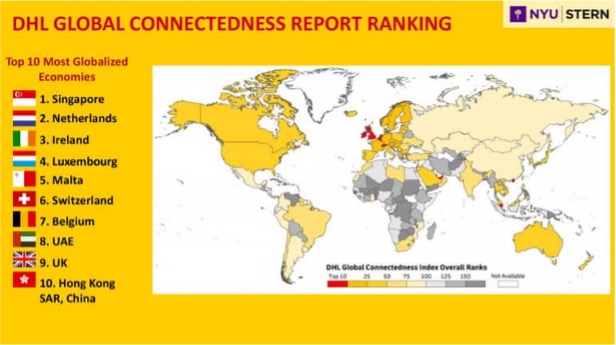
DHL Global Connectedness Index (Photo: Moneycontrol.com)
Unlike indices that focus solely on the economy or infrastructure, DHL evaluates the “substantive level of globalisation” of a locality. The stronger a city’s international flows, the greater its ability to participate deeply in global economic networks.
For Hai Phong, its most prominent advantage at present lies in the flow of international goods and investment, supported by its well-developed seaport system, industrial zones, and logistics sector. However, its capacity for connectivity in technology, knowledge, and high-quality services remains limited in comparison with leading global centres in the region.
This indicates that the city needs to continue promoting digital transformation, developing the digital economy, and improving the quality of its human resources in order to expand its global connectivity across multiple sectors.
The Provincial Competitiveness Index (PCI) and the Public Administration Reform Index (PAR Index)
Although these are domestic indices, PCI and the PAR Index provide a relatively clear reflection of a locality’s governance capacity, investment and business environment, and the effectiveness of urban administration.
These indices measure the “quality of institutions” - a factor that is playing an increasingly decisive role in global competition among cities. A city seeking to attract international investment and achieve sustainable development must possess a transparent, efficient, and business-friendly administrative system.
For many consecutive years, Hai Phong has ranked among the leading localities nationwide in both the PCI and the PAR Index. This demonstrates that the city possesses a strong governance foundation, a firm commitment to administrative reform, and a favourable investment environment.
This is a highly important advantage in the context of increasingly intense competition for foreign direct investment. At the same time, it provides a basis for Hai Phong to gradually transition from a “management-oriented government” to a “development-oriented government”, in line with the requirements of a modern internationally integrated city.
Viewed comprehensively through international index systems such as GaWC, Oxford Economics, GPCI, A.T. Kearney, UNCTAD, IATA, and DHL, it can be seen that Hai Phong is gradually accumulating many of the conditions necessary to participate more deeply in the network of global cities. The city not only serves as the largest seaport centre in northern Viet Nam, but is also emerging as a strategic growth pole for high-tech industry, logistics, international trade, and the marine economy.
Hai Phong’s most notable strengths lie in its unique geo-economic position, its integrated multimodal transport infrastructure, its expanding logistics capacity, its significantly improved investment environment, and its economic growth rate, which remains among the highest in the country. The city’s continued success in attracting multinational corporations, expanding international relations, and integrating more deeply into global supply chains demonstrates its increasingly important role in international connectivity.