
In 2025, the world not only experienced geopolitical fluctuations but also witnessed a fundamental change in the nature of integration. International integration is no longer simply about opening commodity markets or participating deeply in industrial supply chains, but has advanced to a stage of integration based on green standards and core technology.
Vietnam, as one of the world's most "open economies," faces a major test: How to maintain independence and autonomy while penetrating deeply into technological ecosystems characterized by strategic competition between powers.
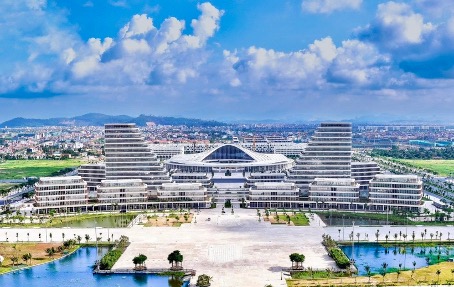
(North Song Cam Political-Administrative Center - Collected Image)
Strategic Touchpoints in 2025
- From "Internalizing Laws" to "Shaping the Rules of the Game": The most profound shift in 2025 lies in legal thinking. Instead of passively implementing commitments from FTAs, Vietnam has proactively built anticipatory laws (Law on Digital Technology Industry, Law on Science, Technology, and Innovation). This is an assertion of sovereignty in digital space. Harmonizing laws not only helps businesses avoid international legal risks but also creates a "filter" to attract high-tech FDI flows instead of labor-intensive and polluting projects.
- Green Economic Integration: From "Barrier" to "Lever": Mechanisms such as CBAM (carbon tax) or the EU's EUDR (anti-deforestation regulation) are often seen as challenges. However, looking deeper, 2025 witnessed Vietnam turning these standards into a basis for economic restructuring. Vietnam has begun repositioning industrial parks according to the "Eco-Circular" model. Integration now acts as a necessary pressure to force traditional economic sectors to upgrade, or face exclusion from the global arena.
- Shift from Pillars to Ecosystems: International integration in 2025 no longer operates under separate "pillars" (Politics - Economy - Culture) but has shifted to an Integrated Ecosystem model. Clearly, high-level political diplomatic activities are materialized through cooperation agreements on education and training (semiconductor human resource training) and economy (green trade contracts...). This intertwining creates a sustainable foreign affairs "posture," where Vietnam's interests are closely linked with those of leading partners.
Despite many achievements, we need to recognize the "bottlenecks" hindering the pace of breakthroughs: (1) Technology absorption capacity: The localization rate in Vietnam's high-tech industries remains low, and the "linkage" between the FDI sector and domestic enterprises is still loose; (2) Non-traditional security risks: Dependence on international digital platforms poses challenges for data sovereignty and cybersecurity; (3) Skill gaps: The team of experts capable enough to participate in international trade disputes or negotiate new technical standards is still thin.
Strategy for 2026: In 2026, Vietnam needs to implement a revolution in integration methods with the following focuses:
- "Core Technology" Integration – Building Digital Sovereignty: Instead of being just an assembly site, Vietnam must integrate to become a Research and Development (R&D) center, focusing on the semiconductor value chain and AI. There is a need for "innovation special zones" with superior sandbox mechanisms to attract technology "eagles" to not only invest in factories but also establish research institutes.
- Energy Diplomacy and Climate Integration: Amidst global energy shortages and pressure to reduce emissions, Vietnam has advantages in renewable energy (wind, solar) with a strategy to integrate deeply into the regional grid (ASEAN Power Grid) and international carbon financial mechanisms. Vietnam needs to become a regional "green energy transit hub".
- Upgrading Localities into "New Generation Integration Gateways": Six key localities (Hanoi, Ho Chi Minh City, Hai Phong, Da Nang, Hue, Can Tho) must be "integration driving regions".
- Hai Phong: Must become an international-scale green gateway port.
- Da Nang: Positioned as a regional digital service and semiconductor center.
- Ho Chi Minh City: To become an international financial center associated with the digital economy.
- Protecting National Interests in "Open Space": Deeper integration brings greater vulnerability; thus, the solution is to build an early warning system for geopolitical fluctuations affecting supply chains while improving legal capacity to protect national brands and Vietnamese enterprises in the global digital environment.
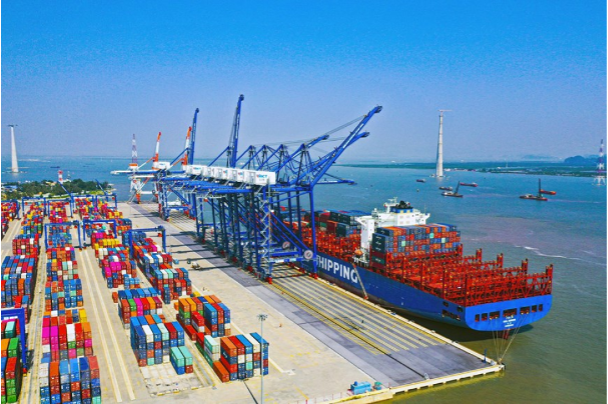
(International Container Terminal - Collected Image)
Based on Report No. 9567/BC-BNG-CSĐN of the Ministry of Foreign Affairs and documents implementing Resolution 59-NQ/TW of the Politburo, below is a detailed comparison table of indicators and key tasks between the results achieved in 2025 and the strategic plan for 2026:
| Field | Outstanding Results in 2025 | Key Plans for 2026 |
| Institutions & Organization | Consolidated the National Steering Committee for the first time, 06 localities participated. | Complete the legal framework for digital transformation and green economy; increase the frequency of monitoring the implementation of international commitments. |
| Economy & Trade | Effectively exploited 16 FTAs; initial response to carbon tax (CBAM) and anti-deforestation regulations (EUDR). | Promote next-generation FTAs; participate in building global "rules of the game" for digital trade and AI; promote green finance. |
| Science & Technology | Attracted FDI in semiconductors and AI; started implementing technology "sandboxes". | Core technology integration: Shift from assembly to R&D; attract overseas Vietnamese intellectuals to support high-tech. |
| Politics & Security | Upgraded strategic partnerships; participated in UN peacekeeping forces. | Proactively propose initiatives at ASEAN and the UN; protect national interests "early and from afar" in cyberspace. |
| Local Capacity | 06 localities (Hanoi, Ho Chi Minh City, Hai Phong, Da Nang...) played a core role in integration. | Localities promote green investment promotion and smart cities. |
| Human Resources & Communication | Universalized awareness of international integration in the new situation; fostered basic digital skills. | Train international law experts and semiconductor experts; step up multi-language external communication at the grassroots level. |
Assessment of Strategic Shift: The above comparison shows a clear shift in Vietnam's integration thinking from the "opening and adapting" stage to the "proactive and creative" stage: (1) From Breadth to Depth: 2025 focused on consolidating the apparatus and maintaining traditional markets, while 2026 aims to penetrate high-value-added technology industries (semiconductors, clean energy) to escape the middle-income trap; (2) Integration Associated with Resilience: The 2026 plan emphasizes building "digital sovereignty" and "data sovereignty," meaning integrating without depending; (3) Action at the Grassroots: A new feature of 2026 is bringing international integration from high-level forums down to reality at commune-level units, special zones, and SMEs.
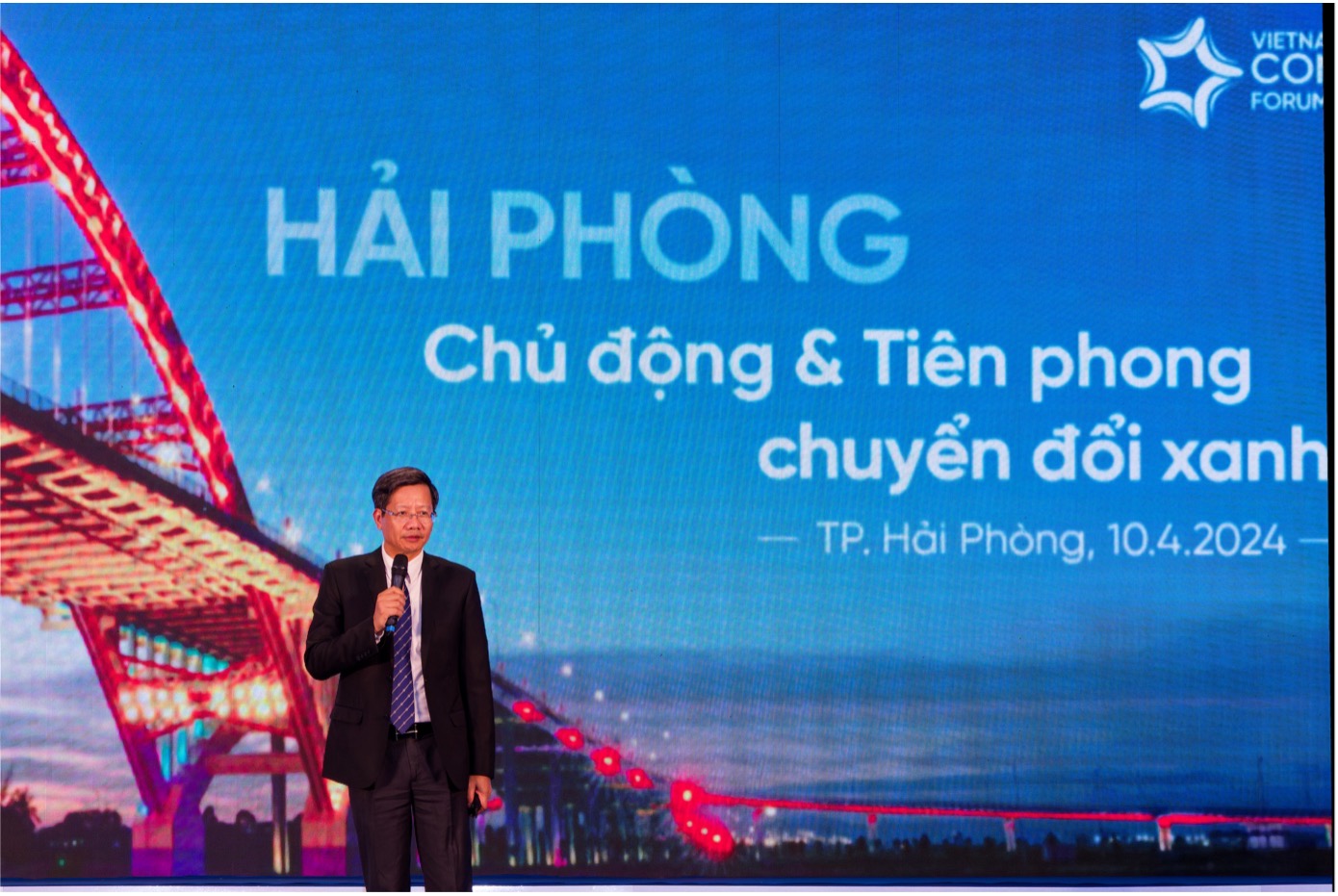

(Standing Vice Chairman of the City People's Committee Le Anh Quan presenting the city's development orientation at the Vietnam Connect Forum)
In Hai Phong, the city issued Plan No. 358/KH-UBND, under which technology diplomacy proposals were made by the Department of Foreign Affairs in Document No. 3807/NV-VP. This focuses on realizing the goal of making Hai Phong a center for technology, logistics, and the green marine economy, including:
- Semiconductor and integrated circuit industry: A core field for the city's sci-tech breakthrough, aiming to attract corporations from the US, Japan, and Taiwan to build chip design and packaging facilities in high-tech industrial zones.
- Marine economy and smart logistics: Utilizing the international gateway port advantage to develop digital infrastructure and attract projects related to AI and 5G-applied Smart Port management systems at Lach Huyen International Gateway Port.
- Clean energy and green economy: Aligned with Net Zero commitments, focusing on renewable energy equipment projects (offshore wind turbines, new-generation storage batteries).
- Digital technology industry and AI: Supporting the city's Digital Transformation program with projects like International Data Centers and AI Research Centers.
To realize this, the city needs to apply breakthrough mechanisms according to Circular 37/2025/TT-BKHCN and Hai Phong's incentive policies, such as: Sandbox mechanisms for AI and automation projects at seaports; special personnel mechanisms or personal income tax incentives for foreign experts and overseas Vietnamese intellectuals; and ready infrastructure ensuring stable power grids and comprehensive 5G coverage.
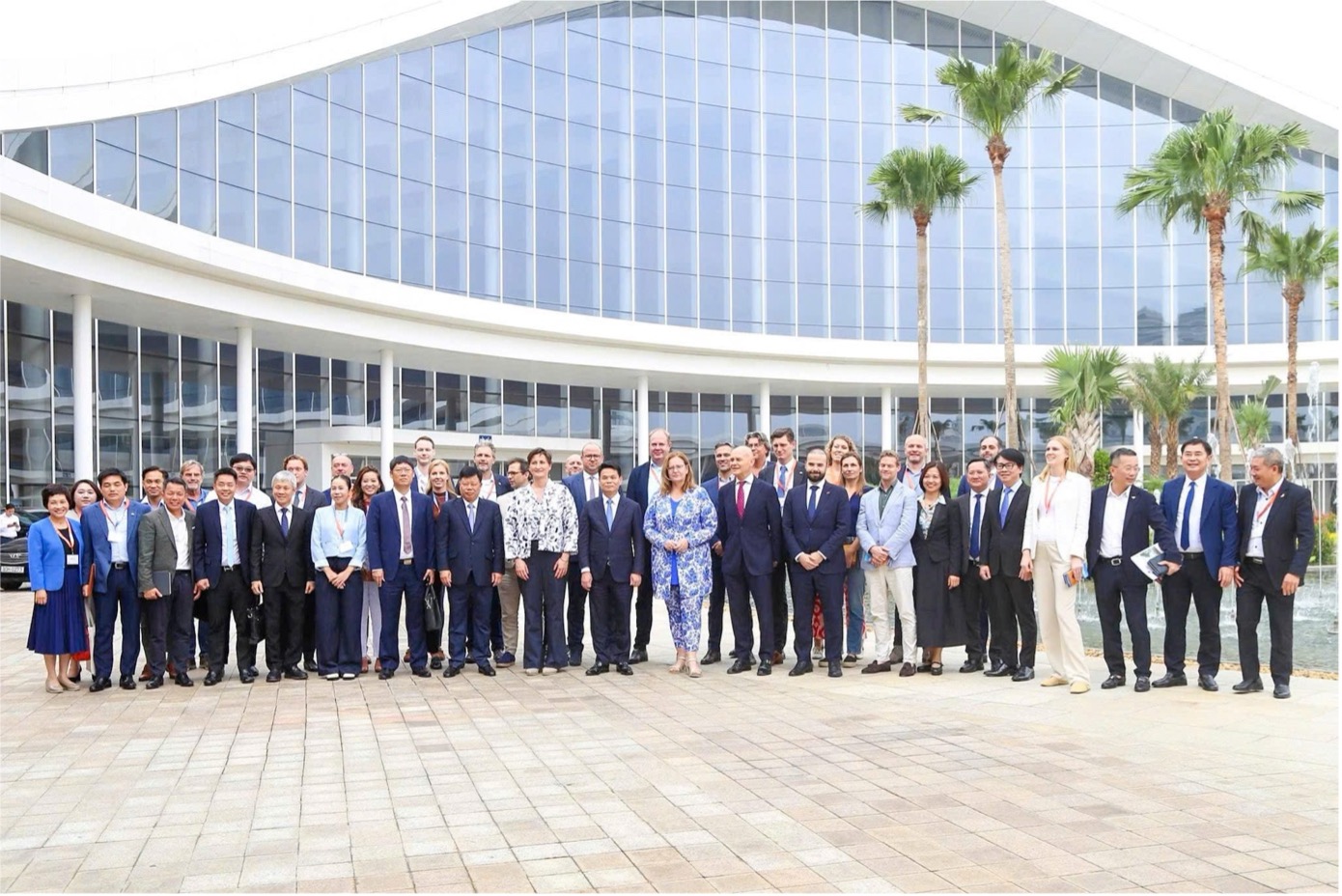
Chairman of the City People's Committee Le Ngoc Chau receiving and working with the delegation of the Netherlands Minister for Foreign Trade and Development Cooperation and the Dutch business delegation to learn about the investment and business environment in Hai Phong
International integration in 2026 is not just about where Vietnam is "present" on the world map, but what value it "contributes" in the nation's era of rising, and it must be a means to elevate internal strength. We integrate not to dissolve into general trends, but to leverage those trends to make Vietnam a "resilient, creative, and prosperous nation".