
On March 3, 2026, the Prime Minister issued Decision No. 380/QĐ-TTg approving the Project on "Establishing and Publishing the Annual Minimum Living Standard as a Basis for Determining Social Policy Standards" (referred to as the Project). Immediately following this, on March 6, 2026, the Hai Phong City People's Committee issued decisive instructions via Document No. 2312/VP-TH to bring this Project into local practice. This is considered a significant turning point in concretizing salary and social allowance policies, aiming to improve the quality of life for residents in the port city.
Strategic Vision and General Objectives of the Project
The Project is built upon a deep grasp of the Party's guidelines on innovating and improving the quality of social policies, particularly the spirit of Resolution No. 27-NQ/TW on salary policy reform and Resolution No. 42-NQ/TW on continuing to innovate social policies. A consistent viewpoint of the Project is that determining the Minimum Living Standard (MLS) must be based on scientific statistical methodology suitable for Vietnam's practical conditions. The data sources for compiling the MLS must ensure transparency, completeness, and reliability, while promoting the application of information technology in all stages from collection to publication.
The general objective is to establish an annual MLS publication system as a firm basis for determining social policy standards. Specifically, starting from 2026, MLS data for the population will be compiled and published annually, with a clear distinction between urban and rural areas. By 2028, the Project aims to determine the calculation method and data sources to publish the annual MLS for workers, providing an accurate "yardstick" for support policies for those in difficult circumstances, poor households, and other policy beneficiaries.
Implementation Roadmap and Scientific Methods
To realize these goals, the Project outlines a systematic implementation roadmap involving various central and local ministries and sectors. In 2026, the key task is to research and revise the Household Living Standard Survey (HLSS) to ensure representative data for both urban and rural areas. The survey will focus on evaluating the quality of information regarding household expenditures, including both food and non-food items.
For the worker category, during the 2026-2027 period, the Project will research and review the "Cost of Basic Need Method" (CBN). This method involves identifying a list of minimum food and non-food items, along with criteria to determine the quantity of these items in the worker's MLS. A pilot expenditure survey for workers will be conducted in 2026 to assess feasibility and ensure the data source reflects reality before official publication in 2028.
Hai Phong's Proactive Involvement and Decisive Implementation
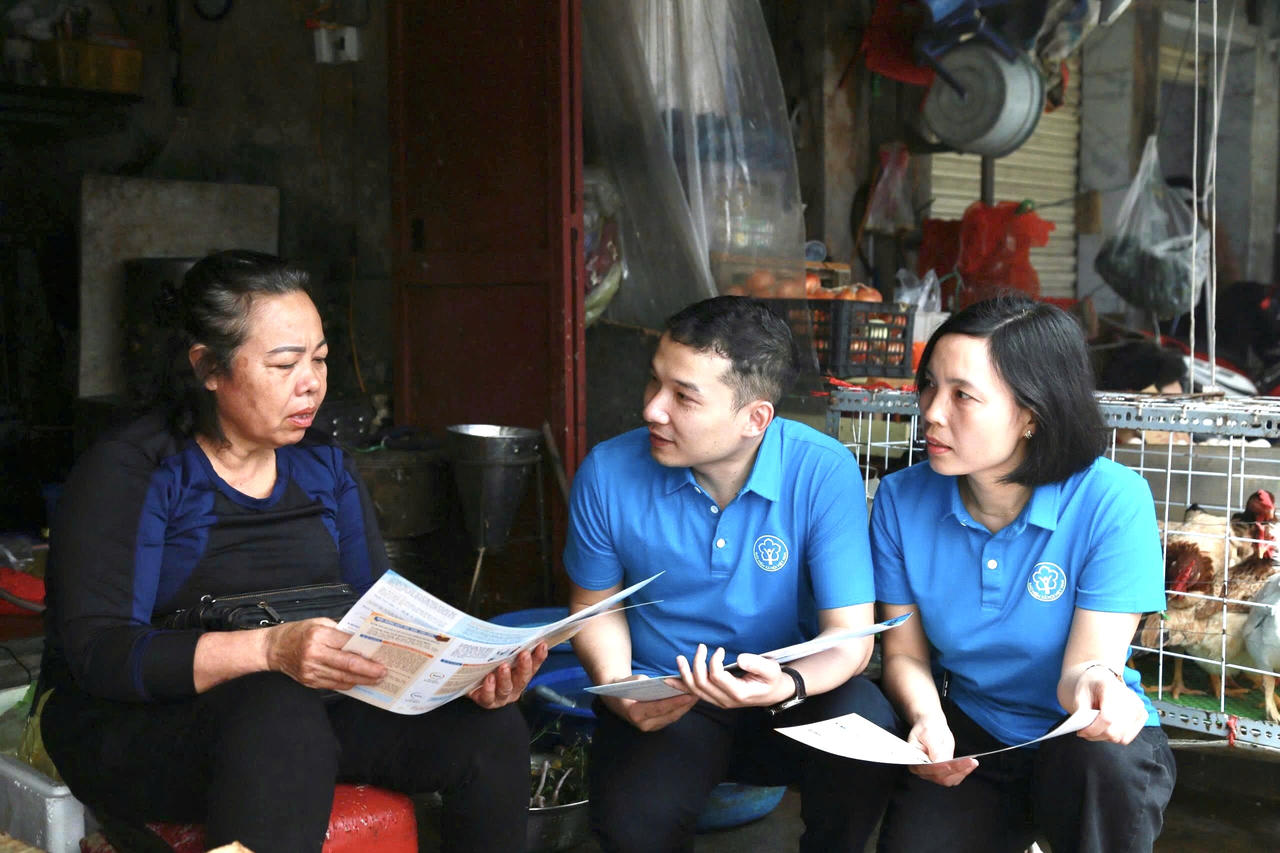
In Hai Phong, recognizing the Project's importance for local social security, Vice Chairman of the City People's Committee Le Trung Kien has directed relevant units to urgently begin implementation. Through Document No. 2312/VP-TH dated March 6, 2026, city leaders assigned the Hai Phong City Statistics Office to play the leading role, coordinating with departments, localities, and relevant units to implement Decision 380/QĐ-TTg.
This direction demonstrates the city's determination to unify the use of MLS data as a basis for determining multi-dimensional poverty lines and other related social policy standards. Accordingly, grassroots units such as commune-level People's Committees are also required to coordinate closely with the Statistics Office to ensure the accuracy and timeliness of data collected from the field. Implementation in Hai Phong not only follows the national roadmap but also aims to build a synchronized administrative database ready for information sharing to serve effective state management.
Inter-sectoral Coordination and Key Solutions
The success of the Project depends heavily on coordination between agencies. At the central level, the Ministry of Finance plays the leading role, coordinating with the Ministry of Agriculture and Environment, the Ministry of Health, the Ministry of Home Affairs, and the Vietnam General Federation of Labour. The Ministry of Health is responsible for providing data on the calorie content of food items, while other ministries provide relevant administrative data for compiling the MLS.
To ensure implementation quality, the Project proposes several key solutions:
- International Cooperation: Researching international methodologies and experiences in compiling MLS to apply them appropriately to Vietnam's reality.
- Human Resource Training: Strengthening training and improving the capacity of officials directly involved in data collection, synthesis, and compilation.
- Technology Application: Maximizing the use of information technology in building, publishing, and sharing MLS data.
- Resource Assurance: Prioritizing the allocation of funds from the state budget and other legal sources to implement statistical surveys and scientific research serving the Project.
Significance for Social Security Development in Hai Phong
The implementation of the Project in Hai Phong brings immense significance. First, it provides the city with a scientific database to plan support policies for the right subjects, avoiding omissions or waste of social resources. Second, the annual publication of the MLS gives citizens and workers a basis to protect their legitimate rights, while providing businesses with a foundation to adjust wages and remuneration packages appropriately.
In the digital era, Hai Phong's promotion of technology and transparency in living standard data not only improves management efficiency but also creates firm trust among the people in the policies of the Party and State. The Project's results will be summarized and evaluated in December 2028 to be reported to the Prime Minister, opening a new phase for comprehensive and sustainable social security.
With close guidance from the City People's Committee and the proactive involvement of the Hai Phong Statistics Office, there is confidence that the Project will be successfully implemented, contributing to making Hai Phong a livable city with progressive and humane social standards.