
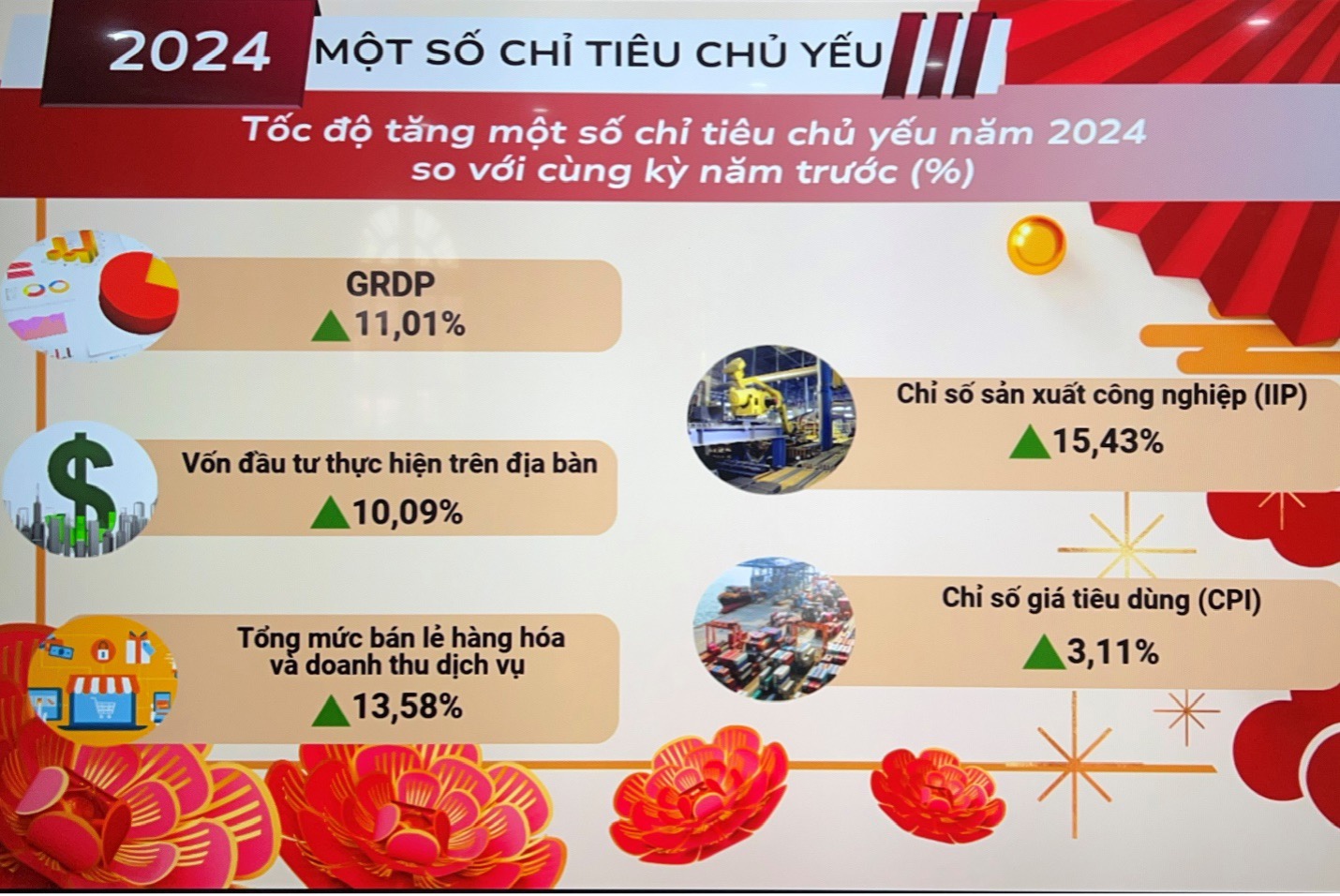
In 2024, despite facing numerous challenges—particularly the direct impact of Typhoon No. 3—Hai Phong City swiftly stabilized its socio-economic development. The city’s gross regional domestic product (GRDP) was estimated to grow by 11.01%, ranking third nationwide and first in the Red River Delta, marking the tenth consecutive year Hai Phong maintained double-digit growth. Notably, 2024 marked the first year the city officially entered the group of Vietnam’s top five localities with the largest economic scale.
Many key socio-economic indicators were fulfilled earlier than expected and exceeded planned targets, with continued improvements in both material and spiritual living standards for the population. The city's GRDP was estimated at VND 288.492 trillion, up 11.01%, including a 13.69% increase in industry and construction, 8.66% in services, and 7.21% in product taxes minus subsidies, while agriculture, forestry, and fisheries declined by 3.4%. Total realized investment in the city grew by 10.09%; total retail sales of goods and consumer service revenue rose by 13.58%; the Index of Industrial Production (IIP) increased by 15.43%; and the Consumer Price Index (CPI) rose by 3.11%.
Total state budget revenue in Hai Phong for 2024 was estimated at VND 118.255,3 trillion, equivalent to 120.86% of the target assigned by the central government and 110.77% of the estimate approved by the city’s People’s Council. As of December 31, 2024, Hai Phong had attracted over USD 4.9 billion in foreign direct investment (FDI).
The commerce and service sectors also recorded significant results. Total tourist arrivals served by accommodation and travel businesses in the city reached an estimated 9.103 million, an increase of 14.52% compared to the previous year. Total export turnover rose by 19.91%, while revenue from transportation and logistics services increased by 12.81% year-on-year.
Hai Phong has remained a leading locality nationwide in implementing progressive, human-centered social welfare policies, making important contributions to the city’s comprehensive socio-economic development. Key areas such as culture, sports, tourism, education and training, information and communication, religion and belief, youth and child protection have received consistent attention from all levels of local government. Social welfare, public assistance, and sustainable poverty reduction efforts have been carried out thoroughly, promptly, and accurately, ensuring targeted support reaches the right beneficiaries.
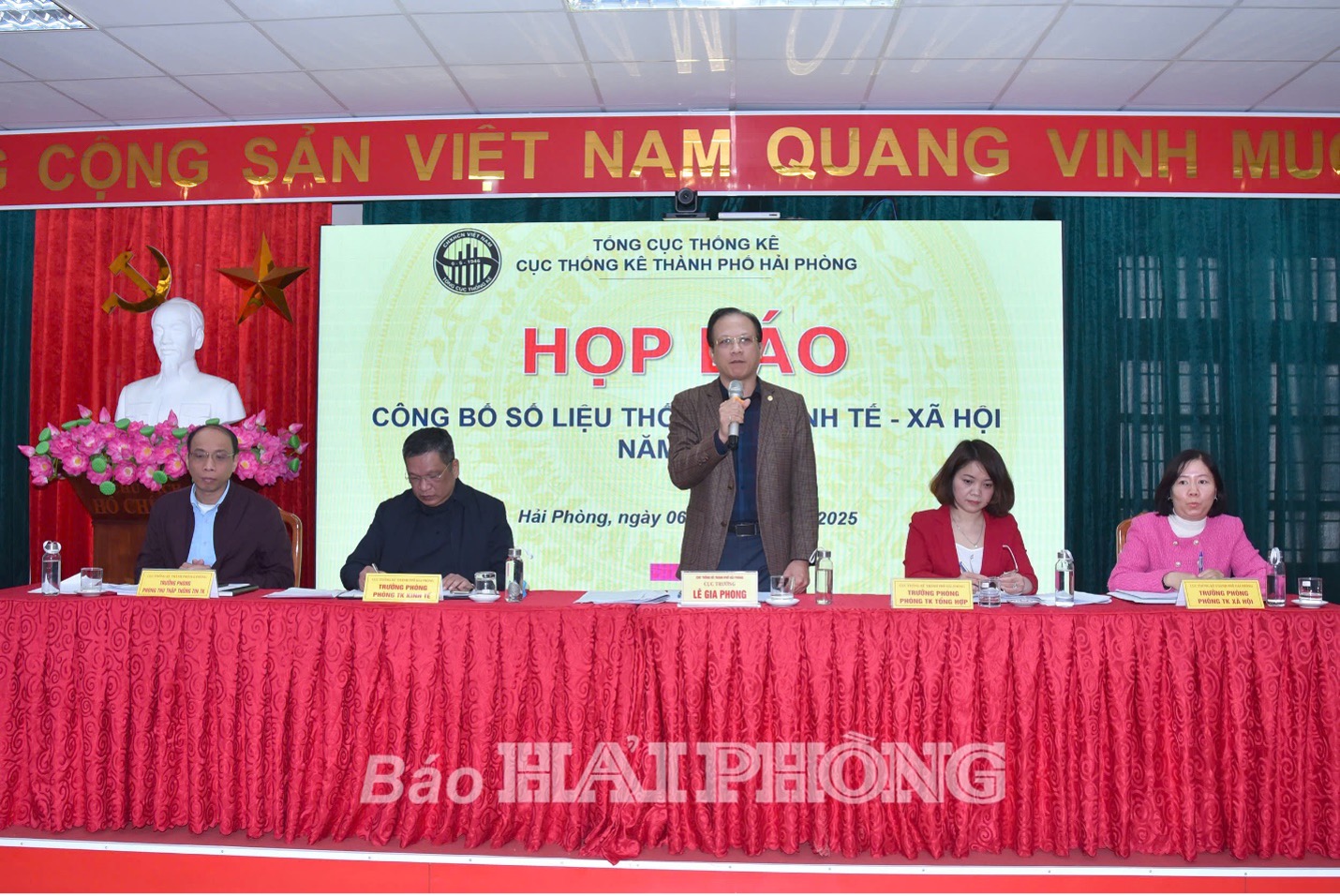
At a press briefing, Mr. Le Gia Phong, Director of Hai Phong Statistics Office, and leaders of relevant divisions addressed questions from media agencies on topics including FDI attraction, data from the 2025 Rural and Agricultural Census, and developments in labor and employment.