
On March 11, 2026, the Hai Phong City People's Committee officially issued Action Plan No. 77/KH-UBND regarding the implementation of the project "Low-emission production in the crop sector for the 2025-2035 period, with a vision to 2050" within the city. This is a concrete step to realize Decisions No. 4024 and No. 4766 of the Ministry of Agriculture and Rural Development, aiming for a green, sustainable agriculture that adapts effectively to climate change.
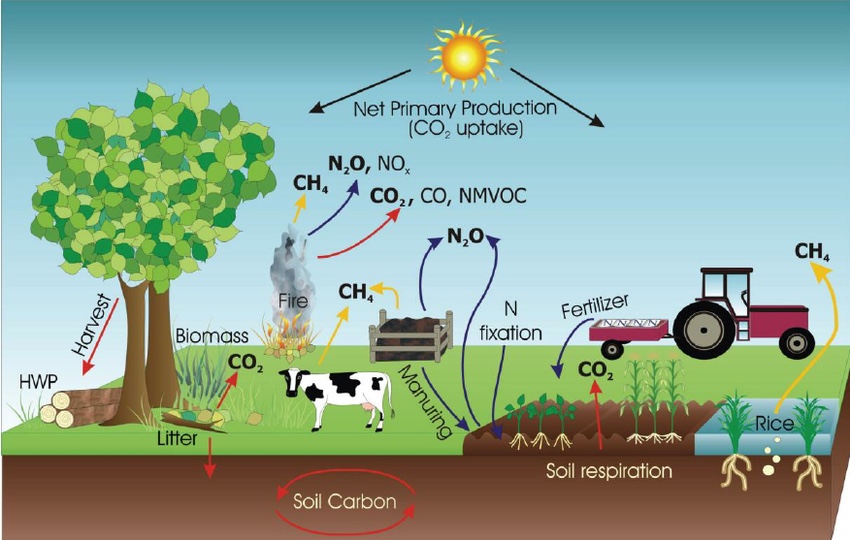
Strategic Objectives: Reducing Emissions by 15% by 2035
The city's new action plan clearly defines the goal of promoting the transformation of crop production systems toward low emissions, enhancing sector competitiveness, and ensuring food security. Hai Phong has set specific targets for the next ten-year roadmap:
- Emission Reduction: Striving by 2035 for the crop sector to contribute to a reduction of at least 10-15% of total greenhouse gas emissions (CO2e) compared to the 2020 base year.
- Branding and Models: Building and developing the “Low Emission” label for key crop products. The city will deploy at least 1-2 replicable low-emission production models and pilot cultivation models capable of developing carbon credits that meet international requirements.
- Data Infrastructure: Building an emission database for the crop sector that is synchronously connected with the National Registration System.
- Capacity Building: Organizing technical training and providing emission measurement tools for local officials, farmers, and businesses to promote a shift in production behavior.
By the 2050 vision, Hai Phong aims for 100% of key crop areas in concentrated production zones to apply sustainable technical processes. The city's crop sector will extensively apply digital technology and smart agriculture, contributing actively to the "Net Zero" emission goal as per international commitments at COP26.
Key Tasks and Breakthrough Solutions
To achieve these goals, the city has assigned specific tasks to departments and sectors with a roadmap from 2026 to 2035. The primary tasks include:
- Developing Carbon-Absorbing Crops: Prioritizing the formation of concentrated, high-value fruit production areas linked to value chains.
- Flexible Structural Conversion: Shifting from inefficient rice land to higher-value dry crops or combining rice-aquaculture to reduce greenhouse gas emissions.
- Technical Research and Application: Coordinating the research of low-emission cultivation technical packages suitable for each type of crop and ecological zone.
- Measurement Systems (MRV): Coordinating the measurement and periodic reporting of emission reductions according to the guidelines of the Ministry of Agriculture and Rural Development to ensure transparency and international recognition.
Piloting Green Production Models
The city plans to implement two pilot models to lead the entire city:
- High-Yield, High-Quality, Low-Emission Rice Model: Implemented in concentrated rice areas with active irrigation. The core technical solution is applying the alternate wetting and drying (AWD) method to reduce methane (CH4) emissions while still ensuring high yields.
- Low-Emission Onion and Garlic Production Model: Applying circular farming methods and complying with VietGAP. This model focuses on reusing crop by-products and livestock waste to create organic fertilizer, helping to improve soil fertility, reduce the use of chemical fertilizers, and lower N2O emissions.
Resource Mobilization and Implementation
Hai Phong has determined that implementation funding will be mobilized from diverse sources, including the state budget integrated from national target programs, and non-budgetary capital from businesses and socialization. The city focuses on attracting investment in modern cultivation equipment, digital technology applications, and carbon traceability systems.
The Department of Agriculture and Rural Development is assigned the leading role, coordinating with relevant units to select priority areas and crops. The Department of Industry and Trade will support trade promotion and publicize green agricultural products with environment-friendly labels. Local People's Committees at the commune and ward levels are responsible for extensive propaganda to mobilize residents to change traditional cultivation habits toward emission reduction.
The Chairman of the City People's Committee requires that implementation be carried out regularly, ensuring quality and progress, while periodically reporting difficulties for timely resolution. With this determination, Hai Phong is gradually forming a modern ecological agriculture that is climate-responsible and enhances sustainable livelihoods for local people.