
On March 17, 2026, the Hai Phong City People's Committee issued Action Plan No. 86/KH-UBND regarding the development of the city's intellectual force during the period of accelerated industrialization and modernization until 2030, with a vision to 2045. This is an important document aimed at concretizing the National Strategy and City Party Committee Resolutions, affirming the determination to build Hai Phong into a green, civilized, and modern city and a leading center for science and technology in the Northern Coastal region.
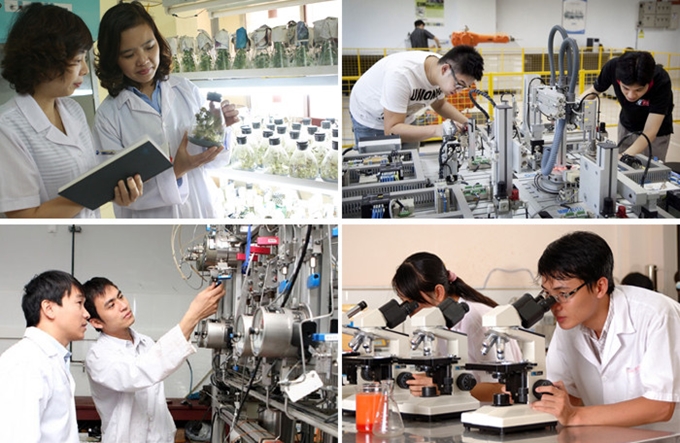
- Strategic Vision: Intellectuals as the Core of Development
Action Plan No. 86/KH-UBND defines the general objective of building a Hai Phong intellectual force that is strong in quantity and superior in quality, commensurate with its status as a centrally-governed Grade I city. The city focuses on developing leading experts and scientists and a contingent of public officials with breakthrough thinking, capable of leading digital transformation and international integration.
The intellectual force is identified as the core role in realizing the aspiration to make Hai Phong a regional hub for education, healthcare, and science and technology. By 2045, this force will be the primary driver bringing Hai Phong to international levels, contributing to the successful implementation of sustainable development strategies.
- Breakthrough Indicators to 2030
The city has established a system of specific quantitative indicators to measure the development of the intellectual force through 2030, focusing on key sectors:
- Research and Development (R&D): Hai Phong strives for a ratio of 12 people engaged in scientific research and innovation per 10,000 people. The total number of science and technology research staff citywide must reach at least 600 people, while developing a minimum of 150 science and technology enterprises.
- Training and Labor Structure: The city requires a strong shift in the educational structure, ensuring that at least 50% of students are in basic sciences, engineering, and technology. Specifically, the proportion of intellectual labor in high-tech and strategic industries must be raised to 25%.
- Equality and Talent Attraction: The plan sets a target to ensure at least 40% of women and minority groups participate in leadership and research positions in science and technology. Each year, the city aims to attract 3-5 overseas Hai Phong experts and intellectuals to participate in teaching, policy consulting, and technology transfer.
- Education and Healthcare: The proportion of university lecturers with PhDs must reach 30-50% by 2030. In the health sector, the city strives for 19 doctors per 10,000 people, with at least 28% of medical personnel holding postgraduate degrees. Hai Phong's Human Development Index (HDI) is expected to reach 0.8 during this period.
- Breakthrough Solutions for Institutions and the Working Environment
To realize the above goals, Action Plan 86 proposes comprehensive solution groups, with institutional and governance breakthroughs prioritized as the top focus:
- Specific Mechanisms and "Sandbox": Hai Phong will deploy superior preferential policies for talents in spearhead sectors such as the Marine Economy, High-tech Industry, and Digital Transformation. Notably, the city will apply controlled testing (sandbox) mechanisms for new governance models, new technologies, and public-private partnership models in research and training.
- Modern Research Ecosystem: The city will invest in building a shared laboratory integrated within the Science and Innovation Park. Digital library systems and open learning materials will be developed to create a working environment approaching international standards.
- Utilization and Recognition: Intellectual evaluation will be based on output results; while acknowledging and ensuring equal policy access between public and private sector intellectuals. The city will also advise on issuing stable, long-term income policies for intellectuals in basic research, healthcare, and education.
- Human Resource Training and Globalization of Intellectuals
The plan emphasizes building an open education system and promoting lifelong learning. Training will focus on:
- Interdisciplinary Training: Combining natural sciences with social sciences and humanities; integrating STEM/STEAM and critical thinking from the secondary level to create the next generation of intellectuals.
- International Training: Continuing to send outstanding officials and students for training abroad using the state budget.
- Global Network: Facilitating conditions for Hai Phong intellectuals to participate in global initiative networks, performing secondments or short-term work at international organizations without necessarily requiring long-term residence in Vietnam.
- Implementation and Key Tasks
The Department of Science and Technology is assigned as the standing agency, leading the advisory and urging the implementation of the Plan. Specialized departments such as Home Affairs, Finance, Education and Training, and Health are responsible for integrating intellectual development goals into their respective sector plans.
The list of tasks accompanying Plan 86 has identified several "anchor" projects, including:
- International Marine Science-Technology Center Project: Advising the City People's Committee to submit to the Prime Minister for approval a project to build Hai Phong into an International Center for Marine Science-Technology Training, Research, and Application in December 2026.
- Intellectual Data System: Building and updating a "live, clean, sufficient" database of the intellectual force by industry and field.
- Promotion and Recognition: Hai Phong press and broadcasting agencies will regularly implement programs to honor outstanding intellectuals and the movement "Vietnamese Intellectuals in the Digital Transformation Era".
Action Plan No. 86/KH-UBND is not just a human resource development roadmap, but also a commitment by the city government to create the most favorable environment for intellectuals to contribute. With the close combination of developing local resources and attracting external talent, Hai Phong is firmly stepping on the path to becoming a green and modern port city based on the power of intellect and creativity.