
On March 23, 2026, the Hai Phong City People's Committee issued Decision No. 1052/QD-UBND, approving the Implementation Plan for the program "Renovating and Enhancing the Quality of Rural Vocational Training to 2030". This essential step specifies the Prime Minister's Decision No. 328/QD-TTg and is expected to bring new vitality to rural areas, closely linked with the processes of industrialization and modernization.
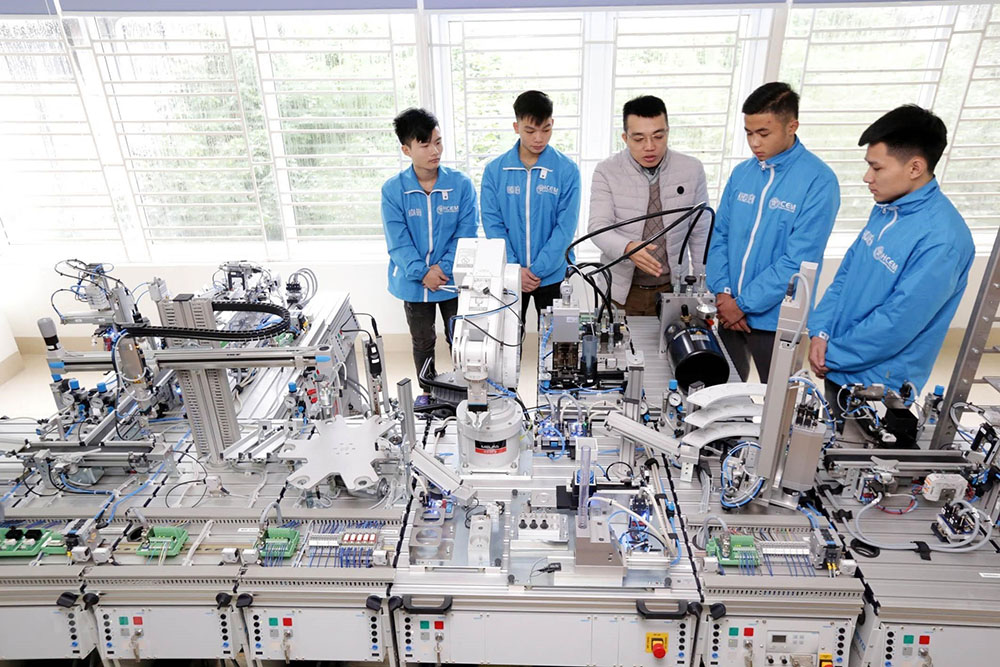
Strategic Vision: Substantive, Effective, and Sustainable Training
The core objective of the city's plan is comprehensive renovation, enhancing the quality and efficiency of vocational training for rural laborers. Hai Phong is focusing not only on simple trade transmission but also on shifting the labor structure, creating jobs, and increasing incomes to bridge the gap in trained labor rates between urban and rural areas.
Under this new orientation, the city will focus on training high-quality human resources for advanced and modern agricultural production. Concurrently, a significant portion of rural laborers will be trained to transition into industry and services to meet the requirements of urbanization and international integration. The program places rural residents at the center, emphasizing sustainable development and adaptation to climate change.
Specific Targets to 2030
Decision 1052 sets out specific and ambitious figures to measure the program's effectiveness in the coming period:
- Training Scale: An annual average of approximately 54,000 rural workers will receive training, retraining, and vocational skill improvement.
- Sectoral Structure: Non-agricultural vocational training will hold an overwhelming share at approximately 90%, while agricultural vocational training and rural trade development will account for about 10%.
- Inclusivity in Training: Focus will be placed on specific groups, with targets of over 45% for female laborers, approximately 4% for people with disabilities, and about 70% for ethnic minorities receiving appropriate vocational training.
- Output Efficiency: Striving for an employment rate of over 85% immediately after the completion of training courses.
Five Breakthrough and Modern Solution Groups
To realize these goals, Hai Phong City is synchronously implementing several breakthrough solution groups:
- Raising Awareness and Innovating Communication: The city identifies rural vocational training as a strategic breakthrough. Propaganda will be diversified through the press, television, and commune-level radio systems, ensuring it is appropriate for the characteristics and languages of various groups, particularly those in island regions and ethnic minorities.
- Perfecting Support Policies: Hai Phong will review and complete support policies for specific groups, such as workers whose land has been reclaimed, youth completing military service, and those losing jobs due to pandemics or the Fourth Industrial Revolution. There will be mechanisms to encourage artisans, businesses, and successful farmers to participate in trade transmission.
- Digitalization and Modernization of Learning Materials: A highlight of the plan is the push for the digitalization of training programs, including electronic lectures, simulation lectures, and open libraries. This allows for shared data for distance learning and guided self-study, helping rural workers access knowledge anytime and anywhere.
- Close Linkage with Businesses: The plan requires the construction of models linking vocational education institutions with the labor market and job transaction floors. Businesses and cooperatives will directly participate in building curricula, enrollment, and post-training recruitment to ensure workers have practical skills and appropriate salaries.
- Expanding International Cooperation: Hai Phong will actively participate in international forums and associations regarding vocational training to learn from experience and improve vocational skill levels, opening opportunities for rural residents to integrate well into the global labor market.
Responsibilities and Implementation Mechanisms
The City People's Committee has assigned the Department of Education and Training as the standing agency to lead and coordinate with other departments and localities to implement the plan. The Department of Agriculture and Environment is responsible for agricultural vocational training and supporting innovative startup models for farmers.
Regarding funding, the city will integrate resources from the state budget, National Target Programs for the 2026-2030 period, and other legal sources to ensure feasibility. The City Branch of the Vietnam Bank for Social Policies will also facilitate loans for rural workers for vocational study and starting businesses after training.
With methodical preparation and high determination from the entire political system, Hai Phong's rural vocational training program aims not only to help residents escape poverty sustainably but also to serve as an important foundation for building modern, civilized, and identity-rich rural areas.