
The Hai Phong seaport is planned into five zones with approximately 70–74 berths, ensuring that by 2030 it will handle over 215 million tonnes of cargo and 22,800 passenger movements annually.
On January 16, 2025, the Prime Minister issued Decision No. 140/QĐ TTg, approving the detailed zoning plan for marine ports and berths in Vietnamese waters for the period 2021–2030, with a vision extending to 2050. Accordingly, the Hai Phong port system will be divided into five areas: the Lach Huyen zone, the Dinh Vu zone, the Cam River–Pha Rung zone, the Nam Do Son–Van Uc zone, and the Bach Long Vi island zone, along with mooring buoys, anchorage zones, and transshipment yards.
Planned for up to 74 berths
Under this plan, the Dinh Vu zone is allocated 15 berths (including 35 quays), capable of handling 80 million tonnes of cargo per year. The Bach Long Vi island zone is planned with two quays to accommodate between 100,000 and 200,000 tonnes per year.
The Lach Huyen zone is designated as the largest cargo and passenger port within the Hai Phong system, with 13–16 berths (14–18 quays). These berths are designed to handle 61.4–90 million tonnes of cargo per year and accommodate 10,500–11,000 passenger movements annually. By 2050, this zone will be expanded to include 20 container berths.
The Hai Phong seaport, planned as five zones with some 70–74 berths, is designed to ensure throughput of over 215 million tonnes of cargo and 22,800 passenger movements per year by 2030.
The Cam River–Pha Rung zone will not be developed or expanded; instead, existing berths from the Bach Dang Bridge area downstream to the Vat Cach port will be gradually relocated and repurposed in alignment with the Hai Phong city master plan and the phased construction of berths in the Van Uc zone.
In the Nam Do Son–Van Uc zone, two initial berths at Nam Do Son will serve 10–12 million tonnes of cargo and 9,900–11,800 passenger movements per year. The Van Uc River area will undergo synchronous development in tandem with the relocation of berths from the Cam River and the establishment of adjacent industrial zones.
The combined Cam River–Pha Rung and Van Uc zones will be planned with 38–39 berths (49–54 quays), capable of handling 23.7–32.6 million tonnes of cargo annually.
Furthermore, detailed planning outlines the construction of docking, anchorage, and anchoring spots in areas such as the Bach Dang River, Cam River, Lan Ha Bay, Hon Dau, Ben Got, Ninh Tiep, Lach Huyen, and other locations to serve maritime vessels operating within the Hai Phong seaport.
Complementing the berth system, public infrastructure projects are prioritized, such as dredging and constructing the Van Uc–Nam Do Son waterway and dyke system (for the initial stage of Nam Do Son port), upgrading and expanding the Ha Nam shipping channel and the Lach Huyen channel (including the ship turning basin). Berth construction projects from berths 3 to 8 in the Lach Huyen zone are prioritized for investment and operation.
According to Mr. Pham Hong Minh, Chairman of the Hai Phong Port Joint Stock Company, in preparation for berths 3 and 4 at the Hai Phong International Gateway Port in the Lach Huyen zone, since mid-November 2024, Hai Phong Port has collaborated with a Japanese supplier to transport, install, and calibrate six STS container gantry cranes and twenty-four RTG cranes to serve container loading and unloading at berths 3 and 4. These are energy-efficient, electric-powered, modern technologies aimed at environmental protection and ensuring the development of a green port.
Moreover, Hai Phong Port has signed a cooperation agreement regarding the deployment of Azimuth tugboats in the Lach Huyen area with the Northern Port Maritime Corporation to prepare for handling large vessels at berths 3 and 4. Concurrently, in partnership with the Korean TSB consortium, the port organized a training course on "Operating CATOS and EPORT software" to support operations at berths 3 and 4 of the Hai Phong International Gateway Port in Lach Huyen. The goal is to achieve a port throughput capacity of 1.1 million TEU per year, with potential expansion to 2 million TEU.
With the port's planned cargo throughput reaching 215.5 million tonnes per year, Hai Phong seaport, along with Ba Ria–Vung Tau (236.9 million tonnes) and Ho Chi Minh City port (253 million tonnes), will become one of the three Vietnamese ports with the highest cargo throughput.
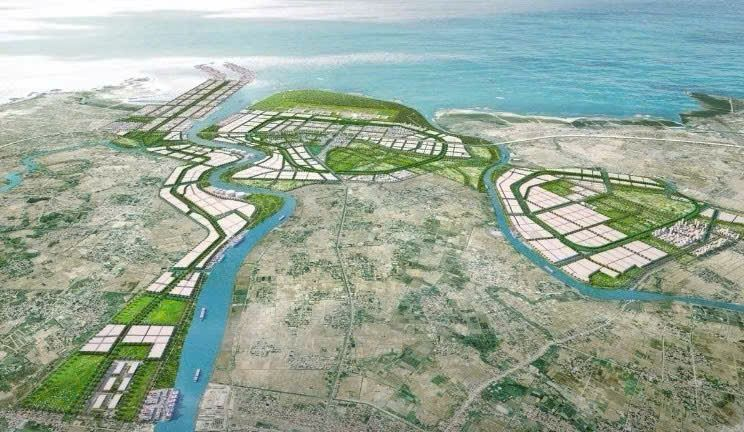
Vietnam's seaport system is classified into five groups. Hai Phong seaport belongs to Group 1, which includes Hai Phong, Quang Ninh, Thai Binh, Nam Dinh, and Ninh Binh ports. Hai Phong and Ba Ria–Vung Tau ports are major gateway seaports for the northern and southern economic regions, respectively, and are therefore designated as “special ports.”
Resolutions 45 and 30 of the Politburo identify Hai Phong as a modern international logistics center centered around its gateway seaport. The approval of the detailed port group planning is an opportunity for Hai Phong to leverage its significant maritime potential and coastal positioning to expand its development space. It also provides a basis for calling on investors to study and submit proposals for two initial berths in the Nam Do Son port zone, with the Prime Minister expected to decide on investment policy in 2026 and construction completed and operational before 2030 as outlined.
It is known that Hai Phong Port is in a race against time to open berths 5 and 6 at Hai Phong International Gateway Port in Lach Huyen by the first quarter of 2025. Mr. Nguyen Van Tien, General Director of Hateco Hai Phong International Container Port Co., Ltd., stated that the port has successfully installed five modern STS cranes and fourteen RTG cranes. Particularly, Hateco's STS cranes can reach 24 rows of containers, comparable to the world's largest container ships. This is a new milestone in the upgradation of specialized equipment to enhance handling capacity, improve logistics chain efficiency, and meet increasing transshipment demand through the Hai Phong seaport area.
According to Mr. Bui Nguyen Khoi, Harbor Master of Hai Phong Maritime Administration, in 2024, the Hai Phong seaport area surpassed 100 million tonnes of cargo throughput (reaching 106 million tonnes), a 10% increase over 2023. The Hai Phong shipping channel became the busiest in the nation, with over 17,000 vessel calls for cargo operations. This impressive result forms the basis for the Maritime Administration to set a high goal for 2025 of handling over 115 million tonnes.
Hai Phong seaport is becoming increasingly dynamic as berths 7 and 8 undergo related procedures to prepare for project implementation. In the near future, Hai Phong will be home to two international transshipment ports: Lach Huyen and Nam Do Son.