
On April 3, 2026, the Hai Phong City Inspectorate issued Report No. 132/BC-TTTP summarizing the implementation of important Government Decrees regarding citizen reception and the settlement of complaints and denunciations. The report not only comprehensively evaluates the results achieved after years of implementing Decrees No. 64/2014/ND-CP, 124/2020/ND-CP, 31/2019/ND-CP, and 55/2022/ND-CP but also emphasizes efforts to adapt to and resolve issues arising from Hai Phong's implementation of a two-level local government model following administrative unit mergers.
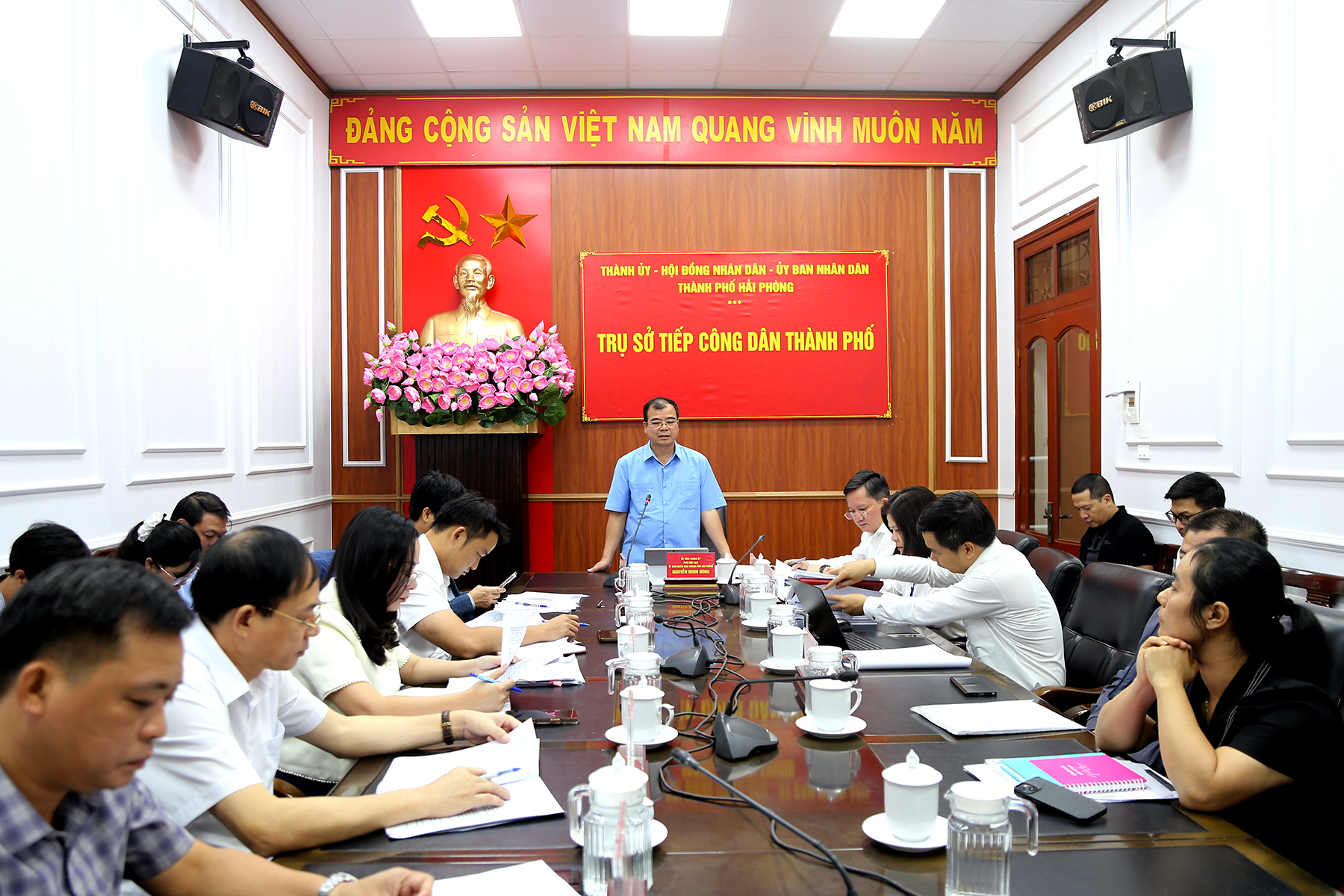
Proactivity in Direction and Implementation
Immediately after the Central Government issued the Decrees, the Hai Phong City People's Committee (PC) promptly released a system of documents to direct and guide synchronous implementation. These documents focused on grasping Party guidelines and State laws while assigning clear responsibilities to each level and sector. The City Inspectorate played a core role in issuing professional guidance and unifying the process for receiving citizens and handling documents citywide.
The city's directing documents are considered relatively complete, timely, and highly feasible, creating an important legal basis to enhance state management in the inspection field. Parallelly, legal dissemination has been stepped up through innovative forms, combining traditional training workshops with propaganda via electronic portals and grassroots broadcasting systems. This propaganda focuses on raising awareness for officials directly performing tasks at the grassroots level to limit violations and increase public service responsibility.
Adapting to the Two-Level Local Government Model
A major highlight in the report is the rearrangement of personnel after the merger and the implementation of the two-level local government model according to Decree No. 141/2025/ND-CP. Before the merger, the citizen reception apparatus was maintained stably from the city to the commune level. After the model transition, District-level Citizen Reception Boards ceased operations, while the City Citizen Reception Board was strengthened and given increased responsibility.
Although the division of authority under the new model has basically been implemented as regulated, the initial phase faced difficulties due to confusion in determining the authority to settle cases arising before the merger. To resolve this, the City PC directed the City Inspectorate to coordinate with sectors to summarize specific obstacles and seek guidance from the Government Inspectorate.
Notably, to support commune-level officials—who are mainly part-time and lack stability—the City Inspectorate deployed inspection teams combined with direct guidance under the motto "hands-on guidance". The city also issued Resolution No. 44/2025/NQ-HĐND to unify the allowance regime for those performing citizen reception and document processing, ensuring fairness and motivating grassroots officials.
Outstanding Results in the Implementation of the Decrees
- Citizen Reception (Decree 64/2014/ND-CP): Implementation has brought order to citizen reception. There is a marked increase in the awareness of heads of agencies regarding the role of dialogue and resolving complaints from the grassroots. Many localities have invested in spacious reception offices and issued strict working regulations.
- Settlement of Complaints (Decree 124/2020/ND-CP): This Decree has made the complaint settlement process more rigorous and objective, especially regarding complaint authorization and handling crowded cases. The responsibility of leaders in direct dialogue has been enhanced, helping to settle many complex, prolonged cases.
- Settlement of Denunciations (Decree 31/2019/ND-CP): Hai Phong has built a clear legal corridor for receiving, classifying, and verifying denunciations. Regulations on withdrawing denunciations protect citizens' rights while preventing the abuse of denunciations for self-interest. Specifically, whistleblower protection mechanisms are prioritized to increase public trust in the law.
- Building the National Database (Decree 55/2022/ND-CP): The national database system is maintained stably and connected seamlessly from the city to the commune level. Data digitalization helps management agencies monitor the situation centrally to promptly direct the handling of cases arising at the grassroots.
Identifying Difficulties and "Bottlenecks"
Besides the advantages, the report frankly points out existing issues. In citizen reception, some heads of agencies still delegate periodic reception to deputies without specific handling sanctions. Laws still lack unified regulations on whether citizens may record or film at reception sites, causing management difficulties.
Regarding human resources, commune-level staff are still lacking and weak, frequently fluctuating, and lack professional job position regulations. IT infrastructure at some merged units is limited, with unstable network connections affecting timely data updates. Additionally, coordination between specialized agencies and the Inspectorate is sometimes not tight, leading to prolonged settlements of land and compensation cases.
Solutions for Improvement and Recommendations
To further improve efficiency in the new period, the Hai Phong City Inspectorate proposed several solutions:
- For Decree 64: Add sanctions for leaders who do not fully perform citizen reception; clarify rights to record/film at reception sites; and define professional standards for commune-level staff.
- For Decree 124: Provide specific guidance on delegating verification to specialized agencies to reduce the workload for leaders; add economic enforcement measures for organizations/individuals slow to execute effective complaint settlement decisions.
- For Decree 31: Standardize forms to be simpler and easier to apply; strengthen absolute identity confidentiality for whistleblowers; and strictly handle acts of retaliation.
- For Decree 55: Issue unified technical standards for data systems in the two-level government model; increase in-depth digital transformation training for commune officials.
This summary is an important basis for Hai Phong to advise Central agencies on amending legal regulations to fit administrative management in the new period. With a decisive spirit and the motto "clear people, clear work," the port city is striving to create fundamental changes, contributing to political stability and sustainable socio-economic development.