
On April 20, 2026, the Hai Phong Department of Home Affairs submitted a report on the implementation results of occupational safety and health (OSH) work in 2025 and outlined key tasks for 2026. Against the backdrop of major administrative boundary changes and impressive economic growth, protecting the health and lives of workers has become a core foundation for the city's sustainable development.
Economic Breakthrough and the Urgent Need for Labor Safety
The year 2025 was marked by a strong performance as the economies of Vietnam and Hai Phong established themselves as highlights in the region. Notably, Hai Phong City and Hai Duong Province officially merged into a new administrative unit, expanding development space and optimizing resources to create a leading growth pole for the country. The city's Gross Regional Domestic Product (GRDP) grew by 11.81% compared to 2024, ranking second nationwide and leading among centrally-run cities.
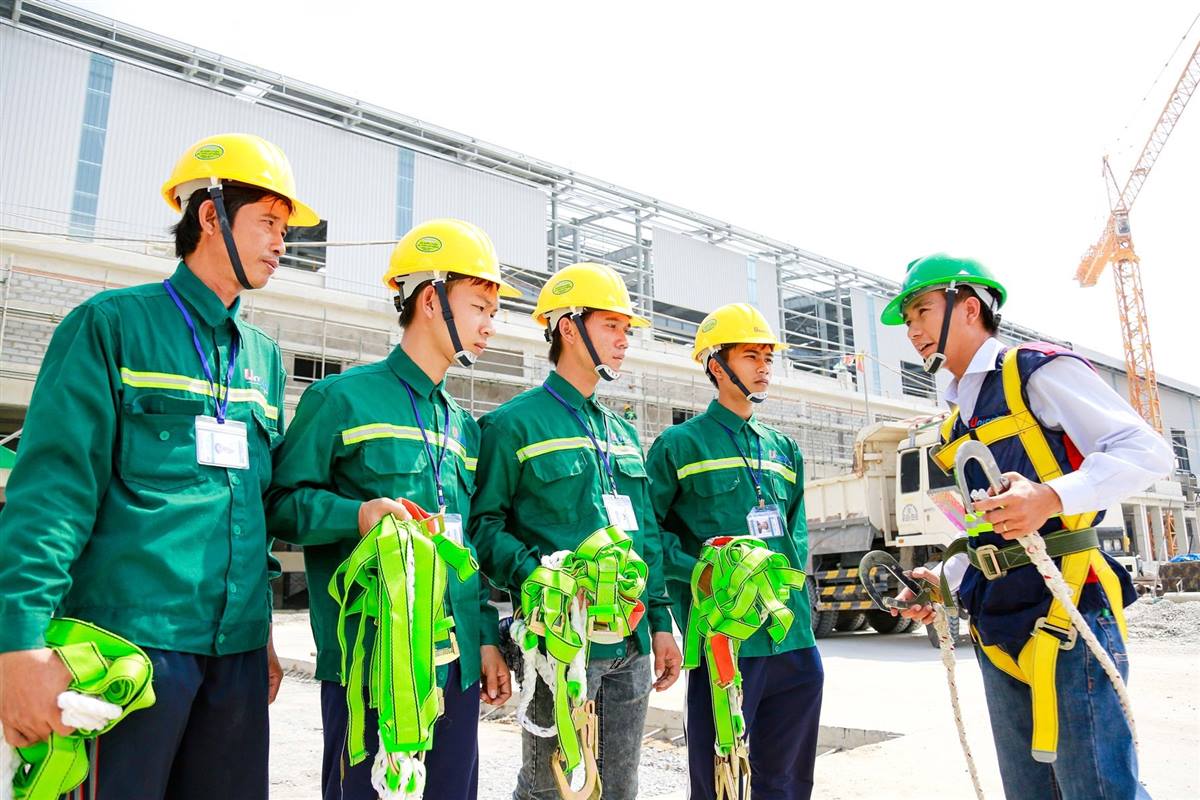
The surge in industrial production, seaports, and construction led to a rapid increase in the workforce, with approximately 98,600 new jobs created last year. However, this reality also poses a major challenge as dangerous and harmful factors in the workplace become increasingly complex, requiring OSH work to be viewed as a vital political task.
2025 Milestones: Risk Reduction and Organizational Refinement
Thanks to the decisive leadership of the City Party Committee and the People's Committee, OSH work in 2025 achieved substantive results through a comprehensive system of management documents. A key highlight was the city's review of the Law on Occupational Safety and Health and the issuance of a decision to establish the City OSH Council on March 30, 2026, to refine the advisory apparatus.
In terms of actual data, the occupational accident situation in the area has shown positive changes. In 2025, the city recorded 319 occupational accidents, a 5.9% decrease compared to 2024. The number of fatalities also decreased by 5.6% to 34 people. Nevertheless, sectors such as construction (106 cases), engineering (71 cases), and industrial production still harbor many risks, primarily due to technical process violations and a lack of safety measures at the workplace.
Healthcare for the city's "most valuable asset" was also deployed synchronously. The local medical network was strengthened with 622 facilities having business medical staff and over 9,500 people participating in first aid forces. During the year, 217,174 people underwent periodic health checkups, with 83.54% classified as health categories I and II. Specifically, occupational disease screenings for 25,448 people helped identify risks early, recording 15 cases of noise-induced hearing loss.
Innovative Propaganda and Strong Resource Investment
The 2025 OSH Action Month witnessed a breakthrough in communication methods, shifting strongly from theory to "visual – interactive – real-life experience". Instead of dry ceremonies, the city organized experiential areas for first aid guidance, incident response skills, and mobilized resources from businesses. Safety messages were spread widely through over 1,000 banners, 25 specialized reports, and digital platforms.
OSH training reached impressive numbers with 334,509 participants, equivalent to over 36% of the workforce. This safety policy covered not only the industrial sector but also rural areas, with 140,000 farming households signing OSH commitments for production and business.
Notably, Hai Phong's business community demonstrated high responsibility by investing up to 364.6 billion VND to implement OSH plans. The largest costs were allocated to personal protective equipment (146.6 billion VND) and technical safety measures (121 billion VND). This reflects a clear shift in employer perception from reactive to proactive prevention.
Towards 2026: Digital Transformation and Early Risk Control
Entering 2026, the city aims to further reduce serious occupational accidents, particularly in high-risk sectors such as chemicals, electricity, and construction. The motto for action is "early and remote prevention," minimizing errors caused by subjective factors to the lowest level.
A top priority task is promoting digital transformation in management. Hai Phong will build a centralized database system for statistics, reporting, and risk analysis. Furthermore, the city intends to research the application of advanced technological solutions such as Artificial Intelligence (AI) and the Internet of Things (IoT) to monitor work environments and warn of risks early.
The Department of Home Affairs will lead coordination with various sectors to review and complete policies, strengthening decentralization alongside the responsibility of the heads of organizations. Inspections will no longer be purely periodic but will shift to post-monitoring and spot checks at high-risk locations. The city also encourages the socialization of training and inspection services to improve the quality of service for businesses.
With the results achieved in 2025 and a methodical roadmap for 2026, Hai Phong is gradually forming a sustainable "occupational safety culture". This is not just a commitment to protecting people but also a smart strategy for the city to maintain its growth momentum, deserving its status as a leading growth pole for the country in a new era of development.