
On April 1, 2026, the Hai Phong City People's Committee officially issued Decision No. 1282/QD-UBND, approving the Project “Building and developing startup, innovation, and artificial intelligence (AI) zones and centers in Hai Phong”. According to the sources, this is not merely an internal development plan but a pivotal strategy for the port city to achieve breakthroughs in its international integration process, asserting its position as a regional and national center for innovation.
Vision to Become a Global Connection Hub
Under the Project's content, Hai Phong identifies the construction of innovation and AI zones and centers as an essential requirement to enhance competitiveness in the context of deep integration. Leveraging its status as an international gateway and a vital transportation hub, the city possesses ideal conditions to connect with global innovation ecosystems such as those in Singapore, South Korea, Japan, and the United States.
A strategic goal of the Project is to transform Hai Phong into an International Center for marine science-technology training, research, and application. This is a core task to implement Resolution No. 45-NQ/TW of the Politburo, aiming to attract top international research institutes, universities, and experts in marine technology to work and contribute. The city expects to form a unified innovation network capable of accessing global knowledge and resources.
International Cooperation as a Nuclear Driver
The sources emphasize strengthening international linkages to capitalize on core technological achievements. Hai Phong will promote cooperation with strategic partners such as KIST (South Korea), Ai20X (USA), and other international organizations to help local startups access foreign technology and markets. The presence of major tech corporations like Qualcomm (which hosts the world's third-largest AI R&D center in Vietnam) or platforms from Meta and NVIDIA is seen as a golden opportunity for Hai Phong to position itself on the global AI technology map.
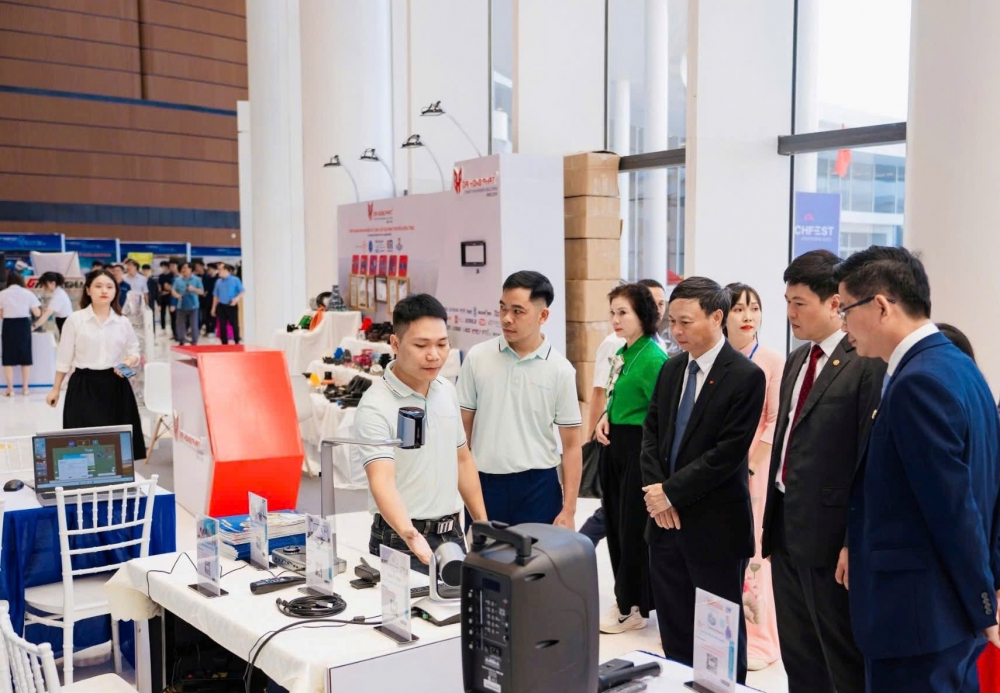
Within the innovation infrastructure structure, the Nucleus Center will serve as the direct connection point to international innovation centers and a place to pilot superior specific policy mechanisms (sandboxes) that can compete regionally and globally. Notably, the annual Techfest Haiphong event will be further elevated, attracting the participation of embassies, investment funds, and international experts from leading innovation nations such as Israel, Singapore, and the Netherlands.
Learning from Experience and Attracting International Talent
Hai Phong has synthesized valuable lessons from successful models such as Silicon Valley (USA) regarding risk-acceptance culture, Block 71 (Singapore) regarding non-profit tech center operations, and the Seoul Startup Hub (South Korea) regarding centralized ecosystem management. Consequently, the city has proposed a Science and Innovation Park model (the nuclear zone) with an expected total investment of 1,000 billion VND to attract high-tech FDI.
To attract "brainpower" from around the world, the Project introduces breakthrough solutions such as the "digital talent attraction" policy, which includes housing incentives and special visa regimes for international experts working in tech zones. The city also encourages local universities to cooperate in training AI human resources according to international standards and to engage in student exchanges.
The Strategic Role of the Department of Foreign Affairs
In the organization of implementation, the Department of Foreign Affairs is tasked with presiding over the expansion of international cooperation activities. Specifically, this unit is responsible for:
- Focusing on attracting potential investors in high-tech fields, semiconductor circuits, and AI.
- Strengthening connections, exchanges, and learning from countries with technological strengths such as Japan, Australia, and the United States.
- Promoting cooperation in training high-quality human resources that meet international requirements.
- Attracting ODA projects and non-refundable grants to serve the development of the innovation ecosystem.
The approval of this Project confirms Hai Phong's determination to shift its growth model based on science, technology, and innovation. When these centers become operational, Hai Phong will not only be an industrial port city but will transform into an International City, a symbol of creativity and sustainable integration for Vietnam.