
In the context of climate change becoming an urgent global challenge, green transition is no longer an option but has become an inevitable requirement and a passport for modern cities to enter the era of sustainable development. For Hai Phong City—one of the country's key marine economic centers—green transition is the key to realizing the ambition of becoming a modern, civilized, and ecological industrial port city.
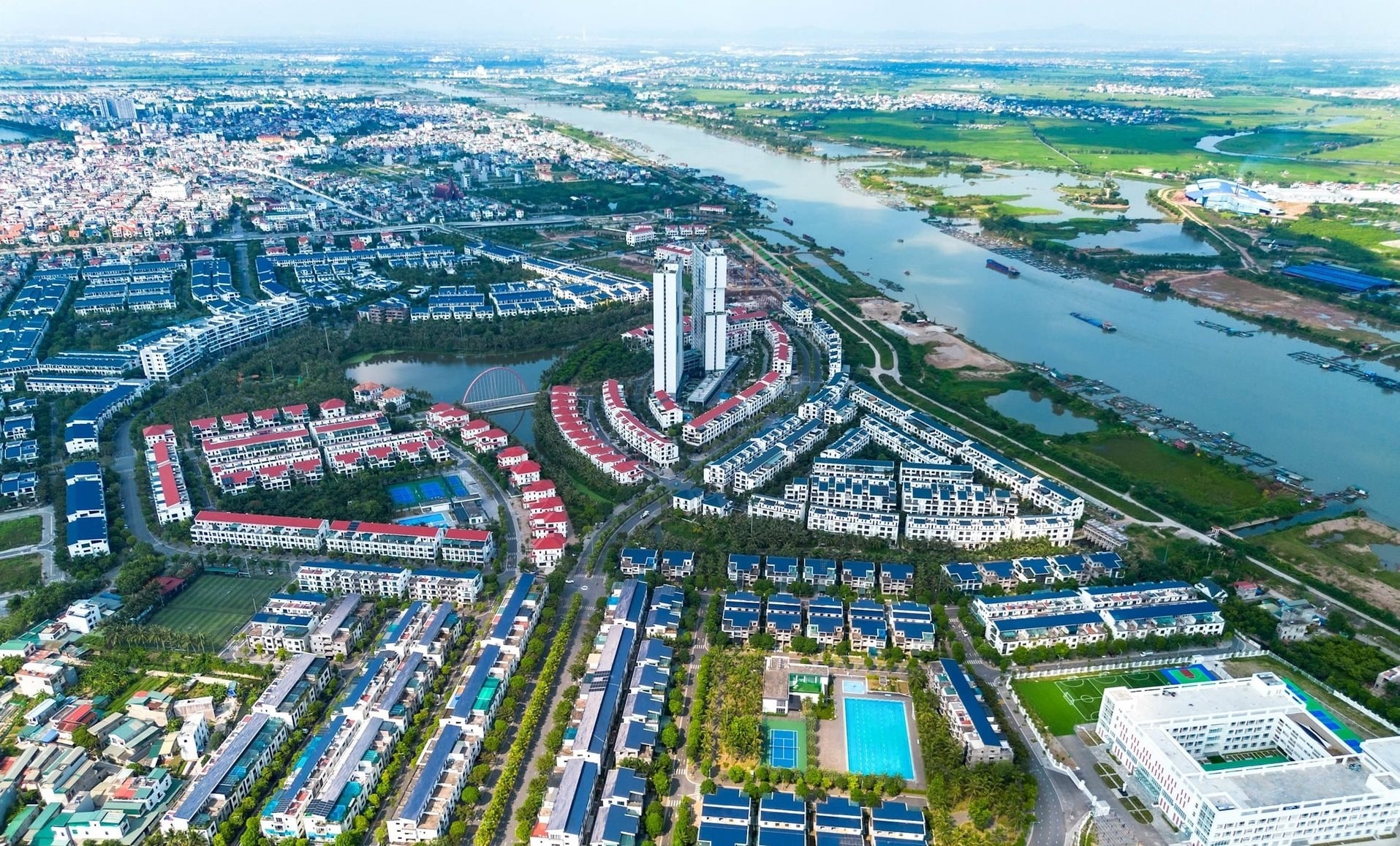
- Strategic Vision and Breakthrough Goals to 2030
On April 16, 2026, the City People's Committee issued Plan No. 133/KH-UBND to implement Resolution No. 08-NQ/TU of the City Party Executive Committee. This is considered a milestone "master design," identifying green transition as the core driving force to promote Hai Phong's sustainable economic development and fulfill Vietnam's Net Zero commitment by 2050.
Hai Phong has set very clear goals: by 2030, the city must create distinct changes in the awareness and actions of the entire political system, business community, and people regarding green lifestyles and sustainable consumption. The city strives to reduce greenhouse gas emissions by at least 43.5% compared to 2020 and maintain its position among the country's leaders in the Provincial Green Index (PGI).
Specifically, the city identifies 07 core green pillars: Transport - Seaports, Industry, Energy, Construction - Urban, Agriculture, Tourism, and Green Lifestyle. All implementation plans must adhere to the "6-clear" motto: "clear person, clear task, clear time, clear responsibility, clear product, and clear authority" to ensure substance and efficiency.
- Green Transport and Green Ports: The "Vessels" of an Ecological City
As a port city, Hai Phong identifies green transition in transport and seaport infrastructure as a top priority with a total estimated budget of up to 57,907 billion VND. In the field of public transport, the city is determined to convert 100% of replacement or newly invested buses and taxis to electricity and green energy.
For private transport, a bold scheme will be implemented in 05 inner-city wards (Hong Bang, Ngo Quyen, Gia Vien, Le Chan, An Bien) to support citizens in converting at least 35% of motorcycles and mopeds to clean energy by 2030. To support this roadmap, a synchronized network of electric charging stations will be completed across the city by December 2028.
Regarding seaport infrastructure, the city aims for 100% of seaports to meet Green Port standards. Key projects such as Shore Power for the Lach Huyen and Dinh Vu port systems will help docked ships minimize emissions and noise. New investments in electric E-RTG crane systems and barges using Hybrid/LNG fuel are specific steps toward greening the logistics chain.
- Green Industry and Clean Energy: Changing the Growth Mindset
Hai Phong will no longer develop industry at all costs. The city is shifting from "brown" to "green" by building eco-industrial zones (IZs). Two pilot models, Nam Cau Kien and Dinh Vu IZs, will serve as a premise for at least 50% of IZs in the area to register for conversion to the eco-model by 2030.
The city is resolutely pushing the roadmap to relocate polluting production facilities out of urban areas, ensuring environmental protection and sustainable planning requirements. Simultaneously, standardized centralized wastewater treatment systems must cover 100% of operating industrial clusters.
In energy, this sector has the largest expected investment at over 89,000 billion VND. Hai Phong focuses on potential renewable energy sources, such as:
- Developing the Offshore Wind Power project in the Bach Long Vi island area (70,000 billion VND scale).
- Promoting rooftop solar installation at IZs and public buildings.
- Converting coal-fired power plants to low-emission technology (co-firing ammonia, biomass).
- Putting into operation at least 02 modern waste-to-energy plants by 2028.
- Green Urban Areas and Circular Agriculture: For the People's Quality of Life
Sustainability must be present in every brick and every agricultural product. The city aims to plan at least 06 new urban areas following green, smart, and high-tech application models. In public investment, Hai Phong pioneers the requirement for 100% non-baked building materials. Additionally, drainage and wastewater systems will be comprehensively renovated to adapt to sea-level rise, with significant capital mobilized from ODA and the budget.
In agriculture, Hai Phong is building the "Low-emission Agricultural Products" brand and promoting the circular economy. Key tasks include thoroughly treating livestock waste through Biogas/Biomass, ending straw burning, and supporting farmers in achieving green certifications such as VietGAP and GlobalGAP.
- Cat Ba Island – A Symbol of International Green Tourism
Cat Ba is planned to become a carbon-free "Green Island". This is a central task to enhance tourist experiences and preserve precious natural resources. The implementation roadmap includes:
- Converting 100% of tourist transport vehicles on the island to electricity.
- Investing in solid waste and wastewater treatment systems using the most advanced technology.
- Strictly protecting core zone biodiversity and restoring coral reefs.
- Implementing the Green Tourism Criteria, committing to eliminating single-use plastics at lodging facilities and coastal attractions by 2030.
- Lifestyle Transition: Power from the Community
Every plan will become meaningless without the companionship of the people. Hai Phong identifies green lifestyle transition as a persistent task through education and communication. The city is synchronously implementing waste sorting at the source across the city and forming energy-saving habits. The city is also pioneering the creation of a mandatory green public procurement list, accounting for at least 35% of total public spending to lead the market for environmentally friendly products.
- Implementation Resources and Monitoring Mechanisms
To perform this massive workload, Hai Phong expects to mobilize resources up to 256,052.19 billion VND during the 2026-2030 period. Within this, capital from enterprises plays a key role with over 135,700 billion VND, combined with public investment, regular spending, and ODA support from international organizations.
The City People's Committee will consolidate the Steering Committee on Green Transition to resolve inter-sectoral issues. The Department of Agriculture and Environment is assigned the role of the standing agency, monitoring and urging implementation annually. All difficulties from the grassroots must be reported promptly for adjustment according to authority.
Hai Phong's green transition journey is not just an economic plan, but a commitment to future generations for a "Livable - Civilized - Ecological" port city. With the drastic involvement of the entire political system, the response of the business community, and public consensus, it is believed that Hai Phong will soon reach its green goals, deserving its status as a leading city in the national cause of industrialization and modernization.
Thanh Huong