
On April 16, 2026, the Hai Phong City People's Committee issued Plan No. 137/KH-UBNDregarding the development of gifted high schools in the city through 2035. This step demonstrates the city's strong political determination to realize educational and training breakthroughs in the spirit of Politburo Resolution No. 71-NQ/TW. The plan is not merely an expansion of scale but a quality revolution, aiming to turn Hai Phong's gifted schools into leading national educational centers that reach an advanced level within the Asian region.
Strategic Vision and General Goals
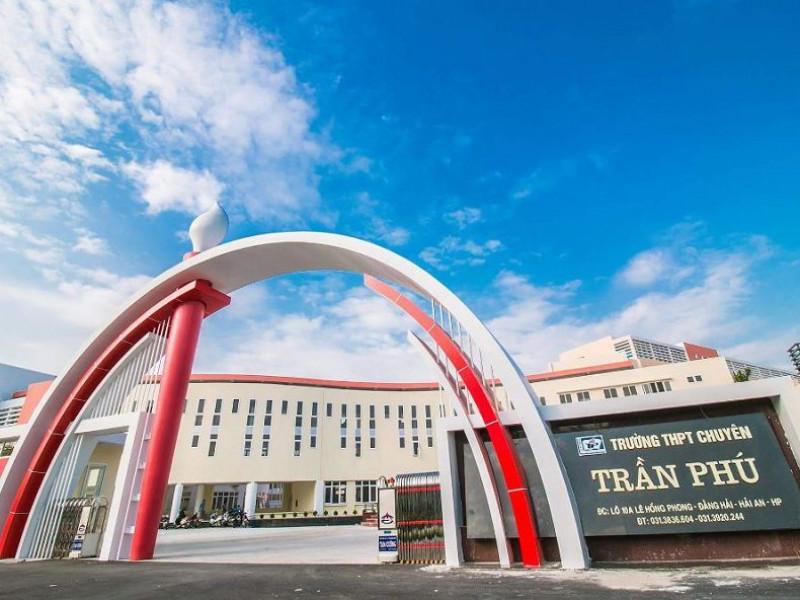
According to the Plan, Hai Phong aims to build its gifted high schools (focusing on Tran Phu and Nguyen Trai) into modern and smart educational environments. Hai Phong expects to create an educational system that ensures harmony between mass and elite education, and between national traditions and global standards. Students at these schools are expected to be talented in specialized knowledge while possessing a solid cultural foundation, ready to become global citizens and high-quality human resources serving the development needs of the city and the country.
Expanding Scale and Focusing on STEM and Foreign Languages
A key component of the roadmap to 2035 is the expansion of student enrollment and specialized classes. The city is particularly focused on strengthening STEM classes (Mathematics, Physics, Chemistry, Biology, and Information Technology), with a goal for each school to have two classes per grade per subject. Class sizes will be limited to no more than 35 students to ensure the highest teaching quality. The new enrollment roadmap is clearly defined by school year:
- 2026-2027 Phase: Nguyen Trai school expects to recruit 15 classes per batch, while Tran Phu recruits 19 classes per batch.
- From the 2029-2030 School Year Onward: The scale will increase significantly to 22 classes per batch at Nguyen Trai and 25 classes per batch at Tran Phu.
- Language Diversification: To meet integration requirements, schools will offer a full range of specialized foreign language classes, including English, French, Chinese, Japanese, Korean, and Russian.
Breakthroughs in Infrastructure and Smart Schools
By 2030, Hai Phong is determined to complete infrastructure investments so that gifted schools meet National Standard Level 2. The most significant highlights include the completion of Phase 3 of the Tran Phu Gifted High School construction project (174.24 billion VND) and the project to relocate and build a completely new Nguyen Trai Gifted High School at a new location with a total cost of 1,120 billion VND. The new infrastructure system will include:
- 100% smart classrooms, digital classroom models, and experience centers.
- Synchronized investment in modern dormitories to meet the boarding and semi-boarding needs of students from afar.
- Digital libraries and digital learning materials connected to national and international systems.
- STEM labs and classrooms equipped to international standards for advanced scientific research.
Building an Elite Faculty
Hai Phong identifies managers and teachers as the deciding factors for educational quality. By 2035, the city ensures a ratio of 3.1 teachers per class and strives for each specialized subject to have at least two teachers per specialized class. Standards for gifted school faculty are being raised to new heights:
- Professional Qualifications: 90% of teachers with a Master's degree or higher, with at least 10% holding a Doctorate.
- Digital Competence: 100% of teachers proficient in using information technology and applying Artificial Intelligence (AI) in teaching.
- Language Skills: 60% of managers and teachers capable of using at least one foreign language in teaching and research (Level 5/6 proficiency according to the Vietnamese competency framework).
- Scientific Research: Each year, each school must have at least 02 articles published in domestic or international specialized scientific journals with an ISSN index.
Comprehensive Quality and International Standards
Students at Hai Phong's gifted schools are directed toward comprehensive development in "Ethics, Intellect, Physique, and Aesthetics". The plan sets strict targets:
- Academic Results: Over 90% of students rated "Good" and over 70% achieving "Excellent" status.
- Language and IT: 100% of students reaching B2 English level (IELTS 5.5+) upon graduation; 80% holding international IT certificates.
- English-led Instruction: At least 30% of Mathematics and Natural Science curricula will be taught entirely in English.
- Soft Skills: Students will be trained in skills such as presentation, teamwork, leadership, and critical thinking. Specifically, 100% of students must know how to play at least one musical instrument/art form and practice one sport.
Regarding elite performance, the city targets over 85% of participants winning prizes in national excellent student exams, with 10% being First Prizes, alongside students winning awards in regional and international competitions. 100% of students are expected to enter prestigious universities, with an increasing rate of admission to famous foreign universities.
Creating "Satellite" Sources from Junior High Schools
To ensure sustainable input quality, Hai Phong will build a network of "satellite" junior high schoolswith "key classes". These schools will be responsible for identifying and nurturing talent early, creating a stable enrollment source for gifted high schools. Local authorities are responsible for allocating budgets to upgrade facilities for these key classes.
Massive Investment and Specialized Mechanisms
The total projected budget to implement the gifted school development plan through 2035 is 1,905 billion VND. The majority of this funding is dedicated to infrastructure and equipment (1,866 billion VND). Additionally, 2.449 billion VND is allocated for faculty training and 36.75 billion VND for specialized incentive mechanisms.
Funding will be mobilized from the city budget, public investment, school revenue, and a strong push for socialization from domestic and foreign businesses and organizations. The city also commits to incentive policies to recruit and employ excellent graduates and national prize winners to teach at gifted schools.
Roadmap and Implementation
The plan is divided into two main stages: (1) 2026-2030: Focus on issuing regulations, infrastructure investment, and digital transformation; (2) Post-2030: Review and implementation for the 2031-2035 period. The Department of Education and Training is assigned the lead role, coordinating with the departments of Finance, Home Affairs, Construction, and Agriculture and Environment for synchronized implementation.
Plan No. 137/KH-UBND is a comprehensive, feasible blueprint with a long-term vision. It not only elevates Hai Phong's educational status but also serves as a key driver for the city to break through in the context of deep international integration and global competition for elite human resources.