
Hai Phong, as one of the largest port cities in Vietnam, has taken the lead in developing and implementing an Action Plan for the National Strategy on Green Growth since 2014. This is not only an important step towards sustainable development but also affirms the city's commitment to environmental protection and climate change adaptation. With this strategic vision, Hai Phong has actively integrated into the international community, collaborating with global partners to promote projects and initiatives aimed at green growth.
To implement the National Strategy on Green Growth, the Institute for Global Environmental Strategies (IGES) has supported Hai Phong in completing the net-zero emissions scenario by 2050. This scenario has been researched and developed since 2022, involving relevant agencies in Hai Phong to fulfill Vietnam's commitments at the COP26 Conference. The net-zero emissions scenario focuses on seven key areas: industry, commerce, transportation, households, agriculture and forestry, waste, and land use. It is projected that Hai Phong can reduce over 99% of total greenhouse gas emissions by 2050 through 34 specific projects. However, to achieve this goal, the city needs to cut an additional approximately 530 tons of CO2 equivalent.
In addition, over the years, Hai Phong has also coordinated with various localities in Japan to implement environmental protection projects aimed at green growth, achieving encouraging results. Under the sister city relationship between Hai Phong and Kitakyushu, since 2015, the two cities have collaborated to develop an Action Plan Report to promote green growth, proposing 15 pilot projects across seven areas such as waste, energy, transportation, Cat Ba Island, water supply and drainage, and environmental protection. Notable projects have received significant technical and technological support from Kitakyushu, such as the "Household Waste Classification and Compost Production Project at the Trang Cat Waste Treatment Complex" using organic fertilizer production technology from Kitakyushu (2015); and the "High BOD Wastewater Treatment Project at Ngoc Hai Fishing Port, Do Son District, Hai Phong City" (2019-2023) using high BOD wastewater treatment technology through activated fermentation, utilizing enzyme catalysts and microorganisms from J-Fil Co., Ltd. Kitakyushu has also supported Hai Phong in implementing the project "Promoting Eco-Industrial Parks Towards Carbon Neutrality in Hai Phong City." This project, proposed by Kitakyushu along with IGES and funded by the Japanese Ministry of the Environment, aims to develop energy-saving, renewable energy, smart energy, and energy recycling projects from waste. The project aims to fulfill the Prime Minister's commitment to net-zero emissions by 2050, contributing to the promotion of carbon-free industrial parks and building a carbon-free Hai Phong City. The city is also coordinating with Kitakyushu to request financial support from the Japan International Cooperation Agency (JICA) with the participation of women's associations and residents of communes and towns in Vinh Bao District. The project aims to change the lifestyle of residents by establishing a system to disseminate models for waste classification, self-recycling, and reusing organic waste at households, factories, and businesses.
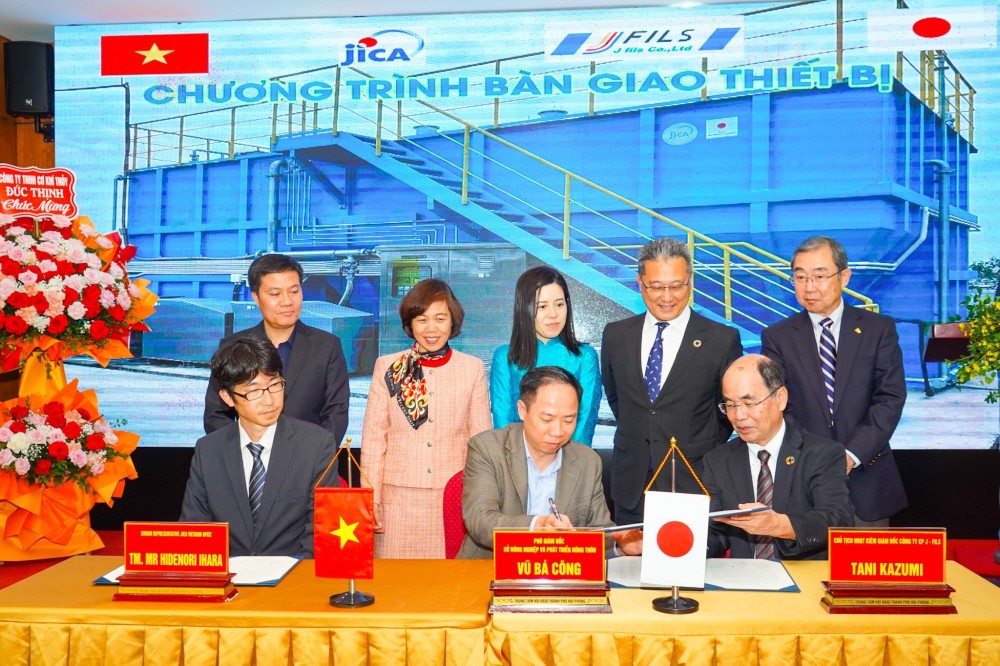
Signing the Equipment Transfer for the High BOD Wastewater Treatment Project at Ngoc Hai Fishing Port, Do Son District
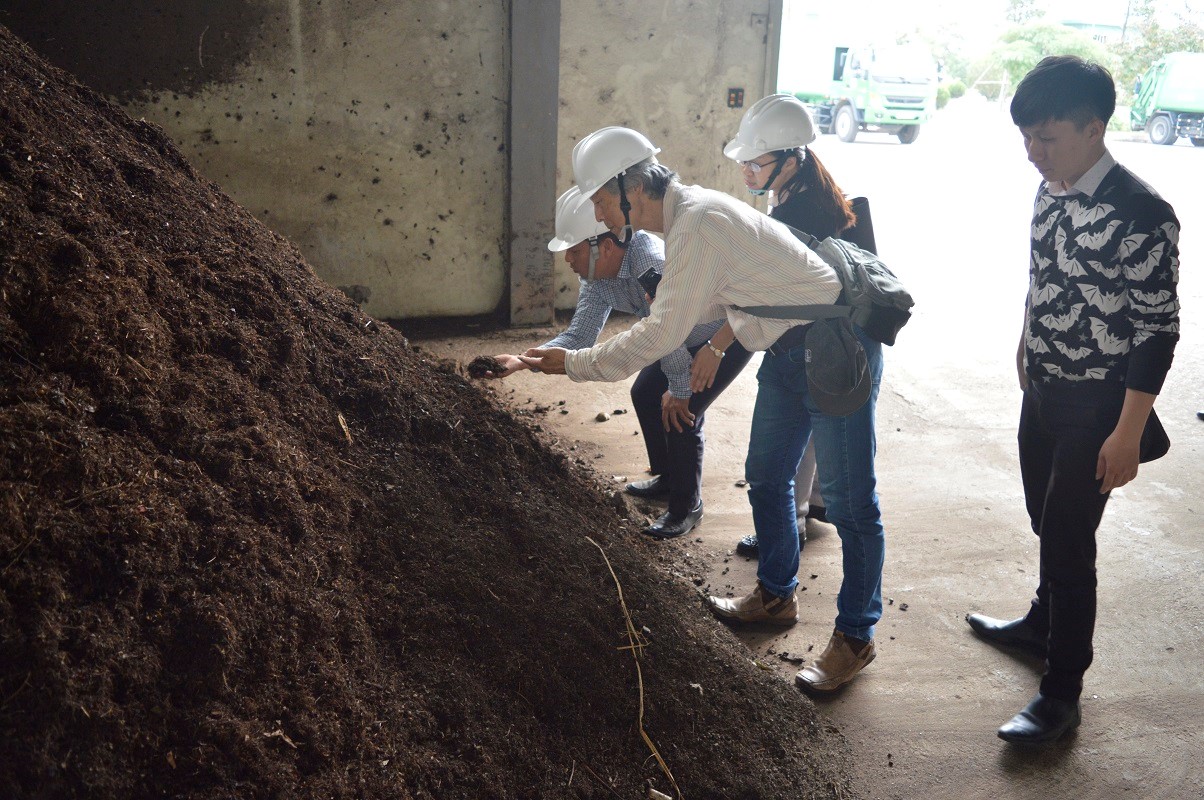
Household Waste Classification Project and Compost Production Project at the Trang Cat Waste Treatment Complex
In addition to Kitakyushu, Hai Phong has also collaborated with other localities in Japan, such as working with Shiga Province to implement activities for the project "Cooperation and Support for Applying the Biwa Lake Model to Enhance Management of the Cat Ba Archipelago and Surrounding Areas," aimed at supporting voluntary activities through cooperation between the state, businesses, and residents of the Cat Ba Archipelago, encouraging collaboration with Quang Ninh Province in efforts to conserve the archipelago and expand to surrounding areas, including Ha Long Bay, by applying the main ideas and expertise of the Biwa Lake Model based on Shiga's water improvement technology; and cooperating with Kagawa Province to implement the "Marine Waste Reduction Project on Cat Ba Island" with community participation to improve waste conditions and promote sustainable tourism development.
International cooperation activities in implementing green growth in Hai Phong have been actively carried out, with close coordination between the city and localities, international partners, and relevant agencies. These efforts not only create opportunities for learning and exchanging knowledge and practical experiences but also help Hai Phong access advanced techniques and technologies in building an environmentally friendly society and reducing carbon emissions. The implemented projects have significantly contributed to addressing issues related to wastewater treatment, waste management, and carbon emission reduction in Hai Phong. These efforts not only protect the environment but also support the city in fulfilling Vietnam's commitments at the COP26 Conference and the national strategies towards the goal of net-zero emissions by 2050.
Hai Phong is on the path of international integration and sustainable development through green growth projects. Cooperation with Kitakyushu, Shiga, and international organizations not only helps the city address environmental issues but also creates a solid foundation for sustainable development in the future. With these efforts, Hai Phong is asserting its position as a model city in responding to climate change and moving towards a carbon-free future.