
On April 1, 2026, the Office of the Hai Phong City People's Committee issued Document No. 3428/VP-VX, conveying the instructions of Vice Chairman Nguyen Minh Hung regarding the implementation of Decision No. 373/QĐ-BVHTTDL from the Ministry of Culture, Sports, and Tourism. This directive guides the adjustment of the cultural and sports facility network planning for the 2021-2030 period, with a vision toward 2045, within the port city.
Political Determination and Synchronous Involvement
Following the city leadership's direction, the Department of Culture, Sports, and Tourism has been assigned the lead role, coordinating with various departments, agencies, and People's Committees at all levels to organize the execution of the planning approved by the Minister. A key task is the strict management of land funds designated for the development of the cultural and sports facility network in accordance with the plan, while ensuring consistency and synchronization between the city's specialized plans and national planning.
This planning adjustment is not merely a rearrangement of physical facilities but represents a shift in developmental thinking. Hai Phong identifies culture and people as the foundation, a vital endogenous resource, and the "soft power" of the nation in the new era.
Modernization Goals for the Facility Network by 2030
The adjusted plan sets a goal that by 2030, the network of cultural and sports facilities will be basically completed in a synchronous and modern manner, capable of hosting national and international events. As a growth pole and developmental driver of the Red River Delta, Hai Phong will focus on establishing key facilities.
The city aims for 100% of provincial-level administrative units to have three basic types of cultural institutions (arts and culture centers, museums, libraries) and three basic sports facilities (gymnasiums/arenas, stadiums, swimming pools) with modern investment. Specifically, Hai Phong's provincial public library will be upgraded into a regional knowledge center, playing a role in promoting connection and sharing information resources among localities within the socio-economic region.
Positioning Hai Phong as a Driver for Regional Sports Development
In the field of sports, the plan identifies Hai Phong as a key area for building new provincial sports training centers that serve as drivers for regional development. These facilities will receive investment in modern technical infrastructure to serve high-performance sports development, aiming for medals at major arenas such as ASIAD and world championships.
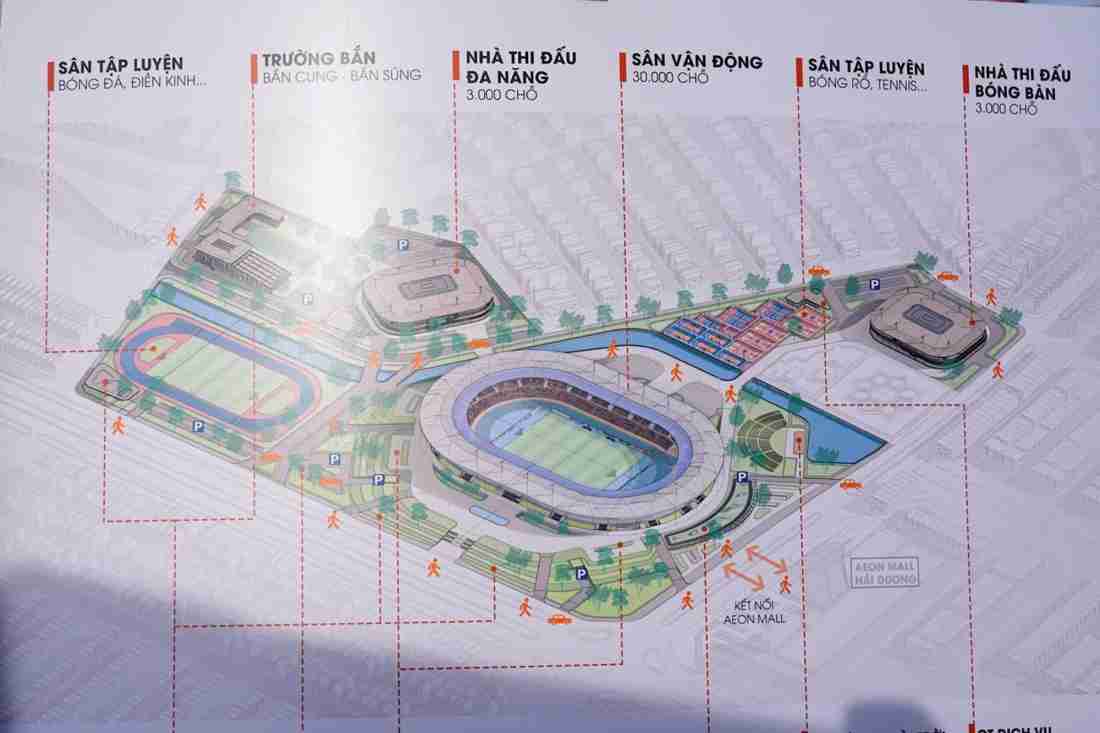
Additionally, the city will continue to invest in modern sports complexes, acting as "satellites" for organizing large-scale sports festivals and promoting regional and inter-regional links. These works will apply advanced technology to ensure international standards for key sports.
Digital Transformation and Sustainable Development
One of the newest features of the adjusted planning is the emphasis on digital and green transformation. Hai Phong will focus on building a digital database for culture and sports, integrating data on heritage, athletes, coaches, and competition systems. The goal is to achieve 100% digitalization of national and special national-ranked cultural heritages by 2030.
The city will also promote the application of Geographic Information Systems (GIS) in digitalizing heritage maps, assisting in the visual management and protection of cultural values in the digital space. Furthermore, large-scale cultural industry and entertainment centers will be formed, utilizing modern technology to expand accessibility for residents and tourists.
Innovating Governance and Resource Mobilization
Hai Phong will innovate its investment mechanisms by promoting socialization and Public-Private Partnerships (PPP), utilizing models such as "public investment - private management". The city encourages private enterprises to proactively participate in the list of projects calling for investment and will build support mechanisms for businesses to improve management capacity and technology application.
Alongside state budget capital prioritized for core facilities, the city will maximize the mobilization of social resources to develop cultural industries and the sports economy. The renovation and beautification of riverbanks and canals into open cultural parks and walking paths combined with public art spaces are also part of the strategy to build a livable city.
Vision Toward 2045: A Symbol of Prosperity and Aspiration
By 2045, Hai Phong aims to possess a synchronous and sustainably developed national cultural and sports facility network, playing a pillar role in building comprehensively developed Vietnamese people. Cultural and sports works will not only be event venues but also strong, symbolic brands representing the spirit of self-reliance and the nation's aspiration for peace.
With the drastic implementation of Decision 373/QĐ-BVHTTDL, Hai Phong is step-by-step asserting its position as a major cultural and sports center, contributing directly to increasing "soft power" and enhancing Vietnam's status on the international stage. This plan serves as the foundation for the port city's efforts to ensure that all social classes have equitable access to high-quality cultural and sports services.