
On the morning of October 9, Mr. Nguyễn Văn Tùng, Chairman of the Hai Phong City People's Committee, hosted and held a working session with a high-level delegation from the Egyptian Administrative Monitoring Agency, led by Mr. Tamer El Fargany, Vice Chairman of the Egyptian Administrative Monitoring Agency. Also present at the meeting were Mr. Dương Quốc Huy, Deputy Inspector General of the Government Inspectorate; Mr. Đỗ Mạnh Hùng, Director General of the Department of International Cooperation (Government Inspectorate); Mr. Nguyễn Đình Chuyến, Member of the Standing Committee of the Hai Phong City Party Committee and Chairman of the Hai Phong City Party Committee’s Inspection Commission; as well as senior leaders from relevant departments, agencies, and other units.
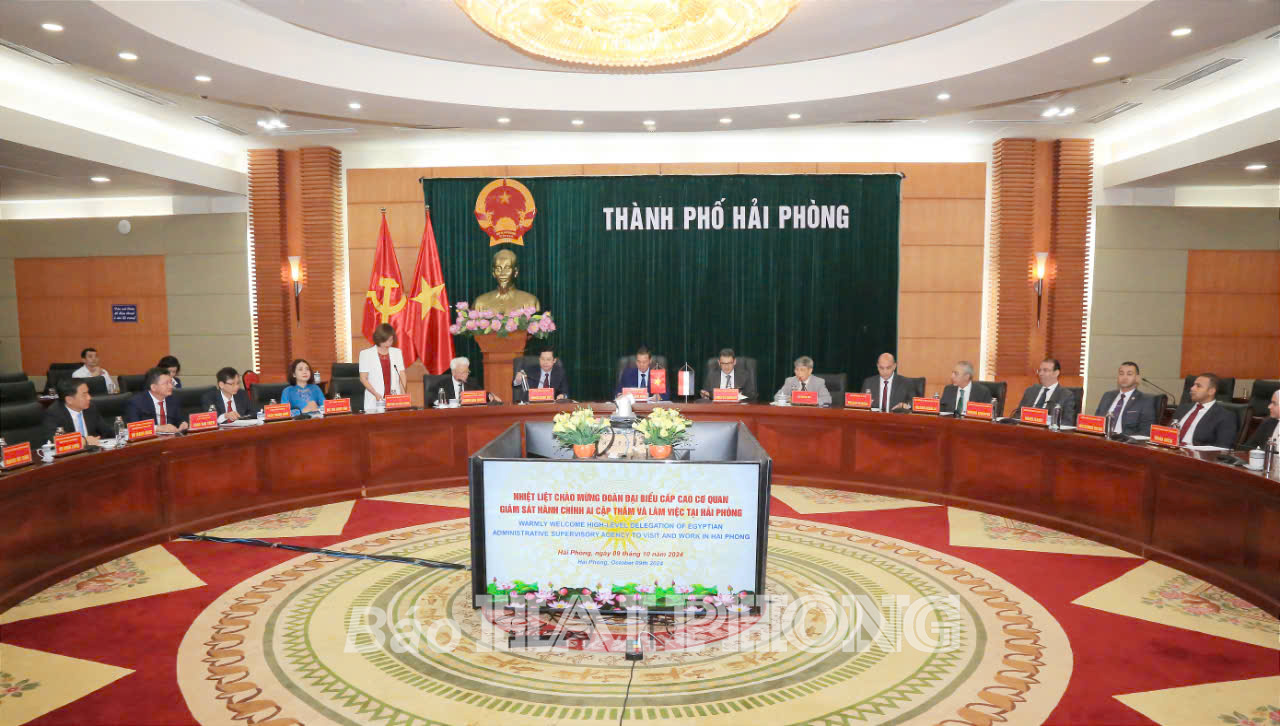
Working scenerio.
In welcoming the high-level delegation to Hai Phong for their official visit, Mr. Nguyễn Văn Tùng, Chairman of the Hai Phong City People's Committee, emphasized that Vietnam and Egypt enjoy a strong and friendly cooperative relationship. The visit signifies the further strengthening of cooperation between Vietnam and Egypt, as well as between the Egyptian Administrative Monitoring Agency and the Government Inspectorate of Vietnam, along with Hai Phong’s partnerships with Egyptian counterparts.
In his address, Mr. Tùng shared an overview of Hai Phong's strategic geographical advantages, development potential, and recent socio-economic progress, particularly in terms of attracting foreign investment. He noted that the city currently hosts nearly 1,000 active foreign investment projects, totaling an estimated 31 billion USD, from investors across 39 countries and territories. Over the first nine months of 2024, Hai Phong’s export turnover to Egypt reached 1.1 million USD, while imports from Egypt amounted to 1.05 million USD. However, Mr. Tùng pointed out that the trade relations between Hai Phong and Egypt remain relatively modest, not yet reflecting the full potential and advantages of both parties. He expressed hope that the discussions would lead to further expansion of cooperation across various sectors in the future.
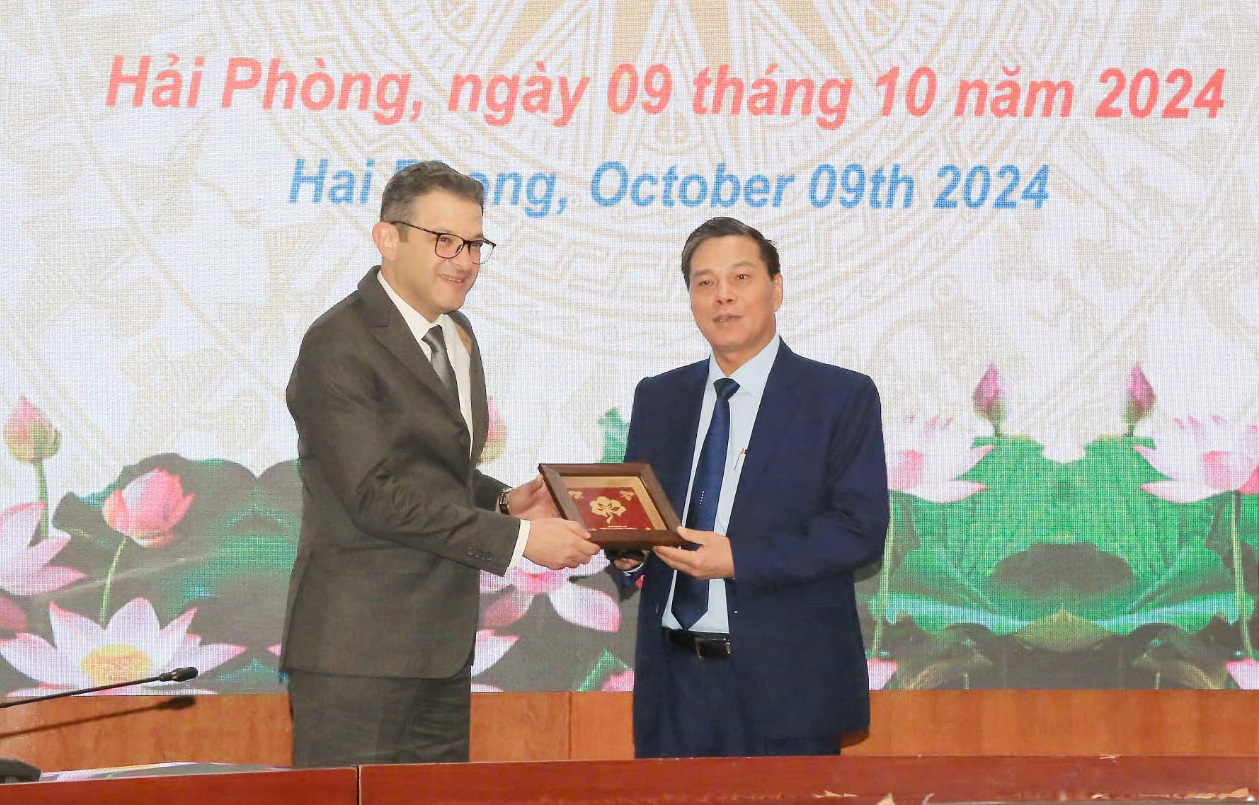
Mr. Nguyễn Văn Tùng, Chairman of the Hai Phong City People's Committee, presents a commemorative gift to the delegation of the Egyptian Administrative Monitoring Agency.
Regarding the delegation’s interest in anti-corruption efforts, Mr. Tùng outlined that combating corruption has always been a priority for the Government Inspectorate, central authorities, and local departments in Hai Phong. Over the years, significant attention has been given to inspection, anti-corruption measures, and timely leadership in ensuring the effectiveness of these initiatives. These efforts have led to positive outcomes in reducing corruption, limiting violations, and maintaining political stability, which in turn supports economic development and fosters public trust in the city’s governance. In response, Mr. Tamer El Fargany, Vice Chairman of the Egyptian Administrative Monitoring Agency, expressed his appreciation for the warm hospitality extended by Hai Phong’s leaders. He highlighted that the visit offers a valuable opportunity to learn from Vietnam’s practical experiences in anti-corruption and governance reform. He stated that this exchange would contribute to enhancing the effectiveness of public administration and creating a sound socio-economic environment, while also fostering further collaboration and strengthening the partnership between Egypt and Vietnam in the future.
During the working session, Ms. Bùi Thị Hồng Vân, Head of the Hai Phong City Inspectorate, provided an overview of the city’s inspection activities, including anti-corruption measures. She highlighted key leadership strategies, management practices, and the implementation of anti-corruption policies within Hai Phong. Ms. Vân also shared valuable insights and lessons learned in the areas of inspection, anti-corruption, and modernization of inspection practices. Additionally, both sides exchanged experiences regarding asset recovery from corruption, as well as mechanisms for monitoring and controlling assets and income.