
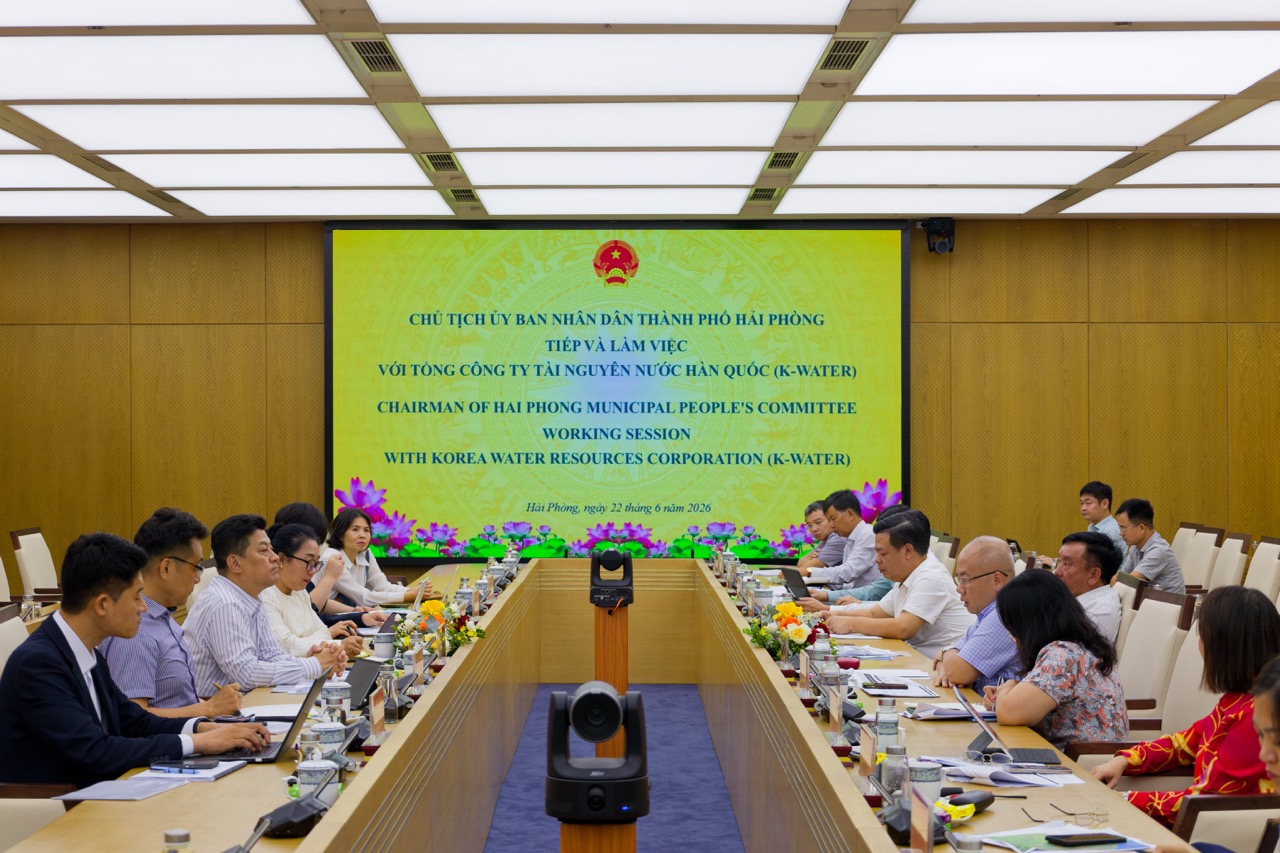
Following a highly successful diplomatic mission to the Republic of Korea in early June 2026, the leadership of Hai Phong City has moved decisively to concretize cooperation with the Korea Water Resources Corporation (K-water). On June 22, 2026, Chairman of the Hai Phong City People’s Committee Do Thanh Trung chaired a high-level working session with a K-water delegation led by Senior Vice President Han SeongYong to discuss the "Hai Phong Integrated Water Resources Management Roadmap 2050". This collaboration is poised to revolutionize the city's water infrastructure, ensuring sustainable development and enhancing its global investment appeal.
The Implementation Process: From Vision to Action
The foundation for this partnership was established during the official visit of Hai Phong’s leadership to Korea from May 31 to June 6, 2026. A pivotal Memorandum of Understanding (MOU) was signed between the Hai Phong Economic Zone Authority (HEZA) and K-water, marking a new chapter in bilateral relations.
To move beyond conceptual agreements, Chairman Do Thanh Trung has directed the immediate establishment of a Joint Working Group. Led by the Director of the Department of Agriculture and Environment, this group includes representatives from the Departments of Construction, Foreign Affairs, Finance, and Science and Technology, as well as HEZA. Their mission is to coordinate directly with K-water experts to share hydrological data, conduct field surveys, and finalize the scope of the Comprehensive Water Management Master Plan. This plan will serve as the strategic blueprint for the city’s water future, aligning with national development goals and Korea-Vietnam comprehensive strategic interests.
Potentials for Cooperation: Addressing Urgent Challenges
Hai Phong is currently the third-largest city in Vietnam and a critical hub for global manufacturing and logistics. With over 20,000 hectares of developed industrial zones and a consistent GRDP growth rate of 12.5% over the past decade, the demand for high-quality, stable water supplies is surging. However, the city faces significant water security risks that threaten its long-term stability:
- Saltwater Intrusion: During the dry season, saltwater pushes deep inland, endangering raw water intake points and agricultural production.
- Urban Flooding: The city’s low-lying terrain and aging drainage systems lead to recurrent flooding during extreme weather events.
- Infrastructure Gaps: Current water facilities are increasingly fragmented and aging, struggling to meet the rigorous reliability standards required by high-tech international investors.
Recognizing these "bottlenecks," Hai Phong looks to K-water’s world-class expertise. K-water’s proven success in utilizing Artificial Intelligence (AI) at the Sihwa Tidal Power Plant and the Shiheung Water Treatment Plant offers a transformative model for Hai Phong's digital transition.
Strategic Core Projects and Technological Innovation
The cooperation focuses on four detail-oriented strategies designed to build a resilient "Smart Water City":
- Integrated Water Resource Management (IWRM): Utilizing MODSIM software, the partners will optimize water allocation across domestic, industrial, and agricultural sectors. This includes assessing alternative sources such as underground dams and treated wastewater reuse to ensure a reliable supply 365 days a year.
- Climate Change Resilience: To combat saltwater intrusion, the project will implement EFDC 3D modeling. This scientific approach allows for precise forecasting, enabling water plants to selectively time their intake to avoid high salinity levels.
- Digital Twin Technology: A "Digital Twin" platform will be developed for river basin management and flood forecasting. By simulating rainfall and runoff patterns, city managers can make data-driven decisions on operating sluice gates and pumping stations to protect vulnerable urban areas during "golden time" windows.
- Smart Water Network Management (SWNM): Through IoT sensors, the city will monitor pressure and flow in real-time. This enables immediate leak detection and rapid response to infrastructure failures, significantly reducing water loss and operating costs.
Expected Results and Strategic Impact
The partnership between Hai Phong and K-water is expected to deliver multi-dimensional benefits:
- Economic Prosperity: By providing a "fail-safe" water supply, Hai Phong will drastically enhance its competitiveness in attracting Foreign Direct Investment (FDI), particularly in high-growth sectors like semiconductors and electronics.
- Social Well-being: Citizens will benefit from safer living environments, reduced flood damage, and higher-quality drinking water that meets international standards.
- Technological Leadership: Hai Phong aims to become a national pilot model. Successful technologies demonstrated here will be standardized and replicated across other provinces in Vietnam.
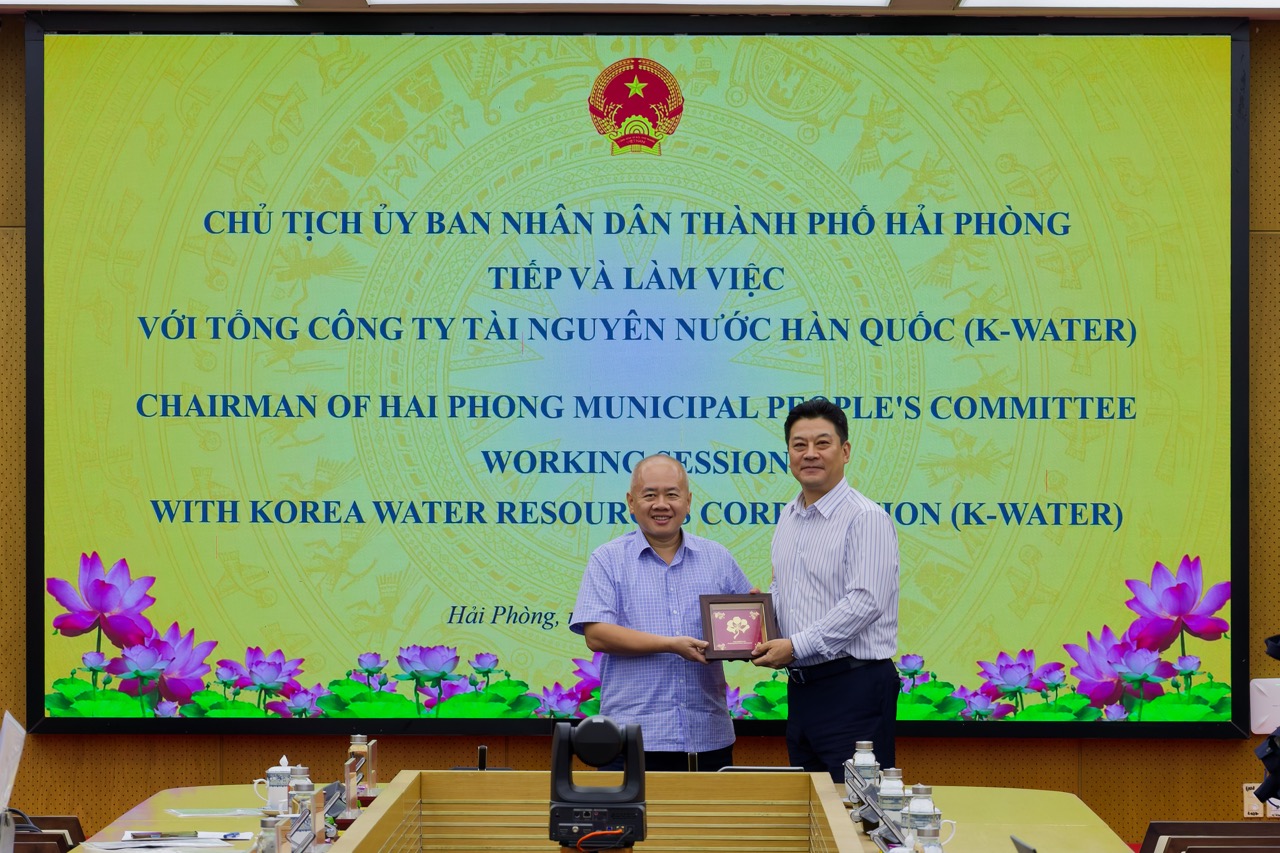
In his concluding remarks, Chairman Do Thanh Trung emphasized that the city is committed to creating the most favorable conditions for K-water. This cooperation is not merely a technical project; it is a testament to the Vietnam-Korea Comprehensive Strategic Partnership, driving Hai Phong toward a sustainable, smart, and prosperous future. The city expects to see tangible progress on priority projects by the end of 2026, setting a strong foundation for the 2050 vision.