
Recently, the Hai Phong City People's Committee issued Document No. 601/UBND-TH regarding the synthesis of a proposed list of resolutions to be submitted at the regular sessions of the 17th tenure City People's Council in 2026. This marks a crucial preparation step to concretize socio-economic development goals, ensure national defense and security, and enhance the efficiency of state management in the port city during the new phase.
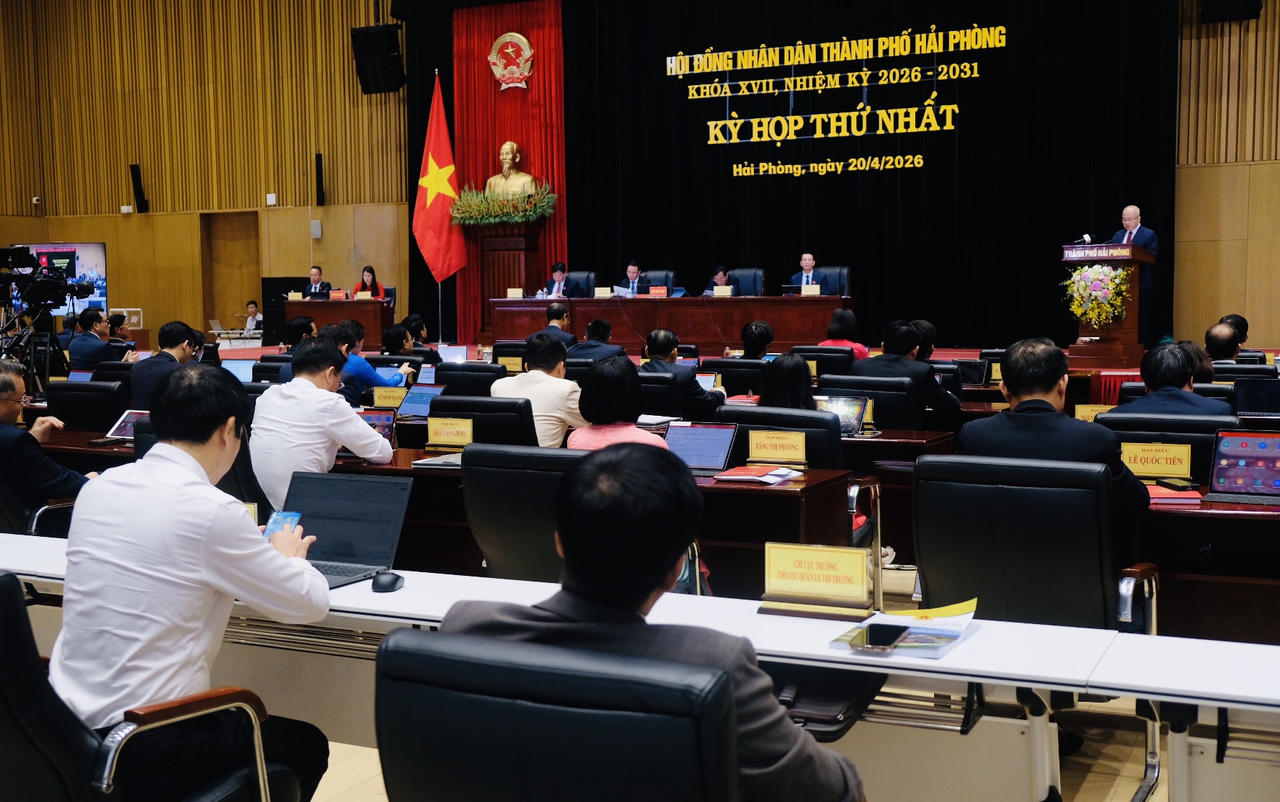
Overview of the 2026 Legislative Plan
Based on proposals from departments, sectors, localities, and units, the City People's Committee has agreed on a list of 42 contents scheduled for submission to the City People's Council for consideration. According to the roadmap, these contents will be divided into two main sessions: 23 contents will be presented at the Mid-year Regular Session and the remaining 19 contents will be focused on at the Year-end Regular Session of 2026.
The development of this list was carried out in the spirit of the Standing City People's Council's instructions in Document No. 22/HĐND-CTHĐND dated March 24, 2026. On behalf of the City People's Committee, Vice Chairman Le Anh Quan signed the document requesting the Standing People's Council to review and decide on this list to serve as a basis for the lead agencies to implement the development of documents on schedule.
Mid-year Session: Focus on Infrastructure Breakthroughs and Financial Policies
At the mid-year regular session of 2026, topics concerning finance and public investment will account for a large proportion, featuring a series of important resolutions drafted by the Department of Finance. Most notable is the proposal to approve the investment policy for the Project to complete Belt Road I in the Western Hai Phong area, a key infrastructure work aimed at strengthening regional connectivity and relieving urban traffic pressure.
Additionally, financial policies supporting public services are also emphasized, such as a resolution regulating the level of support for administrative procedure result return costs via the public postal system when performing online public services. The city also expects to issue regulations on business registration fees and policies for land rent exemption or reduction for socialized facilities and non-profit projects to encourage investment in community sectors.
Regarding human resource management and social security, the Department of Home Affairs will submit a resolution regulating criteria for experts, scientists, and high-quality laborers working at enterprises within the Hai Phong City Free Trade Zone. This is a strategic step aimed at attracting "brainpower" to serve the city's specific economic model. Furthermore, the city's gift levels for policy beneficiaries on major holidays such as the Lunar New Year, July 27, and National Day (September 2) will be standardized through a new resolution.
In the fields of education and culture, policies supporting vocational training for the 2026–2030 period and funding for the "Building a Learning Society" Scheme will be brought forward for discussion. The Department of Culture, Sports, and Tourism will also provide advice on naming roads, streets, and public works, contributing to the beautification and modernization of the urban appearance.
Year-end Session: Strategic Vision and Organizational Stability
The year-end regular session of 2026 will be a pivotal time to decide on the development scenario for the following year. The City People's Committee will submit for the People's Council's consideration the 2027 Socio-Economic Development Plan, the public investment plan, and the 2027 local budget revenue and expenditure estimate. Another important content is the decentralization of revenue sources, expenditure tasks, and the percentage distribution of revenues between the city budget and commune-level budgets for the 2027–2030 period.
Regarding planning and construction, the Department of Construction will submit for approval the General Planning of Hai Phong City to 2050, with a vision to 2075. This is a historical plan that defines the city's development space for the next half-century. Simultaneously, the Scheme for developing public passenger transport by bus for the 2026–2030 period will also be considered to complete the public transport system.
In the field of security and order, the City Police will submit resolutions regulating minimum housing area conditions for permanent residence registration at rented, borrowed, or stayed-in accommodations. Notably, this resolution will replace Resolution No. 16/2021/NQ-HĐND of the former Hai Duong Provincial People's Council, demonstrating the legal synchronization process after the administrative boundary merger. The criteria for establishing Security and Order Protection Groups at the grassroots level will also be perfected to ensure stability from the ground up.
Resource Management and Rural Development
Throughout both sessions in 2026, issues regarding Agriculture and the Environment will always be prioritized, with a large number of resolutions led by the Department of Agriculture and Environment. The city will review and pass a list of land recovery projects and land areas for investigation and survey before recovery in accordance with the Land Law and the National Assembly's Resolution No. 226/2025/QH15.
To protect land resources, the city expects to abolish outdated resolutions that are no longer appropriate and issue new policies on funding support for the destruction and dismantling of fishing vessels and job conversion for fishermen until 2030. Resolutions on New Rural Development for the 2026–2030 period, agricultural production support after natural disasters, and regulations on areas where livestock farming is prohibited will also create a solid legal framework for the sustainable development of suburban areas.
The list of 42 contents planned for the 2026 regular sessions reflects the efforts of the Hai Phong city government in preparing a comprehensive legal corridor. From trillion-dong transport infrastructure projects to specific social security policies, all aim at the goal of building Hai Phong into a civilized, modern, and livable city that meets the expectations of the city's people.