
On March 11, 2026, the Prime Minister officially issued Decision No. 423/QD-TTg, approving the General Planning Task for Hai Phong City until 2050, with a vision toward 2075. This is a landmark document that not only shapes the development space for the Port City over the next half-century but also lays a solid foundation for Hai Phong to become a primary growth engine for the country and the Southeast Asian region.
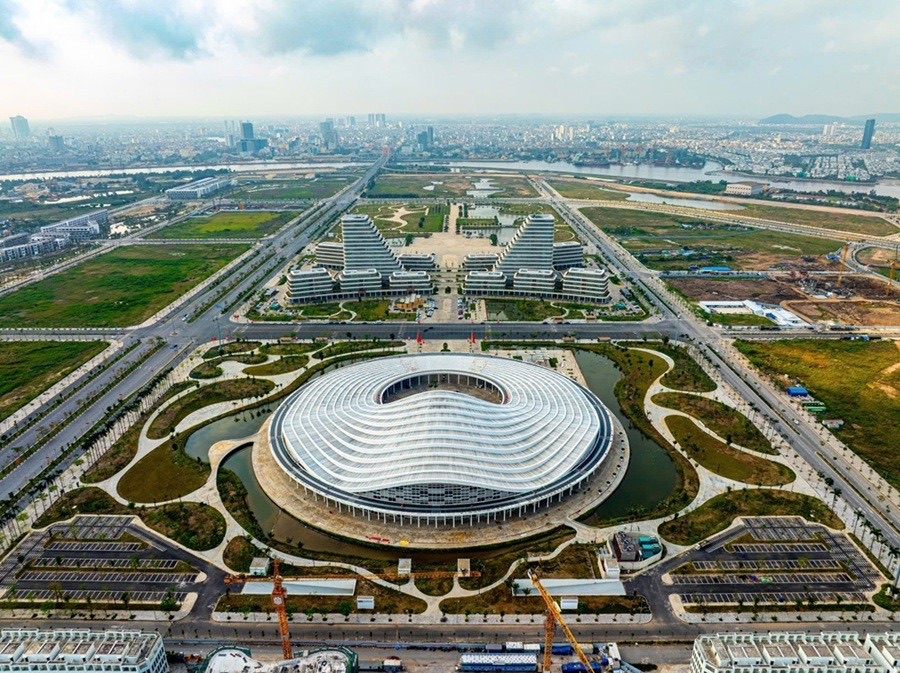
Long-term Vision and Breakthrough Scale
According to the planning content, the scope covers the entire administrative boundary of Hai Phong City after its merger, with a total natural land area of approximately 3,194.72 km². The city's boundaries are expanded to connect closely with the provinces of Quang Ninh, Bac Ninh, Hai Duong, and Hung Yen, forming a dynamic growth pole in the Red River Delta.
The planning period is divided into two phases: short-term until 2040 and long-term until 2050, with a far-reaching vision to 2075. Notably, the plan forecasts that Hai Phong's population will experience robust growth, expected to reach about 8.50 - 9.50 million people by 2050. To accommodate this development, the urban construction land area will also be expanded to 160,000 - 180.000 hectares by 2050.
Characteristics of a Modern "Maritime Mega-city"
Hai Phong is positioned as a special-class city and a crucial maritime economic center both nationally and internationally. The city will serve as the major gateway to the sea for the Hanoi Capital region and northern provinces, as well as a vital transportation hub connecting domestic and international economic corridors through a system of modern seaports, aviation, expressways, and railways.
The plan identifies Hai Phong as a center for modern industrial development, high technology, logistics, and large-scale integrated services. Specifically, the city aims for a model of a modern, civilized maritime city that crystallizes the historical and cultural values of the Xu Dong region and the characteristic tradition of a port city.
Strategic Significance: A Lever for Sustainable Development
The approval of this General Planning Task carries immense significance across multiple dimensions:
- Management and Legal: This serves as an important legal framework for the city to implement, adjust subdivision plans and detailed plans, and manage construction investment according to the established roadmap.
- Digital Economic Development: The planning provides infrastructure space for data centers, the Hai Phong SOC (Security Operations Center), and the IOC (Intelligent Operations Center), effectively supporting the goals of digital transformation and smart economic development that the city is pursuing.
- Regional Connectivity: The plan clarifies Hai Phong's role in close linkage with the Capital region and neighboring provinces, affirming its position as a growth pole and international trade gateway for the entire region.
- Conservation and Adaptation: The planning emphasizes a balance between economic development and the protection of the environment and marine ecology, while enhancing resilience to climate change. Hai Phong will develop in a green, sustainable direction, improving the quality of life for its citizens.
Multi-modal transportation systems, particularly the Lao Cai - Hanoi - Hai Phong railway line and the Lach Huyen deep-sea port system, will be the primary "arteries" to realize this vision.
In summary, Decision 423/QD-TTg is not merely a construction plan but a "blueprint for the future," awakening the potential and comparative advantages of a special-class maritime port city. With a methodical roadmap and long-term vision, Hai Phong is confidently asserting its position as one of the most livable, smart, and modern cities in the region within the digital era.