
On June 11, 2026, in Hanoi, the Politburo and the Secretariat of the Party Central Committee solemnly organized a national conference to study and implement Resolution No. 06-NQ/TW, dated May 19, 2026, regarding the implementation of the foreign policy lines of the 14th National Party Congress. General Secretary and President To Lam attended and delivered a strategic keynote speech, providing ideological and action-oriented guidance for the entire Party, army, and people in the field of foreign affairs to meet the requirements of national development in a new era.
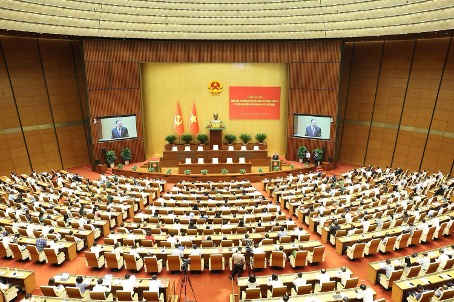
General Secretary delivered a keynote speech at the conference (From collected source)
Foreign Affairs as the "Extension of Domestic Affairs" in a Changing World
Opening his speech, General Secretary To Lam emphasized that Resolution No. 06-NQ/TW concretizes the major orientations of the 14th Congress, reflecting the Party's vision for foreign policy in the new period. Following the spirit of Resolution No. 59-NQ/TW of 2025 on international integration, the new resolution aims to develop foreign affairs commensurate with the country's historical and cultural stature, towards a prosperous and happy Vietnam steadily progressing toward socialism.
Analyzing the international context, the General Secretary noted that the world is witnessing turning points unprecedented since World War II. In a volatile world, nations that fail to keep up or choose isolation will lag behind; conversely, those that are strategically proactive and cooperative will have opportunities to rise. Vietnam determines that its development cannot be separated from the world's development; therefore, combining national strength with the power of the era is a prerequisite to "stand shoulder to shoulder with the powers of the five continents".
Recalling historical lessons, the General Secretary affirmed that domestic and foreign affairs always go hand in hand and complement each other. Correct foreign policy helped Vietnam gain immense international support to liberate the nation and build the country. In the new era, foreign affairs and international integration must play a vital role in implementing a development model that takes science, technology, innovation, and digital transformation as its pillars.
Five Theses Shaping the New Foreign Policy Ideology
Resolution No. 06-NQ/TW focuses on concretizing the foreign policy of the 14th Congress through five defining theses:
- A Crucial and Regular Task: For the first time, foreign affairs are identified as being at the "frontline and center" alongside national defense and security. Foreign affairs are responsible for identifying and neutralizing conflict risks early, from afar, and from their points of origin.
- Manifesting Vietnam's Stature and Bravery: Foreign affairs do not only protect interests but also serve as a method to spread Vietnamese civilizational values, building respect and trust in the international community.
- Strategic Autonomy and Self-Reliance: This is the capacity to master the national destiny, correctly position the nation's status, and promote national internal strength to make the country stronger.
- A Mission for National Interest and Global Responsibility: Taking the people as the center, placing peace and independence as the foundation, and considering contributions to the international community as Vietnam's responsibility.
- Comprehensive and Synchronous Foreign Affairs: An undertaking of the entire Party and people based on the coordination of three pillars (Party diplomacy, State diplomacy, and people-to-people diplomacy) closely linked with defense, security, and all levels of government.
Five Strategic Orientations for Implementation
To shift Vietnamese diplomacy toward "creating national development capacity" and "contributing to shaping the rules of the game," the General Secretary emphasized five major orientations:
- First, promoting a pioneering role in crisis prevention and strengthening the security-development belt. Top priority is given to relations with neighboring countries through strategic connectivity in infrastructure, logistics, and energy, while harmoniously handling border and water security issues. For major powers, it is necessary to proactively shape balanced and harmonious relations. Within ASEAN, Vietnam should enhance its central role and propose cooperative initiatives.
- Second, foreign affairs as a driver for new development space and opportunities. Foreign policy must shift focus from "attracting" to "selecting" high-tech FDI and unlocking new financial sources like green ODA and climate credit. Simultaneously, "technology diplomacy" must be promoted, connecting with world innovation centers to help shape new rules regarding AI, data, and green standards.
- Third, demonstrating global responsibility and multilateralism. Vietnam needs to promote an active voice to restore trust in multilateralism and contribute to protecting an international order based on international law. With its new position and strength, Vietnam can rise to a core, leading role in appropriate multilateral mechanisms to respond to challenges like climate change and food security.
- Fourth, elevating national position and promoting soft power. Continue promoting a foreign policy of peace and friendship, turning a thousand-year-old culture into international support. Resources from the overseas Vietnamese community must be unlocked, turning cultural diplomacy into an endogenous resource for development.
- Fifth, building a comprehensive, modern, and professional diplomacy. This diplomacy must reflect the identity of the new era and have a solid theoretical system. It is crucial to build a team of foreign affairs officials who are "both red and expert," encouraging the "six dares": dare to think, dare to speak, dare to do, dare to take responsibility, dare to innovate, and dare to face difficulties.
Determination to Act for Substantive Results
To bring the Resolution to life, the General Secretary pointed out four major issues in organization and implementation:
1. Defining foreign affairs as the cause of the entire people: Under the absolute leadership of the Party, all levels from central to local must get involved. Each sector doing its job well is a contribution to foreign affairs. 2. Rapidly concretizing into action: Eliminate formalistic and ostentatious thinking; use specific results and substance as the measure of effectiveness. 3. Innovating inter-agency coordination mechanisms: Closely combine foreign affairs pillars with defense, security, economic, and cultural sectors. Promote the application of digital technology and real-time monitoring systems to urge the implementation of international commitments. 4. Perfecting the apparatus and personnel: Establish a Central Steering Committee for Foreign Affairs and International Integration to build a comprehensive foreign policy strategy at a new level.Concluding the conference, General Secretary To Lam affirmed that when the country is united and brave, combining national strength with the power of the era, we will overcome all difficulties. With high political determination and new approaches, Resolution No. 06-NQ/TW will promote the pioneering role of foreign affairs, contributing to building a developed, independent, and self-reliant Vietnam in the new era.