
Resolution 45 of the Politburo sets a goal for the city’s average GRDP growth from 2018 to 2025 to reach at least 13%. To achieve this ambitious target, the city has focused on a set of solutions, with one key pillar being the strong development of economic sectors, creating breakthroughs in key and advantageous industries.
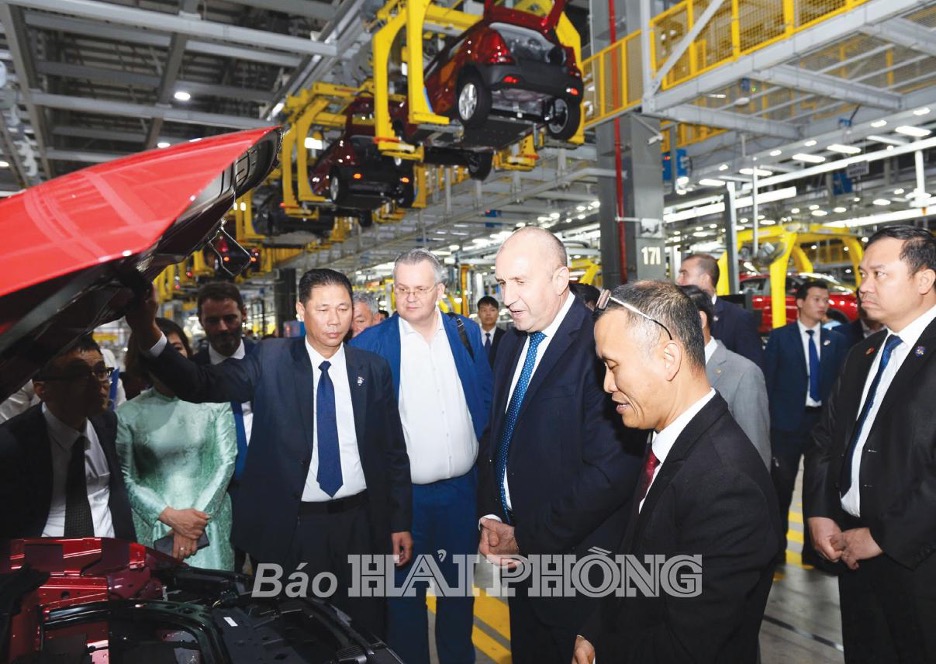
Highlights from the Private Sector and the FDI Sector According to Nguyen Hong Son, Deputy Head of the Central Economic Commission, after five years of implementing Resolution 45, Hai Phong has achieved many accomplishments, gradually asserting its role as a major socio-economic center of the Red River Delta and the country. One of the key factors contributing to Hai Phong’s consistent double-digit growth over many years is the robust development of economic sectors, particularly the private sector and foreign-invested enterprises.
Statistics show that these sectors have grown at high rates, their contribution to GRDP has steadily increased, and they participate in almost all production and business areas, becoming an important driver of the city’s economy. The foreign-invested sector, in particular, has achieved breakthrough growth, emerging as a national highlight. Between 2019 and 2023 alone, the city attracted 435 new foreign-invested projects, with an average investment scale of nearly 11 million USD per project—higher than the national average of 6.16 million USD per project. Additionally, there were 260 capital adjustment transactions and 311 transactions involving foreign investors contributing capital, buying shares, or purchasing equity, totaling about 13.8 billion USD. This accounts for 7.8% of the country’s total investment capital and 20.6% of the Red River Delta region’s total investment capital. Currently, 43 countries and territories invest in Hai Phong, including many projects by corporations ranked among the world’s and Vietnam’s top 500 enterprises. These investments focus mainly on the processing and manufacturing industries (accounting for 88.5% of total investment capital). The strong development of these two economic sectors has accelerated the city’s economic restructuring towards an industrial, modern economy, with a bright spot being the industry-construction sector. This restructuring has involved reducing the share of the state economic sector while increasing the share of the non-state sector and the foreign-invested sector. At the same time, the collective and cooperative economic sector has gradually contributed to the city’s socio-economic development, and the performance of state-owned enterprises has also been gradually improved.
Continuing to Create a Favorable Investment and Business Environment Since 2019, the city has maintained double-digit growth for ten consecutive years. However, the target set by Resolution 45 is for the city’s growth from 2018 to 2025 to reach at least 13%. Moreover, with the national GDP growth goal for 2026-2030 requiring Hai Phong’s growth to reach around 16%, achieving the Resolution 45 target and laying the foundation for the city to successfully fulfill the new era’s tasks assigned by the Central Government demands high determination, great effort, and breakthrough solutions.
To achieve these growth targets and realize the city’s development goals in line with Resolution 45, the city has identified many key groups of solutions. Among these is the solution to develop economic sectors, especially in key and advantageous industries. This includes creating a favorable investment and business environment to position the private sector as a crucial driver of the economy; continuing to attract FDI into key industries and projects with advanced, environmentally friendly technologies, and commitments to technology transfer and linkages with domestic businesses along the value chain; transforming cooperatives’ activities and developing new-style cooperatives aligned with the city’s key industrial sectors; and enhancing the efficiency and effectiveness of state-owned enterprises’ production and business activities.
According to Dr. Vo Tri Thanh, former Deputy Director of the Central Institute for Economic Management, Hai Phong needs to fully leverage the role of economic sectors, especially by developing the private sector faster and more evenly. The city should also adopt a good strategy for FDI attraction, promote technology transfer, and create all conditions for domestic enterprises to grow and participate in global supply chains. Based on feedback from the local business community, to develop economic sectors, the city must continue to improve the effectiveness and efficiency of state management, refine investment and business policies and laws, and focus on reviewing and reducing unnecessary administrative procedures to lower costs and shorten implementation times for citizens and businesses. The city should also support innovation, technology modernization, and human resource development to improve labor productivity; accompany investors in proposing and implementing new projects and projects with major socio-economic impacts; strengthen linkages between domestic enterprises and foreign-invested enterprises and transnational corporations; and promote dialogue with businesses to promptly address their difficulties and obstacles. As for the collective economic sector, there should be a focus on training and nurturing state and cooperative managers, cooperative managers, and cooperative founders; promoting the application of scientific and technological advances; and mobilizing and attracting large enterprises to link up with cooperatives, especially agricultural cooperatives engaged in value chains from production to processing, preservation, and distribution of agricultural products.