
On the evening of October 20, the Hai Phong City People's Committee, in collaboration with the Indian Embassy in Vietnam, organized a performance of traditional Rajasthan dance at the Hai Phong City Opera House. The event was led by the Hai Phong Department of Foreign Affairs and coordinated with the Indian Embassy in Vietnam.
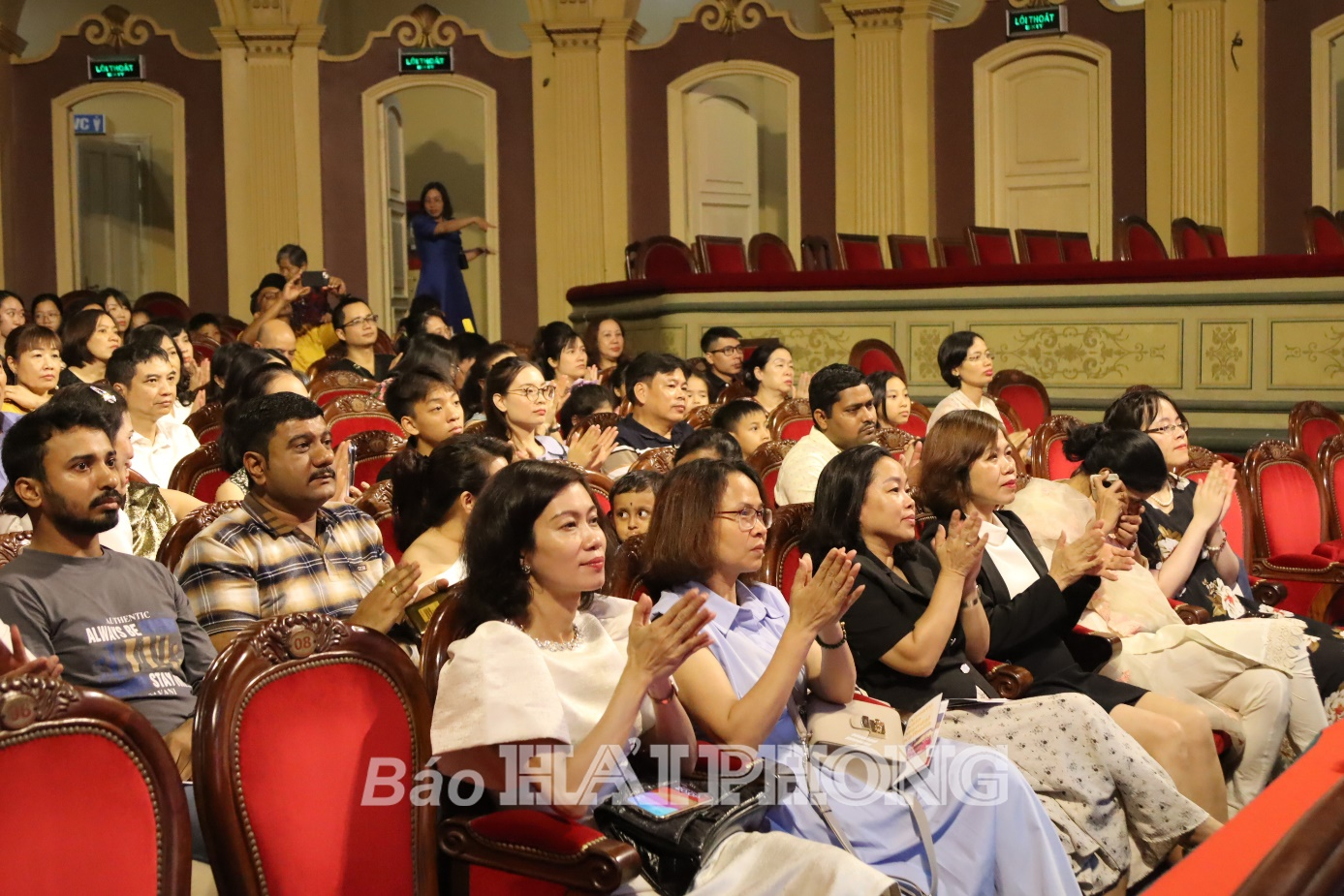
The event attracted a lot of attention, garnering widespread interest and enthusiasm.
Attending the event were Ms. Nguyễn Thị Bích Dung, Director of the Department of Foreign Affairs; Ms. Deepa Ganiger Shiva Rudrappa, First Secretary of the Indian Embassy in Vietnam; and a large audience of art enthusiasts from the city.

Performers at the traditional Rajasthan event.
Rajasthan, meaning "Land of Kings," is the largest state in India. The performances by the Rajasthan troupe are historically rooted in the royal courts and were once presented for kings and nobility, as well as for visiting guests to the region.
During the event, the audience had the opportunity to enjoy a selection of distinguished artistic performances that harmoniously combined music and traditional dance. These included well-known dance forms such as Ghoomar, Jhumar, Chari, Jugal-Bandi, Taraju or Tarazoo, Chakri, and Bhawani. These dances, rich in the cultural essence of India, narrate stories of passion, courage, talent, and the knightly spirit of folk heroes. The dances were accompanied by simple yet vibrant instruments, which produced dynamic and refined harmonies. Through the artistry of the performers, the graceful movements, the vivid colors of their costumes, and the exquisite details of their jewelry all contributed to highlighting the distinctive character of each dance.

This event serves as a significant contribution to enhancing cultural exchange between the people of India and Vietnam.
The event was organized to strengthen the cooperative relations between Hai Phong and the Indian Embassy in Vietnam, while also bringing Indian culture and arts closer to the people of Hai Phong. It further promotes people-to-people exchanges and the sharing of cultural values between the two nations.