
Business incubation is a measure designed to support startups implementing business and innovation ideas; within sponsorship from private enterprises, public entities and academics. In other words, business incubation provides supportive activities and sources (on finance, working facilities, technical consultancy, etc.) to business startups.

Incubate business.
Photo source: https://yourstory.com/2019/04/an-insiders-view-of-the-role-of-an-incubator/amp
Starting business ideas, startups have to handle issues related to financial capacity, human source, timeline, etc. to be able to operate their business ideas realization. Such difficulties may be one of factors affect startups’ business spirit. From that fact, business incubation was born to tackle those difficulties, thereby to be able to realize business ideas; that in turn brings benefits to enterprises and national eco-social development.
Business incubation started in the USA in 1959, when Joseph L. Mancuso opened Batavia Industrial Center operation in New York[1]. Since then, business incubation has been expanding in the USA during the 1980s and reaching to Europe through various forms, such as innovation centers, business incubators, science and tech parks. By now, not only developed countries but also developing countries have deployed business incubation activities with supports from international organizations (World Bank, UNIDO, etc.). Many business incubation programs have received assistance on finance, technique, labors from public and private sectors and nongovernmental entities. Some business incubation programs have got linked with universities for collaboration in research activities and business opportunities implementation.

Harvester Center at Batavia business incubation area, New York.
Photo source: https://mancusogroup.com/the-harvester-center/
Features of business incubation are revealed, as below:
i)Aerial provision to enterprises for co-working environment, cooperation, and mutual learning. Thanks to technological development and remarkable applications, besides directworking space support (physically), business incubation has provided a virtual working environment (grounded on digital tech application, IoT), connecting business stations internally and externally. In current COVID-19 pandemic context, it may be shown clearly that tech applications have been used in connecting and organizing online meetings among numerous stations in nations and across the world (without geographical and distant limitations).
ii)Network connecting opportunities provision through giving support to enterprises and startups to share and develop ideas. With that feature, enterprises, particularly SMEs, would have chances in accessing funds (through ideas sharing for investment calling), material provision of input ingredients, and opportunities for market’s outputs, products, and services. ,
iii)A fund-raising channel for business ideas/projects implementation. When acknowledging profits/values brought by a project/idea, private investors, financial organizations, investment funds, and developers would pay attention to approach, consideration, evaluation, and investment decision-making. Hence, business incubation has been seen as an effective bridge between investors/funds/developers and startups.
iv)An approach to programs, meetings, and consultant conferences with participation of expertise, economists, investors, techs, managers, local and central governments nationally and internationally. This feature leads to opportunities for learning, knowledge and practical experience sharing among stakeholders.
v)A quick and effective channel helps enterprise, business startups, investors, developers, and other stakeholders cut down timing cost and other unnecessary sources.
vi)Provision of job opportunities, training, technical consultancy, contributing to human source quality enhancement, particularly talent sources, that is beneficial to economic development in middle- and long run.
To be able to participate in business incubation, successfully calling on capital, human, tech investment, enterprises having business ideas/business startups need to prepare a concrete business plan revealing all related activities. That is a self-demand to enterprises/startups, and in turn it helps the latter strengthen their competitiveness and successful rate in their business ideas deployment.
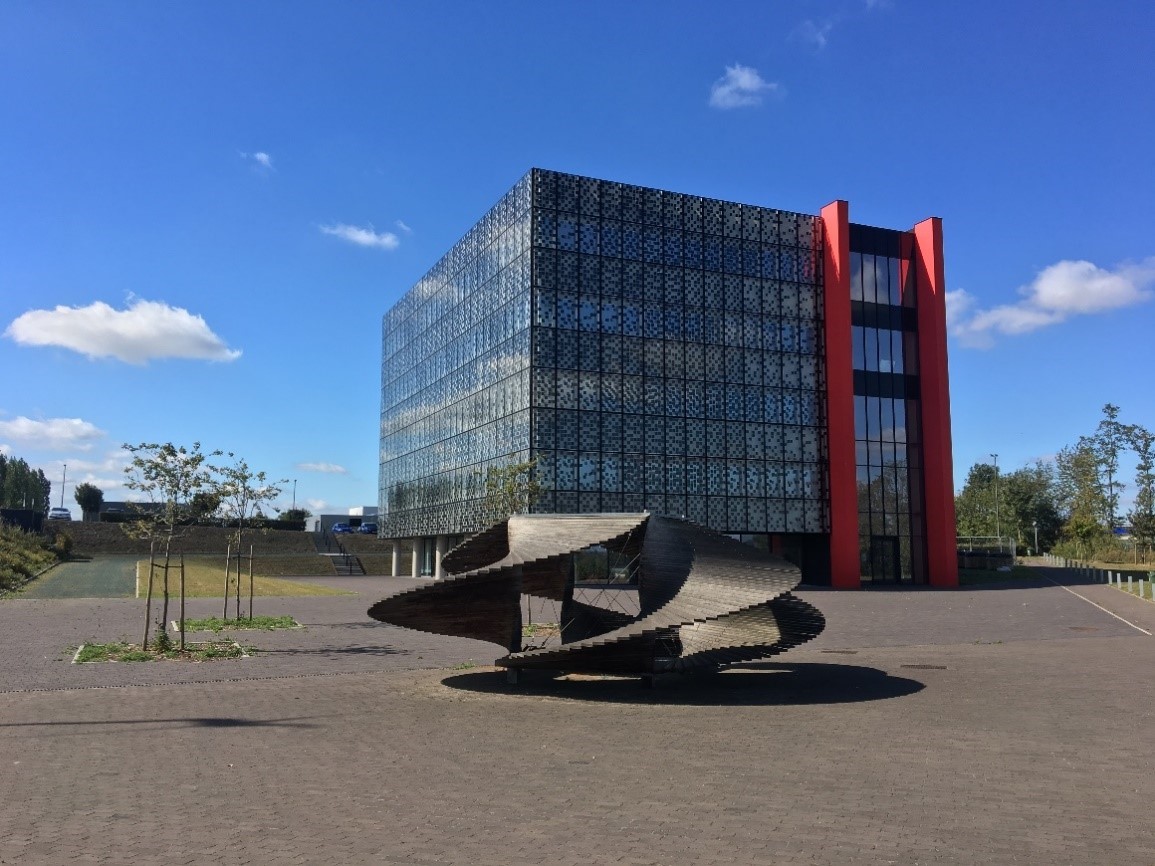
Digital incubator of Enterprendre.wapi©EBN. Photo source: https://ebn.eu/index.php?lnk=K2tiZmlkaWp5MVZzVWF6SzFUWkpHemx1WW8rMk5MRU1jYU9yOVlkT2s4dz0=
In many countries, organizations/associations were established with business incubating functions. Among developed countries, the USA has been known as the earliest pioneer in business incubation. In 1985, National Business Incubation Association (NBIA) was established in the USA, with participation of business incubators, managers, joint venture partners, investors, economists. The NBI’s function is to provide information, training on establishment and management of business incubators, implementation of research, reports, analysis data on industries and reward meetings organization in the industry. In Europe, the European Business and Innovation Centre Network (EBN)has been linked to over 250 business innovation centers across European countries. According to the EBN, companies receiving support from those centers had a survival rate of 94% after the first year and 84% continuing operation after those centers’ support ended. At an analysis of the EBN in 2020, that network gave support to more than 5,200 companies in accessing financial sources with a total of over €609millions for manufacturing and businesses; over 4,700 companies got support in accessing international markets including EU market (72%), the USA market (30%) and Asia market (21%)[2]. Globally, the UBI Global has launched many business incubating programs, ecosystems to boostbusiness incubation, connecting governments, enterprises to startups with business ideas. By now, the UBI Global network has gathered more than 700 incubators, and enhanced business connection with universities that has covered about 70 countries[3]. According to an incubators ranking report of the UBI Global in 2019, North America and Western Europe have continued keeping their high positions with successful incubation programs to businesses, visionaries and future changers[4]. Indeed, a top of 5 business incubators, which hadimplemented their business targets grounded on public entities, getting a great influence and putting value into innovation ecosystems and startups, has run their operation in Chian, the USA, Italia, France and Sweden[5]. In ASEAN, Singapore has been leading in business incubation, particularly in startups. Indeed, some names as BLOCK71 Singapore (tech startups incubation), Expara Co-Working Space (incubating domestic and foreign startups), or PayPal Innovation Lab (fintech incubation)[6] has currently been well-known in Singapore.

T-Hub 2 innovation Center at Hyderabad (India) – a product cooperated among Indian Government, International Tech Telecommunication Institute, Indian Business School, and National Legal Research Institute, and private sector. Photo source: https://www.siasat.com/t-hub-2-indias-largest-incubator-centre-is-ready-to-take-off-2191243/
In Vietnam, business incubators and accelerators have been built in different fields, such as HBI high tech business incubation Center (established according to Decision no. 2629/QĐ-BKHCN dated 29/12/2006), Tech Business Incubation Center – Can Tho University, Tech Business Incubation Center – Ho Chi Minh City University of Agriculture and Forestry, High Tech Business IncubatorSHTP-IC(belong to Ho Chi Minh City High Tech Park Management Agency), Science and technology business incubation center NTBIC –Tech Application Institute, Korea –Vietnam Industrial Tech Incubation Park (KVIP) at Can Tho City, etc. Such facts show that, incubators in Vietnam have followed three models: i)model established by state agencies and operating in a form of business units directly managed by ministries, sectors, provincial/municipal People's Committees; ii)model located in universities, research institutes, in a form of business units/ affiliated enterprises; iii)model established by private sector, operating in a form of an enterprise/part of an enterprise, and operating profitably.On 12/6/2017, Parliament approved Law no. 04/2017/QH14 on supporting SMEs[7](has been valid since 01/01/2018). On 11/3/2018, Central Government issued Decree no. 39/2018/NĐ-CP[8]regulating in detail some articles of Law on supporting SMEs. On 30/3/2020, Central Government launched Decree no. 37/2020/NĐ-CP[9]supplementing list of industries with investment incentives attached with Decree no. 118/2015/NĐ-CP[10]regulating in detail and guidance for operation of some articles of Investment Law, accordingly, a supplement of small and medium sized business incubators, technique facilities supporting the SMEs, co-working area for SMEs startups in the list of investment incentives (i.e, incentives on corporate income tax, land rent exemption and reduction, water surface rent). That is a regulation to support SMEs business incubators, technical facilities to support SMEs, and co-working areas for small and medium-sized businesses to start up, in order to improve their operations’ quality.Circulation07/2020/TT-BKHCN guiding establishment of business incubators for SMEs, technical facilities support SMEs, co-working areas to support SMEs innovate, was approved by Ministry of Science and Technology on 11/12/2020 (in validity since 12/02/2021) that facilitates restructuring small and medium-sized business incubation system in Vietnam.
During current years, in Hai Phong, business incubation has been just standing at the level of organizing supportive activities, connecting enterprises operating in the city area. In context of international integration, the city has promoted implementation of tasks to carry out industrialization and modernization, creating a favorable environment for businesses to stand firm in the market and to have enough competitiveness, which is practically significant to not only businesses but also the city’s economic health and internal resources. Developing business incubation activities will be an important measure to help businesses promote scientific application research, technology transfer, innovation, development, and in return, to contribute to eco-social development of the city./.
Lê Hạnh
[1]http://www.billbooks.com/blog/take-off-your-startup-with-business-incubator/
[2]https://ebn.eu/index.php?lnk=KzF0aDVES1I3bG9TYXFGeEhLL2dQNmR5NEw4VDRsN09KZEwraGpvYVdqcz0=
[3]https://worldincubationsummit.com/about-us
[4]https://resources.ubi-global.com/hubfs/Publications/Rankings/UBI%20Global%20-%20Rankings%201920%20v2.pdf
[5]https://resources.ubi-global.com/hubfs/Publications/Rankings/UBI%20Global%20-%20Rankings%201920%20v2.pdf
[6]https://nusenterprise.medium.com/accelerators-and-incubators-in-singapore-for-startups-38da14a023f2
[7]https://thuvienphapluat.vn/van-ban/Doanh-nghiep/Luat-Ho-tro-doanh-nghiep-nho-va-vua-2017-320905.aspx
[8]https://thuvienphapluat.vn/van-ban/Doanh-nghiep/Nghi-dinh-39-2018-ND-CP-huong-dan-Luat-Ho-tro-doanh-nghiep-nho-va-vua-366561.aspx
[9]https://thuvienphapluat.vn/van-ban/Dau-tu/Nghi-dinh-37-2020-ND-CP-bo-sung-Danh-muc-nganh-nghe-uu-dai-dau-tu-kem-118-2015-ND-CP-438665.aspx
[10]https://thuvienphapluat.vn/van-ban/Dau-tu/Nghi-dinh-118-2015-ND-CP-huong-dan-Luat-dau-tu-281054.aspx