
A free trade zone is one of leading policy suggestions, which has been effectively applied and implemented in many countries around the world since the last years of the twentieth century. Until now, this is still a big trend for cities and localities to research, innovate, apply and deploy to take advantage of attracting maximum investment - trade - technology resources in the context of multi-level, intensive and comprehensive competition. This model is applied mainly in cities, localities and territories with potentials, development advantages, favorable geo-economic locations for trade, cooperation and integration, playing the leading role of the national economy. With strengths gained through the long history of development, the gateway to the sea of the northern region, one of the dynamic economic centers of the Red River Delta and the whole country, Hai Phong has taken many steps to strongly transform in socio-economic development, and achieved many very important results. However, the speed and development results achieved by the City are still not really commensurate with potentials, strengths, visions and development requirements, especially after Resolution No.45-NQ/TW of the Politburo on Construction and Development of Hai Phong in the period of industrialization and modernization was issued, and set targets for Hai Phong to become a leading developed city in region and Asia in the coming decades. In order to realize these goals, the City has proposed to the Central Government to allow piloting a number of specific mechanisms and policies in development, in which the City is studying and submitting to the Politburo about a policy on building a free trade zone. This article will analyze some aspects of building a free trade zone model in Hai Phong and propose some solutions for implementation.
- Definition and features for free trade zones
The definition of Free Trade Zones comes from the term Economic Zones that appeared in the 1970s of the twentieth century. In which, research pioneers were economists/scholars: Hamada [1974], Rodriguez [1976] and Hamilton, Svensson [1980], Wall [1976], Fernstrom [1976], Ping [1979] and Diamond [1979]. According to the 1999 revised Kyoto Convention, “free zone” means a part of the territory of a contracting party where any goods introduced are generally regarded, insofar as import duties and taxes are concerned, as being outside the customs territory. According to Pavlov, Pavel V et al., the practice of economic zone development showed the current approaches to economic zone definition have not been really unified so far.
Although there is no unified understanding about definition of a free trade zone, it can be confirmed from overview studies a free trade zone is a type of economic zones with a geo-economic space defined by the Government, and certain advantages in terms of geographical location, favorable investment and business environment for investors; approved for building and development by the Government; operated by a preferential legal framework; opened to international practices; guaranteed exemption from tariffs, quotas, and preferences in most trading activities of goods and services to promote exports, attract foreign investment, and develop international integration. A free trade zone is a place where priority is given to tax policy, investment environment as well as technical attraction and modern management policy. This is a new definition that has not been mentioned in the legal system of our country and is not in provisions of Decree No. 82/2018/ND-CP dated May 22, 2018 of the Government on management of industrial parks and economic zones.
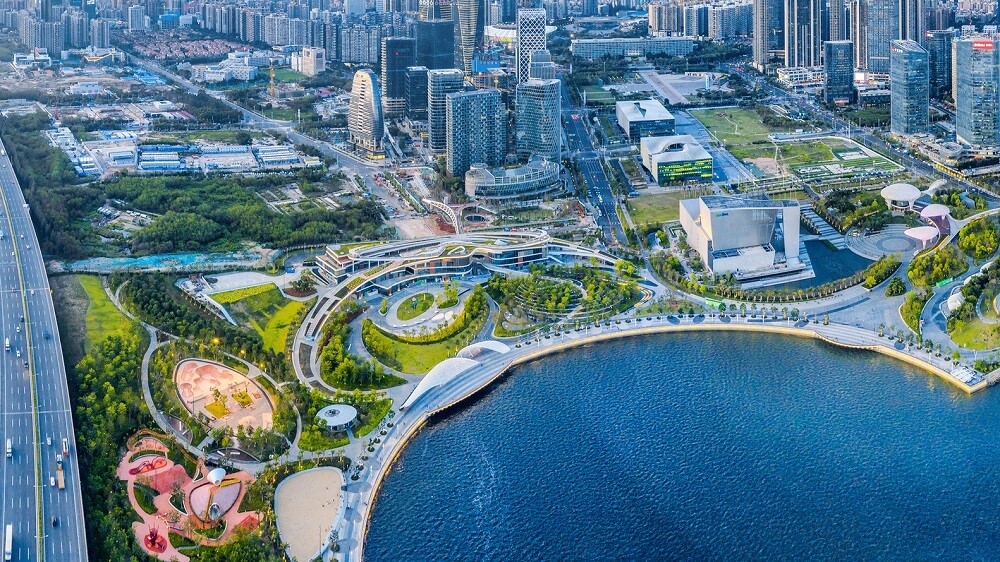
Photo: Shenzhen - the typical successful free trade zone of China, source: https://greenmore.vn/canh-quan-cong-vien-nhieu-tang-cua-trung-tam-thuong-mai-do-thi-tham-quyen/
Some features of free trade zones:
- Import and export taxes are not required on foreign goods until they are imported into national territory for domestic consumption. At that point, importers generally have options to pay taxes at the rate of foreign raw materials or finished products.
- In free trade zones, goods are not subject to import and export taxes. Goods are only subject to taxes when they are transferred to areas for domestic consumption.
- Exemption of export taxes when exporting goods out of free trade zones.
- Guarantee of compliance improvement, inventory tracking and quality control under strict process.
Goods can be stored in free trade zones indefinitely, whether taxable or non-taxable products.
Distinguishing free trade zones from special economic zones and free trade areas:
Models of special economic zones have been established and developed in many countries around the world over the past few decades, the goal is to create open areas with less bound by a system of overlapping administrative regulations and make many incentives (about taxes, land rentals, transaction costs, quotas, customs, labor regulations) to promote business cooperation, investment, job creation, as well as improve management efficiency. In addition, special economic zones are also considered as an institutional laboratory for economies in transition, from close markets to open markets and international integration.
Special economic zones are areas with definite boundaries, larger than industrial parks or export processing areas within national territory. These areas are eligible for preferential measures in terms of customs, foreign exchanges, taxes, and visas to domestic and foreign investors. According to statistics, there are more than 200 special economic zones in the world allocated in more than 60 countries; depending on each country, they will have different names such as: free economic zone, free industrial area, export promotion area.
In terms of features, a special economic zone is about changing both management apparatus and institutions, while a free trade zone only innovates in terms of institutions and policies. Basically, the organization of management apparatus of a free trade zone has not changed much compared to current policies and laws of the country. The partial change of institutions and policies also only serves for trade liberalization. Special economic zones tend to cover all sectors, while free trade zones are mainly about trade and some trade-related sectors.
In fact, in the world, the terms, definitions, and development models of free trade zones and special economic zones have much in common, and even many international scholars consider two concepts as identical ones. Therefore, from the approach of this research, in spite of still clearly distinguishing definitions and research connotations, in order to ensure an overview and get a comprehensive multi-view on the experience of developing free trade areas, many contents in the construction and development of special economic zones in other countries around the world are also applied and compared in a free trade zone model, excluding contents on reforming administration of special economic zones.
A free economic zone is also different from a free trade area, while a free trade area has a transnational connection, a free economic zone is only limited within a country. A free trade area is a form of trade integration among many countries, in which members remove all trade barriers (tariffs, quotas, etc.) among them, but all countries continue to maintain trade barriers with other countries. The purpose of a free trade area is to take advantage of international specialization benefits for improving the living standards of member countries. Free trade areas facilitate international trade and trade-related benefits, accompanied by international division of labor and specialization. Thus, compared with the local perspective, a free trade area is in the national perspective with the participation of many countries. A free trade area is established on the basis of international agreements among countries and significantly influenced by international public laws, while a free trade area is established on the basis of national institutions and operated according to national policies and laws.
Photo: A digital financial technology center like Tokyo in Japan is a head start by taking a shortcut, keeping up with the times, source: https://www.asianinvestor.net/article/tokyo-accelerates-reforms-to-advance-status-as-global-financial-city/468467
- The needs of building a free trade zone model in Hai Phong
Firstly, the role of building a free trade zone in the process of national integration and the cause of building and developing the City in new stage:
Regarding the role of a free trade zone, the model of a free trade zone has become a typical model of economic development to help cities and localities with the role of "economic driving forces" in the world to take advantage of development opportunities from globalization and international economic integration, especially take advantage of benefits from participating in free trade agreements as fundamental guiding principles. The development of “exemplary ones" according to the model of a free trade zone will help localities make the most of their competitive advantages and development potentials to make a comprehensive breakthrough in economic development as well as all aspects of social life in the context of fierce global competition at many levels and subjects. The development of a free trade zone also helps accelerate the accumulation of capital and technology, contributing to the industrialization and modernization of the national economy; enhancing the country's external economic activities; playing a leading role as driving forces for the development of other regions and the whole country; playing an active role in solving social problems.
In particular, a free trade zone also plays a very important role in shortening time and cost to penetrate global markets, especially markets with very large capacity and scale. Preferential policies will create favorable conditions for foreign investors, and at the same time, create an open environment for exporting goods; concurrently, take advantage of low labor cost, local raw materials, etc. All these advantages have helped the export goods of a free trade zone to lower production and exporting costs, reduce production cost and goods price, create high competitiveness for easily penetrating global markets.
From another perspective, in the period of 2016 - 2020, the city's economy developed strongly and always maintained a high growth rate, the 5 year GRDP increased by 13.94%/year, 1.3 times higher than the target of the 15th City Party Congress Resolution (10.5%/year). However, above results are not commensurate with current position, potentials and development strengths of Hai Phong. The local economic, social and investment development indicators are not really commensurate with the position of the third largest city of the whole country and are still far from the leading cities in Southeast Asia. For example, according to GRDP data in 2019: Singapore (63,990 USD/person), Jakarta - Indonesia (19,030 USD/person), Bangkok - Thailand (9,749 USD/person), Kuala Lumpur - Malaysia (30,010 USD/person)... Besides, Covid-19 pandemic emerging from 2019 has seriously affected the global economy as well as socio-economic development of the whole country and the City. To be able to run smoothly and make the most of international investment waves after pandemic, it is essential to approach and propose pilot implementation of new breakthroughs, and a free trade zone model is one of leading policy suggestions, which has been applied and implemented effectively and successfully in many countries around the world from the early 1990s to present days.
Secondly, the city's policy on building a free trade zone in Hai Phong:
Resolution No. 45-NQ/TW dated January 24, 2019 of the Politburo on construction and development of Hai Phong up to 2030 with a vision to 2045 has set out a goal that by 2025, the City is necessary to basically complete the goal of industrialization and modernization; by 2030, Hai Phong must achieve "the level of Southeast Asia cities" and "on par with leading cities in Asia and the world” in 2045. To realize above goals, the City has reported to the National Assembly and central agencies to implement the National Assembly's Resolutions on piloting a number of specific mechanisms and policies to develop Hai Phong and the City also prepared to study, propose to the Politburo on pilot construction of a free trade zone in Hai Phong.
Thirdly, the shortcomings in investment attraction, economic zone models, internal force mobilization for development:
Currently, investment incentive policies also have many shortcomings; still mainly depend on tax incentives, land rentals and raw material costs, affecting the efficiency of attracting investment projects. To attract investment from multi-countries corporations, especially from developed countries such as: The US and the EU, in addition to issues related to investment environment in general, the City needs to pay attention to requirements of investors in some aspects such as: publicity, transparency, stability, predictability of institutions, policies and laws; strict and uniform operation to protect legitimate rights and interests of investors; simple administrative procedures to ensure prescribed time.
A free trade zone model is a large and extensive policy, much more complex in terms of scale, planning, mechanisms and policies for development than operation of current economic zones, industrial parks/clusters, and export processing areas in Hai Phong. At present time, for investment attraction activities, most of the city's investment projects are concentrated in industrial parks and economic zones. Although many encouraging results have been achieved, there are many shortcomings in attracting investment as well as developing industrial parks and economic zones in recent years, especially the scale of industrial parks and economic zones is still operated within a small area, so it is difficult to arrange all necessary infrastructure items, the efficiency of large production investment is not impressive, the policies are not synchronized, lack of consistency on an inter-regional scale…
On the other hand, in the context of complicated situation of epidemic, the attraction of the investment environment has decreased sharply, many plans to enhance investment and increase capacity of foreign investors are suspended, and goods supply chains for global markets are also broken on a large scale. In addition, in the face of strong competition from cities and localities in the region, many foreign corporations have chosen neighboring countries of Vietnam due to their more attractive investment attraction policies and more favorable business environment.
- Some models of free trade zones in the world
According to statistics of the largest economic and trade organization of the United Nations (UNCTAD), in 2019 there were 5,383 economic/free trade zones in the world in 147 countries, specifically as follows: 1/ Developed countries have 374 zones, accounting for 6.9% of total number of free economic zones; Europe has 105 zones, accounting for 2.0%; North America has 262 zones, accounting for 4.9%; 2/ Developing countries have 4,772 zones, accounting for 88.3%; Asia had 4,046 zones, accounting for 74%; Africa had 237 zones, accounting for 4.3%; Latin America and the Caribbean had 486 zones, accounting for 9%; 3/ The transition economies had 237 zones, accounting for 4.3%; 4/ Developing countries have 173 zones, accounting for 3.2%; 5/ Landlocked developing countries had 146 zones, accounting for 2.7%; 6/ Small island developing countries had 33 zones, accounting for 6%. The development models of a free trade zone can be divided into following categories:
1/ A free economic zone has a definite area and boundary with duty-free areas, loading and unloading areas, warehousing areas, means of trade distribution, transshipment, and re-export systems, normally established at most gateway ports in the world, such as Colon free trade zone of Panama. This type has the following features: The purpose is to promote trade and attract investment, the area is less than 50 hectares with international gateway ports, bonded warehouses, import-export centers and trade-related activities, domestic and re-export markets.
2/ Export Processing Zones are specialized industrial parks, granted special incentives and infrastructure for production with manufacturing and export-related activities. It can be divided into two types: Traditional Export Processing Zones and Hybrid Export Processing Zones.
- The model of a traditional export processing zone has a defined location and boundary, exclusively for enterprises operating in the field of export, licensed and managed by management boards. This model has the following features: development target is production for export, the area is less than 100 ha; manufacturing and export processing activities, markets are mostly export-oriented, for example, Karachi export processing zone of Pakistan.
- Mixed export processing zones are divided into normal economic zones for enterprises of all economic sectors, not only export enterprises and separate export processing zones for export and export processing enterprises. This model is relatively similar to the traditional export processing zone model, but only a part of the zone operates under an export processing zone model, such as Lat Krabang Industrial Park of Thailand.
3/ Free port or duty free port is often understood in a broader sense, covering a larger area than its name (not including only port area). The goal of the model is an integrated, multi-purpose development; the area is usually over 1000 hectares for both domestic and foreign markets. This model has all economic activities, including tourism, retail, residential areas, and is enjoyed with preferential tariffs, permits, land, information, training, priority customs procedures, large-scale free economic ports… such as Shanghai, a typical example of this model.

Photo: Hai Phong International Gateway Port is one of the city's competitive advantages to establish a new generation free trade zone, source: https://baodautu.vn/them-loi-the-canh-tranh-cho-cong-ty-co-phan-cang-hai-phong-d148599.html
4/ Enterprise zones or development zones, economic empowerment zones, urban free zones are for the purposes of rebuilding underdeveloped urban or rural areas through tax incentives or financial assistance. The area of an enterprise zone is usually less than 50 hectares with multi-sectors, mainly serving domestic markets. Most of these regions are set up in developed countries such as: The United States, France, the United Kingdom, and South Africa which is a developing country also apply the same model.
5/ The system of export processing factories or single export processing enterprises has special incentives for private enterprises; regardless of defined planning location, factories, enterprises, businesses do not have to be located in a defined, planned area to receive incentives and support. The goal of model development is to produce and process for export, set up a number of independent domestic enterprises to serve export markets. Typically, countries applying this model are Madagascar, Mexico, and Fiji. Some other countries such as Costa Rica, the United States or Sri Lanka apply both industrial park models and export processing enterprises.
Regardless of model types, a free economic zone model also includes some of following structural elements:
- In terms of location, scale, there are advantages of natural conditions, accessibility of ports, airports, resources, materials, markets, and environmental protection.
- With regards to planning (export processing zones, logistics, industry, research and development, tourism, energy, sector and field development, ...) and the goal of developing a free trade zone, as well as an investment and business environment.
- About institutions, policies and incentives, tax incentives, fees, charges, land and water surface rental, housing, administrative procedures, immigration,...
- With regard to the organizational model of management apparatus, operation process, and operation organization.
- About internal and external infrastructure: electricity, clean water, information and telecommunications, waste treatment, wastewater systems.
- As regards the quantity and quality of human resources, labor, education and training to meet requirements.
- About supporting activities, utility and infrastructure such as: construction, finance - insurance - currency - banking, education, healthcare, accommodation services, entertainment...
- Some recommendations for implementing solutions
In coming time, to be able to effectively deploy and implement a free trade zone model in Hai Phong, it is necessary to focus on following solutions:
Regarding location, scale, the City needs to determine areas to build a free trade zone model in accordance with the using plans of natural resources, land areas, environmental protection and development plans, with priority to coastal areas, convenient transportation connecting all traffic types of seaway, road, railway, waterway and airway. Currently, the City also has many advantages in terms of traffic center, connection roads, development of Dinh Vu - Cat Hai economic zone and industrial parks/clusters as well.
However, it is possible to consider unifying the centralized planning in the city's free trade zone; speed up researches, application for policies on building a pilot model of a free trade zone in Hai Phong. In particular, it is necessary to focus on evaluating new generation free trade zone models in the direction of attracting experienced investors and "economic eagles" in three key areas of the city’s development: high-tech industrial, seaport - logistics, tourism - commerce, especially in the fields of technology - finance (fintech), digital economy. At the same time, cut down and minimize the participation of businesses using a lot of natural resources and easily causing pollution; seriously evaluate the issues of social - environmental costs for environmental pollution risks in free trade zones. In the 4.0 revolution, developing countries must increasingly move towards new-generation free trade zones with high technology, finance, tourism, environment, urban regeneration, and extend beyond land-intensive, labor-intensive manufacturing activities of traditional free trade zone. It should be further emphasized that the success of China's free trade zones/economic zones in the high-tech field is particularly superior to other investment sectors. This contributes to gaining experiences, orienting the establishment and development of models of other countries.
With regards to planning and development goals, the City has to accelerate the construction of master plan on the basis of identification and construction orientation of Hai Phong to 2030 and 2045; select an appropriate development model on the basis of overview assessment and consideration of some models of China's economic zones/free trade zones (Shanghai, Shenzhen, Zhuhai, Shantou of Guangdong, Xiamen of Fujian), Korea (Incheon, Jeju, Busan-Jinhae, Gwangyang, Daegu-Gyeongbuk), Japan (economic zones in Tokyo, Fukuoka, Osaka, Kanagawa), the UK's new free border ports set up after leaving the EU, Dubai (UAE), Singapore... Besides, in the process of conducting plans, It is necessary to invite reputable contractors in the world to establish clear and profitable investment development roadmaps and orientations for the world's big investors to trust and choose Hai Phong's free trade zone as a destination for their investment projects.
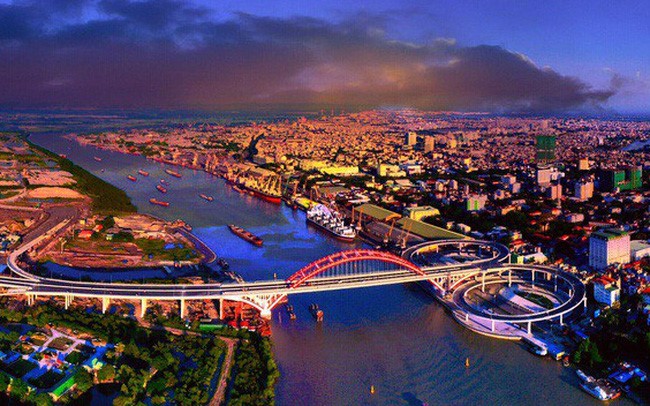
Photo: Hai Phong is a locality that meets all conditions to establish a new-generation free trade zone to become an economic driving force of whole country, a leading city of region and Asia in the future: https://cafef.vn/muon-co-khu-thuong-mai-tu-do-hai-phong-can-gi-20211012090555403.chn
In terms of institutions and policies, the selection of a free trade zone development model and preferential tariff policies should pay special attention to the development of a competitive economic - tariff system with distinct, exclusive and outstanding advantages compared to other localities and cities in Southeast Asia. Simultaneously, these policies also need to be evaluated on the basis of international trade models, including job creation, FDI attraction, foreign currency attraction and added economic value creation, considering these matters as catalysts leading to overall growth of the national economy. However, it is also necessary to evaluate profitable factors after deployment; prevent foreign investors from "surfing investment" to get attractive incentives, and take advantage of fiscal incentives – tariffs loopholes; conduct impact assessment and promote symbiotic cooperation between foreign investors, domestic suppliers and enterprises. In addition, policies on land rentals and shares should create favorable conditions for investors; avoid speculation; ensure security, political and economic stability, social order and safety. At the same time, there are appropriate regulations on the proportion of local goods consumption and export foreign-invested enterprises and localization of enterprise products to build a flexible tax protection system of a free trade zone.
Regarding the organizational model of management apparatus, it should be streamlined, and should study the 4th generation management models or digital free economic zones in development models of economic zones/free trade zones, ensuring effectiveness, efficiency, and not affecting the current legal system. Actively apply and control management solutions by telecommunications - information technology infrastructure to avoid the use of a large number of direct management personnel. Optimize administrative procedures, immigration procedures, goods and services circulation, payment and currency circulation in a free trade zone on the basis of modern management models.
In terms of infrastructure, it is important to ensure an appropriate long-term investment capital schedule, public-private partnership; develop a revenue plan and investment capital loans to ensure the construction of a synchronous, unified and efficient free trade zone infrastructure system; avoid scattered, rampant and unsuitable investments to maintain capitals for fully completing the committed economic - technical infrastructure of a free trade zone. Slow site clearance, lack of additional infrastructure (electricity, roads, bridges, ports…) lead to the failure of some special economic zones of India or the African region. In addition, accelerating the implementation of the city's technical - transport - urban infrastructure projects, focusing on regional linkages and economic corridor linkages with localities in southwestern provinces of China.
Regarding human resources, education - training, special attention should be paid to building high-quality human resources to meet requirements of businesses operating in free trade zones; developing mechanisms and roadmaps to optimize the selection of international talents from successful experiences of other countries for the city’s high-quality human resource development strategies; focusing on attracting the world's leading educational corporations to build universities and research institutes for forming an economic ecosystem to realize technology and investment ideas in a free trade zone with boundaries as Silicon valleys over the world; strengthening companionship in setting up “technology garden” to attract start-ups, technology unicorns, towards building Hai Phong into an innovation - creation - invention technology center; deploying to build a model of an English-speaking city, an international conference center... to create a favorable environment for foreign investors to invest and develop business in a free trade zone.
For construction of utility and supporting infrastructure, the City needs to strengthen the combination of attracting investment capital from domestic investors and foreign corporations in construction of centers of finance-insurance-currency-banking, healthcare, accommodation services, entertainment ... serving activities of businesses, investors in commercial zones and economic zones/clusters in the future.
In general, construction of a free trade zone model in Hai Phong still needs a lot of in-depth research to deploy and build an appropriate model in the future. However, it can be affirmed that development of a free trade zone in Hai Phong is an essential requirement for the City to have breakthroughs to a leading city level in Southeast Asia region and Asia. The selection of a new generation free trade zone model of digital economy - finance is a shortcut step to take the lead in line with trends of industrial revolution 4.0 and digital transformation, a goal worth pursuing and an appropriate direction in the rapidly changing and increasingly drastic international competitive environment./.